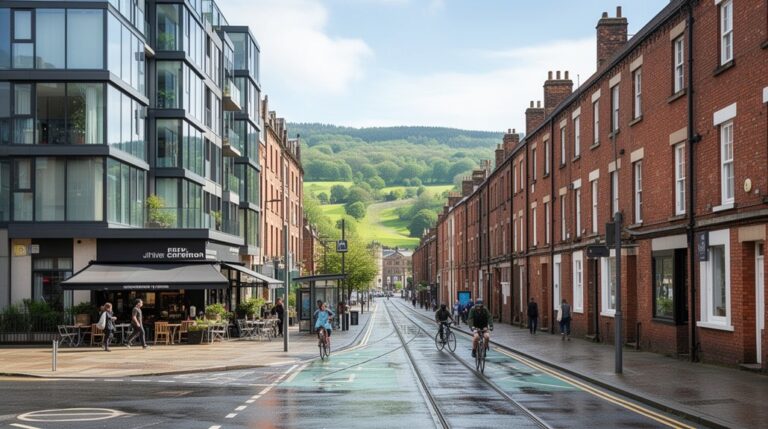
You’re seeing demand in Slough tighten because regeneration spend, fresh retail and public-realm upgrades, and the Elizabeth Line’s time savings are shifting buyer and tenant maths. Local agents say refurbished stock near stations is moving first, especially where insulation, layout fixes, and modern kitchens cut running costs and boost EPCs. They’re also tracking sharper competition on family streets with improving schools and amenities—yet the strongest uplift isn’t where most people expect…
Key Takeaways
- Local agents say regeneration funding and private investment are driving demand, with buyers pricing in future infrastructure before projects complete.
- Demand concentrates near town-centre hotspots and the Elizabeth Line, especially the station–High Street corridor, Langley, and Cippenham.
- Refurbished, upgraded homes outperform “in-between” stock, widening the price gap versus tired properties and making renovation-led value-add more attractive.
- Transport access to Paddington, Heathrow, and business parks lifts prices and rents, while walkable stations and frequent buses reduce rental voids.
- Buyers and tenants favor turnkey flats and family homes in school catchments, with modern finishes, EPC upgrades, and compliant electrics.
Why Is Demand Rising in Slough Now?

As regeneration funding and private investment accelerate, demand in Slough is rising because buyers and tenants can see measurable upside before the next wave of completions. You’re pricing in future infrastructure now, not after it’s headline news, so value-add refurb projects pencil out faster and rents rebase sooner.
You benefit from a tightening gap between tired stock and upgraded homes: rewire, insulate, reconfigure, then let or sell into stronger comparables. You also gain stickier tenancies because local amenities keep daily life easy—schools, parks, stations, and retail—while new workspaces widen the employment pool.
When you show up with community involvement, you’re not just renovating a property; you’re buying into a place people want to belong, and they’ll pay to stay.
Which Slough Neighbourhoods Are Most in Demand?
If you track buyer enquiries and time-to-offer, you’ll see Town Centre regeneration hotspots tightening fastest, especially around new transport links and mixed-use schemes. Landlords who want fast lets and reliable tenants often choose letting agents Slough for professional marketing, thorough checks and smooth property management
You’re also seeing sustained demand in Langley and Cippenham, where solid schools, commutes, and street-by-street pricing give you clearer upside after a smart refurb.
Compare yield, resale spreads, and renovation headroom across these pockets, and you’ll quickly spot where competition is highest.
Town Centre Regeneration Hotspots
While Slough’s town centre rebuild gathers pace, demand has started to cluster around the most “livable-now, uplift-later” pockets—areas where you can buy close to the Elizabeth Line, walk to day-to-day amenities, and still justify a refurb that lifts EPC, layout, and rental appeal.
You’ll see the strongest pull in the station-to-High-Street corridor and the streets feeding off it, where renter churn stays low and yields hold up when you modernise kitchens, add storage, and improve insulation.
Target homes with solid bones but dated finishes; your upside sits in reconfiguring for WFH nooks and compliant fire doors in conversions.
Community engagement is rising around meanwhile-use spaces, and historical development informs which blocks will benefit first.
Langley And Cippenham Demand
Because buyers and renters want Elizabeth Line access without the price tag of central Slough, Langley and Cippenham now sit near the top of the demand stack—especially for family houses and clean, low-hassle rentals within quick reach of Langley station, the A4/M4, and everyday amenities.
You’ll see the local market reward three-bed semis, modernised terraces, and well-managed HMOs, with the best interest landing on turn-key spec and strong EPC ratings.
If you buy, you can add value fast by opening up kitchens, insulating lofts, upgrading glazing, and reworking tired bathrooms—then price confidently against new-build competition.
Tenants tend to stay when you offer parking, a garden, and walkable schools, so voids drop. That stability creates clear investment opportunities.
What Slough Property Types Sell or Let Fastest?
As regeneration spending reshapes Slough’s hotspots and commute-led demand stays resilient, you’ll see certain property types consistently transact faster than the rest—especially turnkey two-bedroom flats near Elizabeth Line access, modern three-bedroom semis in school catchments, and well-presented HMOs or subdividable houses where light refurbishment reveal immediate rental uplift.
To move quickest, you’ll price to the “rent-ready” benchmark: clean EPC profile, compliant electrics, neutral décor, and a kitchen/bathroom you won’t need to rip out.
Two-beds with parking and a balcony tend to beat studios on buyer depth, while family semis with extensions or loft potential attract upsizers.
If you lean into Historical development and Cultural influences—period terraces near established neighbourhood amenities—you’ll also secure faster viewings from residents who want to belong, not just commute.
Which Slough Regeneration Projects Matter Most?
If you’re tracking where Slough values and rents will move next, focus on the regeneration schemes that change fundamentals—transport friction, public-realm quality, and the mix of jobs, retail, and housing—rather than headline budgets.
Prioritise projects that densify the centre with walkable streets, safer lighting, and greener squares, because those upgrades widen tenant profiles and reduce voids.
Watch mixed-use blocks that replace tired retail with modern units below and energy-efficient flats above; they’re where refurb ROI stays defensible.
Back estate renewal that fixes layouts, insulation, and frontage treatments, since buyers pay for “done” homes and consistent streetscapes.
Tie your choices to Historical development: restored facades and adaptive reuse usually outperform bland new build.
Stay close to the Local community—amenities, schools, and clubs signal lasting demand.
How Do Slough Transport Links Affect Buyers and Tenants?
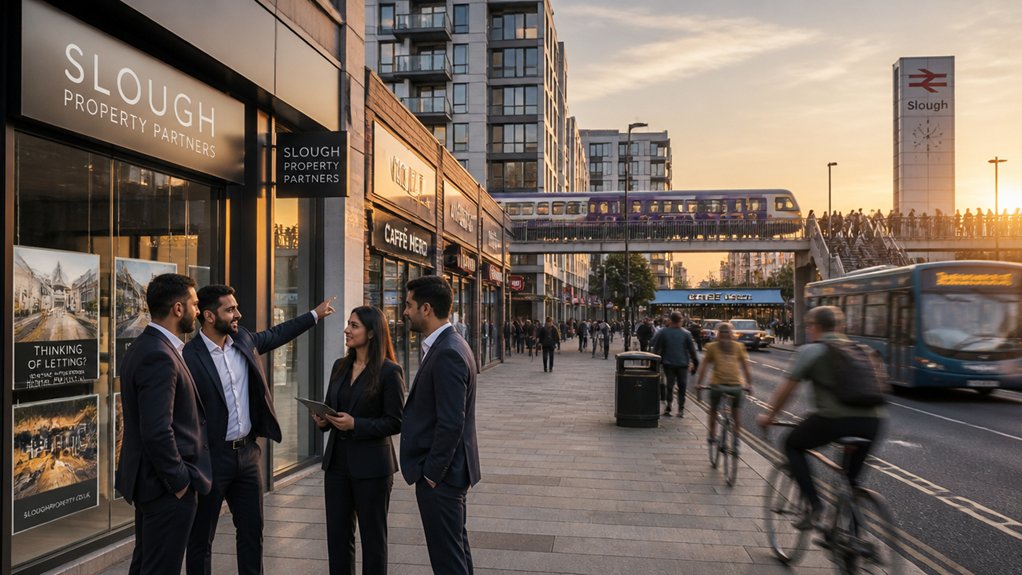
Regeneration only sticks when it cuts journey times and makes day-to-day travel predictable, and that’s exactly why Slough’s transport links move prices and rents so quickly. When you can reach Paddington fast, Heathrow in minutes, and key business parks without a car, you widen your buyer and tenant pool instantly.
You’ll see Public transport access translate into tighter voids and stronger rent resilience, especially within a short walk of stations and high-frequency bus corridors. Connectivity infrastructure also changes how you renovate: prioritise sound insulation, secure bike storage, EV charging readiness, and low-maintenance finishes for commuter wear.
If you’re choosing between streets, track walkability scores, interchange reliability, and weekend service levels—because households want a home that keeps them connected and part of the town’s daily rhythm.
What Are Slough Estate Agents Seeing in Sales?
You’re seeing buyer demand cluster around regeneration corridors and fast-commute pockets, where modernised terraces and EPC-upgraded flats move first. Pricing is firming on turnkey stock while value hunters target dated homes, benchmarking against recent sold prices and renovation costs to justify offers.
Expect tighter competition on correctly priced listings—multiple viewings, best-and-final bids, and shorter negotiation windows are increasingly common.
Buyer Demand Hotspots
Where’s buyer demand concentrating right now in Slough? You’ll see it clustering around the Elizabeth Line stations, especially Slough and Langley, where buyers value fast London access without losing a neighbourhood feel.
Local market insights point to consistent viewing volumes for walkable pockets near schools, parks, and everyday retail, with Chalvey and parts of Cippenham drawing families who want settled streets and practical commutes.
You’re also seeing strong interest in modernised terraces and 1930s semis where lofts, side returns, and EPC upgrades are already planned or part-finished, because buyers can add value quickly.
Around the town centre regeneration zone, demand tracks new public sphere and amenities. Community engagement events and local cafés help buyers picture belonging, not just postcodes.
Pricing Trends And Competition
Although headline asking prices have steadied across much of Slough, local agents still report sharp competition for “ready-to-go” homes near Elizabeth Line links and strong school catchments.
Where best-in-class EPCs and finished loft or side-return extensions can trigger multiple bids within days—while anything dated, lease-short, or priced ahead of recent comparables now needs a reduction or a clear renovation plan to move.
You’ll feel Market volatility most in “in-between” stock: tidy, but not upgraded.
Agents say buyers benchmark against the last 8–12 weeks, not last year, so you should price to today’s sold evidence.
If you’re selling, pre-empt surveys with damp, roof, and electrics fixes.
If you’re buying, target value-add layouts, negotiate on EPC or lease terms, and frame refurb budgets as Investment opportunities.
What Are Slough Letting Agents Seeing in Rentals?
As regeneration projects reshape Slough’s neighbourhoods, letting agents report faster rental turnarounds and tighter competition, especially for refurbished two-bed flats and family homes near Crossrail links. You’ll notice listings getting multiple enquiries within 24–48 hours, with best-in-class units let on first viewings.
Agents say tenants prioritise turnkey finishes: fresh kitchens, modern bathrooms, EPC upgrades, and secure bike storage. If you’re weighing Property investment, you’ll see the Local market rewarding smart refurb choices over size alone.
You can position your rental by adding durable flooring, integrated appliances, and neutral décor that photographs well. You’ll also win loyalty by offering responsive maintenance, clear inventories, and community-friendly touches like parcel lockers and resident apps, helping renters feel they belong.
How to Judge Slough’s Long-Term Value (Yields, Schools, Plans)
Fast lettings and bidding competition only matter if the numbers still stack up over a 5–10 year hold, so you’ll want to judge Slough on three levers: sustainable yields, school-driven tenant demand, and what regeneration plans will do to future resale and rent ceilings.
Start with net yield: model mortgage, service charges, voids, and a renovation budget, then compare against achievable rents near the station and key Local amenities.
Next, map catchments and Ofsted trends; family tenants stay longer, cut churn, and justify higher specs like durable flooring and compliant electrics.
Finally, read the planning pipeline—centre upgrades, transport, and employment nodes—and stress-test caps on rent growth.
Slough’s Historical investment story rewards investors who upgrade stock and hold with the community.
Conclusion
You’re watching Slough echo the classic “railway boom” story—only this time it’s the Elizabeth Line and targeted regeneration. Demand rises where refurbished homes meet new infrastructure: smarter layouts, better insulation, and turnkey finishes sell and let faster. You’ll see strongest pull near stations and upgraded community hubs, where commutes shrink and amenities grow. If you track yields, school catchments, and pipeline projects, you won’t just follow the market—you’ll anticipate it.
About the Author