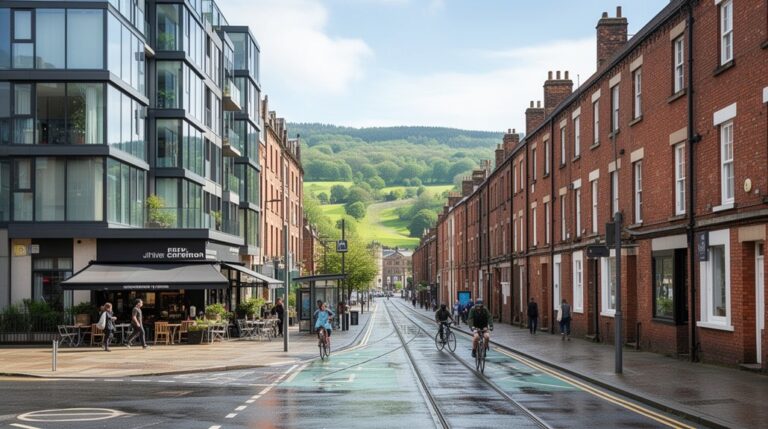

If you’re tracking the 2026 housing picture, you can’t ignore how the local tech cluster is reshaping demand. Higher salaries and hybrid work are pushing buyers toward walkable centres and fast rail links, while renters compete for quality stock near offices, co-working space, and innovation parks. Developers are responding, but supply rarely keeps pace with hiring. The question is where the next price pressure shows up—and how you position yourself before it does.
Key Takeaways
- Tech anchors and startups along the M4 corridor attract skilled workers, increasing buyer competition and rental demand across Reading.
- Fast rail links to London and Elizabeth line access expand job catchments, raising premiums for homes near Reading Station and business parks.
- Higher tech salaries lift mortgage affordability, accelerating sales and price growth for well-specified, energy-efficient homes.
- Professional tenants fuel firm rents and quick letting cycles, especially for modern one- and two-bedroom flats near rail links.
- Regeneration and new-build pipelines concentrate in the town centre and brownfield sites, tightening supply and supporting sustained demand.
What’s Happening in the Reading Property Market in 2026?

While Reading’s tech scene keeps pulling in new jobs and investment, the 2026 property market is behaving like a supply‑constrained growth hub. Demand remains strongest for well-located, energy-efficient homes and rental stock near the station and key business parks. Price growth has normalised from earlier peaks, and rents are staying firm as professional tenant demand outpaces new delivery—so if you’re buying or letting, you’ll get the best outcome by prioritising EPC ratings, commute times, and realistic yield assumptions over “headline” asking prices.
You’ll see historical property trends pointing to faster cycles since 2020, but tighter lending and build costs keep listings thin. Track local economic impacts through vacancy rates, letting times, and employer expansions. To fit in with informed buyers, benchmark against sold prices, not portals.
Why Is Tech Growth Accelerating in Reading?
Because the Thames Valley now offers a rare mix of big‑city connectivity and lower operating costs, Reading’s tech growth is accelerating: you’ve got sub‑25‑minute rail links into London Paddington, direct access to the M4 “Silicon Corridor,” and a deepening cluster of scale-ups, data centres, and enterprise tech employers around the station and business parks like Thames Valley Park and Green Park.
That proximity lets you hire from London’s talent pool while keeping office and lab space more cost-efficient, which improves runway and attracts funding. You’ll also plug into Innovation hubs and startup ecosystems that share mentors, meetups, and procurement routes, reducing time-to-market.
If you want in, track planning around transit nodes, demand for flexible space, and broadband resilience—those fundamentals signal where growth will stick fastest.
Which Tech Employers Are Expanding in Reading?
As you map where Reading’s tech-driven property demand will concentrate next, follow the employers that are actively hiring, renewing leases, and building out capacity across the M4 corridor. Start with established anchors: Microsoft’s Thames Valley Park presence, Huawei’s UK operations, and Oracle’s long-running campus footprint that keeps vendor ecosystems close.
Track consultancies and integrators scaling delivery teams, because they take flexible Grade A space near Reading Station.
You’ll also see Tech startup trends clustering around Thames Valley Science Park, with fintech, cybersecurity, and SaaS teams choosing serviced offices before committing to longer leases.
Watch digital infrastructure investment too: data-centre operators, cloud resellers, and network firms expanding capacity tend to pull in suppliers and contractors.
Join local meetups and university spin-out networks to spot the next occupiers early.
How Are Tech Wages Changing Reading Housing Demand?

When tech salaries rise faster than local averages, they quickly reset what “affordable” means in Reading’s housing market. You’ll see buyers qualify for larger loans, compressing time on market for well-specified homes and lifting competition for rentals near transport and office hubs.
As firms scale digital innovation teams, talent attraction packages often include relocation support, signing bonuses, and flexible working, which expands your buyer pool beyond Berkshire.
If you’re buying, benchmark your budget against tech-led income bands, not historic local medians, and get mortgage approval early to move at offer speed.
If you’re letting, prioritise high-speed connectivity, workspace-friendly layouts, and professional management—those features match how new arrivals live and help you retain tenants longer.
Which Reading Neighbourhoods Are Rising Fastest for Prices?
To spot where prices are rising fastest in Reading, you’ll want to track recent sold-price and rental-growth data along the tech corridor first, where employer density typically tightens stock quickest.
Next, benchmark Thames-side neighbourhoods for value surges by comparing £/sq ft shifts and days-on-market trends against the town average.
Finally, map commuter-belt growth areas using rail access times and new-build pipelines so you can prioritise postcodes with the strongest demand-to-supply imbalance.
Tech Corridor Price Hotspots
Although Reading’s tech expansion lifts the whole market, price growth concentrates along a few “corridor” neighbourhoods where you’ve got the strongest mix of station access, office-to-lab space, and consistent buyer demand.
Watch the Western Corridor around Reading Station, Green Park, and the A33: new campus delivery and rail frequency keep bids tight and days-on-market low.
Target East Reading/Cemetery Junction for ripple growth as buyers trade up for faster links and larger stock.
Track Winnersh Triangle and the M4 junctions for employer clusters, higher-income inflows, and resilient rental demand.
To stay aligned with real estate trends and urban development, you’ll want to compare EPC ratings, lease lengths, and pipeline planning apps before you offer.
You’ll feel part of a growing, commuter-smart community.
Thames-Side Value Surges
As Reading’s riverside regeneration accelerates, you’ll see some of the fastest price momentum clustering along the Thames where buyers pay a premium for walkable amenities, flood-mitigation upgrades, and reliable access into the town centre.
Focus your search on Caversham and Caversham Heights for family stock with tight supply, then track Thames side developments near Reading Bridge and Christchurch Meadows where new-builds reset local price benchmarks.
In Lower Caversham and along the riverside fringe by Thames Valley Park, you’ll often find the strongest bid-ask competition for modern flats with parking and terraces.
To belong in these micro-markets, move fast: line up finance, prioritise EPC ratings, and demand evidence of flood-risk works and service-charge caps.
Your Riverfront investment wins when you buy scarcity plus lifestyle.
Commuter Belt Growth Areas
Because cross-London commuting now drives a bigger share of Reading demand, the fastest price growth clusters around stations and high-frequency bus corridors where you can reach Paddington quickly and still access local employers in Thames Valley Park and Green Park.
Watch winners like Caversham Heights and Emmer Green for family stock, while Tilehurst (near the Elizabeth Line connections) and West Reading around Reading West station attract value-led buyers.
In the centre, areas by Reading station, Katesgrove, and the Oxford Road regeneration zone benefit from urban expansion and rental demand from tech hires.
If you want to feel part of the commuter culture, prioritise walk-to-station streets, school catchments, and planned cycle links.
Track asking-price reductions and time-on-market to spot momentum.
What’s Driving Reading Rents Up (and Where)?
You’re seeing Reading rents climb because tech hiring is expanding the pool of higher-income renters who prioritise fast rail links, walkable centres, and Grade A office access.
Track demand indicators—new tech role postings, commuter-time premiums, and limited new-build completions—to spot where landlords can still price to market without overreaching.
Right now, the tightest pressure typically shows up in high-growth pockets near the station and core amenities, so you’ll want to benchmark asking rents street-by-street before you set your figure.
Tech Talent Rental Demand
Why are Reading rents climbing so quickly? You’re seeing tech hiring convert straight into rental pressure. As employers scale cloud, fintech, virtual reality, and data analytics teams, they pull in graduates and mid-level specialists who rent first, buy later. That keeps occupancy tight and reduces incentives like free weeks.
If you’re renting, expect faster bidding cycles and higher renewal uplifts, especially for modern one- and two-beds near main rail links and business parks. To stay competitive, you’ll need a complete application pack: proof of income, references, and a flexible move date.
If you’re a landlord, you can lift yields by offering turnkey extras—good broadband, a desk setup, and clear maintenance SLAs—so tenants feel they belong.
High-Growth Neighbourhood Hotspots
While citywide averages tell you rents are rising, the sharpest uplifts cluster in a few high-growth neighbourhoods where rail access, Grade A office space, and new-build stock collide. Track Reading Station and Thames Valley Park corridors first: shorter commutes and corporate demand push bidding on one- and two-beds.
In Caversham, low turnover plus strong schools keeps voids tight, so landlords price confidently. Around Green Park and select Kennet riverside schemes, modern blocks with concierge, EPC A/B ratings, and amenities outperform older stock.
You’ll also see premiums where the council’s smart city upgrades improve connectivity and where green infrastructure—cycle links, pocket parks, flood resilience—raises liveability.
If you want to feel part of the action, target walkable micro-markets near hubs, then budget for competition.
Where Is New-Build and Regeneration Adding Supply?
As Reading’s tech-led job growth tightens vacancy rates, new-build and regeneration schemes are the main levers adding stock—concentrated around the Elizabeth line corridor, the town centre, and major brownfield sites.
You’ll see the biggest pipeline in centre-fringe zones where planners can push housing density without sacrificing amenity, using mid-rise blocks and mixed-use podiums to keep streets active.
Track council committee papers and developer phasing updates: schemes typically release units in 12–24 month tranches, so you can time searches to the highest-choice windows.
Prioritise plots tied to urban renewal funding, because delivery risk drops when remediation and public-realm works are budgeted.
If you want to feel part of a growing community, shortlist masterplanned sites with schools, shared greens, and resident facilities that stitch newcomers into established neighbourhoods quickly.
Which Transport Upgrades Are Boosting Reading Property Demand?

Because transport time savings translate directly into higher buyer and tenant willingness to pay, Reading’s biggest demand uplift tracks the upgrades that shrink commutes and widen job catchments—most notably Elizabeth line connectivity from Reading Station, continued capacity and reliability work on Great Western Main Line services, and targeted road and active-travel schemes that reduce “last-mile” friction into the town centre and business parks.
You’ll see demand concentrate where Public transport frequency, interchange quality, and walkability stack up. Faster, more dependable peak paths to Paddington and Canary Wharf make Reading feel “inside” London’s labour market, while incremental timetable resilience supports hybrid workers and firms that need predictable arrivals.
Pair that with bus priority, better cycling links, and junction tweaks, and you reduce door-to-door time—often the metric that moves pricing fastest.
What Should Buyers, Renters, and Investors Do: and What Risks Remain?
If you treat Reading’s tech-led momentum as an investable trend rather than a headline, you’ll act on three levers—location, specification, and time horizon—then stress-test the numbers for today’s rates.
As a buyer, focus on walkable hubs near stations and business parks, and prioritise energy ratings to protect resale and bills.
As a renter, lock value by comparing rent-to-income, EPC, and commute costs, not just headline rent.
As an investor, target proven micro-markets, model voids, and underwrite at higher mortgage rates; you’ll need disciplined Investment strategies.
Risks remain: rate volatility, supply spikes from new-build completions, and tenant affordability.
Track absorption, wage growth, and days-on-market to gauge Market stability, and stay aligned with local planning and employer pipelines.
Conclusion
Reading’s property market in 2026 feels like a live circuit: as tech expands, demand lights up around stations, business parks, and regeneration zones. You’ll see higher salaries compress decision times and push prices and rents upward, especially for energy-efficient homes and build-to-rent schemes. If you’re buying or investing, track employer hiring, vacancy rates, and pipeline completions—not headlines. If you’re renting, lock terms early near transport. Still, rate shocks and oversupply can trip the fuse.
About the Author