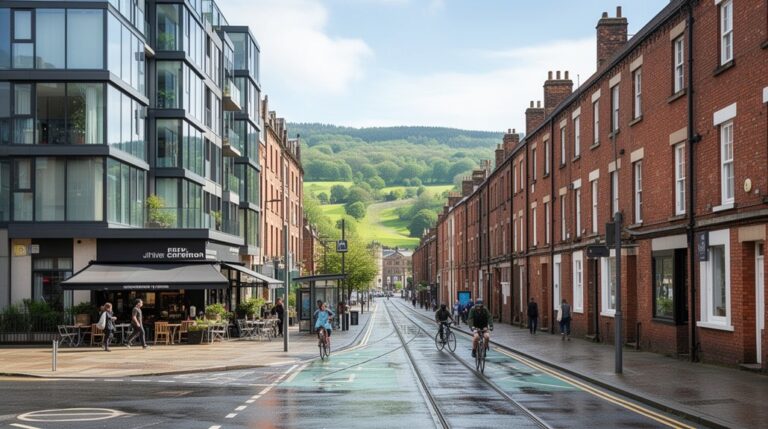

Like a smaller London with a greener spine, Bristol pulls you in with walkable districts, strong cycling links, and quick access to the M4/M5. You’ll find real employment depth in aerospace, tech, and the public sector, but you’ll also face rising rents, tight housing stock, and childcare costs that can reshape your budget fast. If you’re weighing commute time, school catchments, and value per postcode, the numbers start to tell a more complicated story…
Key Takeaways
- Compact, walkable layout keeps jobs, schools, and leisure close, reducing car dependence and making daily life easier.
- Diverse neighborhoods offer options from affordable, community-led areas to premium districts, with many commutes under 20 minutes.
- Strong job market in tech, aerospace, public sector, education, and healthcare provides solid salaries and career progression.
- Robust transport links—buses, local rail, cycle routes, M4/M5, and an airport—support easy commuting and weekend travel.
- Family-friendly amenities like good schools, parks, playgrounds, and a lively cultural scene improve quality of life for all ages.
Moving to Bristol: Who It Suits (and Who It Won’t)

If you’re weighing a move to Bristol, it helps to match your lifestyle and budget to the city’s realities: a strong professional market (especially in tech, creative, aerospace, and professional services), a younger-than-average population, and consistently high demand for housing that keeps prices and rents firm.
You’ll fit best if you want career optionality, walkable neighbourhoods, and a social calendar anchored by Cultural festivals and nightlife hotspots.
Families often choose Bristol for strong schools, green space, and short commutes into the centre, while still finding community in local clubs and parent networks.
You may struggle if you need quiet, car-first living, or expect a slow-paced market with abundant choice.
If you thrive on momentum and connection, Bristol rewards you.
Bristol Living Costs: Rent, House Prices, Bills, Basics
While Bristol’s salaries often outpace many UK regional cities, housing costs still set the pace for your budget: rents and sale prices stay elevated because demand from young professionals, students, and relocating families routinely outstrips supply.
Expect 1-bed rents to cluster around £1,100–£1,500 pcm, with hotspots like Clifton and Redland higher; further out, you’ll trade commute time for £100–£250 savings.
Typical sale prices sit above the UK average, so you’ll likely need a larger deposit buffer and tighter mortgage stress tests.
Budget £150–£250/month for energy, plus £30–£40 broadband and council tax that can top £150.
You’ll still feel plugged in: free Cultural events and walkable nightlife scenes keep social value high.
Bristol Jobs: Biggest Sectors, Hubs, and Salaries
Because Bristol sits at the crossroads of aerospace, tech, and public sector growth, you’ll find a job market that’s broader (and generally better paid) than most UK cities outside London.
Aerospace and advanced engineering cluster around Filton and the North Fringe; roles in systems, design, and project delivery often sit in the £40k–£65k band, with senior posts higher.
Tech and fintech concentrate near Temple Meads and the city centre, where software, data, and product salaries commonly run £45k–£75k.
Public sector, education, and healthcare anchor steadier hiring across major institutions, with mid-career pay often £35k–£55k.
You’ll plug in fast through meetups, Cultural festivals, and the Local cuisine scene—useful networking where newcomers feel like regulars quickly.
Best Places to Live in Bristol by Budget and Vibe

If you’re choosing where to live in Bristol, you’ll get the best value by matching your budget to the local price band and the vibe you actually use day-to-day.
You can target affordable areas with character for lower entry costs, pick mid-range neighborhoods near key transit links to cut commute time, or pay a premium for greener, quieter streets and larger homes.
Next, you’ll see which postcodes tend to fit each tier so you can shortlist options fast and negotiate with real comps in mind.
Affordable Areas With Character
Even though central Bristol prices keep climbing, you can still find neighbourhoods with real personality that won’t push your budget to the limit. In Easton and St George, average rents often sit 10–20% below central postcodes, yet you’re surrounded by independent shops and tight-knit streets. You’ll feel at home quickly because neighbours actually chat and local groups organise meetups.
Look at Bedminster Down and parts of Knowle if you want more space per pound and steady demand that protects resale value. Track listings for “needs updating” terraces; light cosmetic work can trim your monthly costs versus turnkey homes.
You won’t just save money—you’ll join a scene built around Local cuisine, cultural festivals, and everyday pride.
Mid-Range Neighborhoods Near Transit
While prime central postcodes often force a trade-off between commute time and monthly costs, Bristol’s mid-range neighbourhoods near strong transit links let you keep both under control. Target areas along Temple Meads corridors, the Severn Beach line, and MetroBus routes, where time-to-centre can stay under 20 minutes and rents typically sit below the Harbourside premium.
You’ll feel plugged in without paying peak-city rates.
Choose places like St George, Bedminster, or Southville edges, where walkable high streets and frequent buses reduce car costs. You can track value by comparing rent per square foot and sold-price growth near stations.
Weeknights, you’ll blend in fast: Urban art on side streets, local cuisine in independent cafés, and neighbours who actually say hello.
Premium Spots With Green Space
Where do you go in Bristol when you want top-tier schools, a quick commute, and real green space without feeling cut off from the city? You target premium enclaves like Clifton, Redland, and Sneyd Park, where price tags track consistently above city averages and demand stays resilient even in slower markets.
You’ll pay for catchments, character homes, and walkable high streets, but you also buy time: faster links to the centre and Temple Meads, plus easy access to green spaces and urban parks.
Think The Downs for daily runs, Ashton Court for weekend cycling, and nearby playgrounds that help you plug into local parent networks. If you want belonging with upside, you choose streets near parks and reliable bus corridors.
Bristol for Families: Schools, Childcare, Parks, Safety
If you’re weighing Bristol for family life, you’ll want to map school options against admissions catchments and Ofsted ratings, because they can shift housing demand street by street.
You can also benchmark parks and play spaces by walk time and upkeep, then sanity-check day-to-day safety with local crime stats rather than anecdotes.
Finally, you’ll need to price childcare by age band and hours, since availability and weekly costs often decide which neighbourhoods actually work.
School Options And Admissions
How competitive are Bristol school places—and what should you do first? Start by checking your catchment and last year’s allocation distances, because oversubscribed primaries and secondaries can fill fast. You’ll need deadlines, proof of address, and ranked preferences ready for School admissions to work in your favour.
Next, narrow options with data: compare Ofsted grades, progress measures, and attendance. Then sanity-check with a visit to see culture and pastoral support. Bristol offers a mix of academies, maintained schools, and selective independent routes; your budget and commute will shape the shortlist.
If you’re relocating, align your move date with application windows and keep backup choices within realistic travel time. You’ll feel settled quicker when you choose for education quality and community fit.
Parks, Safety, And Childcare
Although school choice often drives the postcode search, day-to-day family life in Bristol comes down to three practical filters: green space within walking distance, safety on your usual routes, and childcare you can actually secure.
Check how quickly you can reach a park, then test it at commute times; footfall and lighting matter as much as playground quality.
For safety, map school runs and evening errands, especially near corridors with urban nightlife; you want busy, well-lit streets without constant late-night noise.
Compare neighbourhood crime dashboards and talk to other parents at cultural festivals to get street-level reality.
Childcare is the tightest variable, so ring nurseries early, ask about waiting lists, hours, and funded-place availability, and budget for wraparound care.
When these align, you’ll feel rooted fast.
Getting Around Bristol and Best Weekend Getaways
Because Bristol packs major employment hubs, schools, and leisure districts into a compact footprint, you can manage most daily trips without a car—then pivot to quick rail, road, or airport links for weekends away.
Public transport covers key corridors with frequent buses and local rail from Temple Meads, while cycling infrastructure like segregated paths and the Bristol–Bath Railway Path helps you commute reliably and feel part of the city’s flow.
If you do drive, the M4/M5 puts you in the middle of the South West’s jobs-and-leisure map.
For getaways, you can reach Bath in ~15 minutes by train, Cardiff in ~50, and London in ~1h45.
Bristol Airport opens easy short breaks to Europe, so your plans stay flexible.
Conclusion
If you’re weighing Bristol, you’ll find the numbers back it up: strong hiring in aerospace, tech, and public services, plus walkable neighbourhoods that cut commuting costs and time. You can match rent and house prices to clear budget bands, then choose a vibe—urban buzz or family-leaning suburbs. With solid schools, parks, and improving cycling and transit links, you’re not buying hype; you’re getting real value—no strings attached.
About the Author