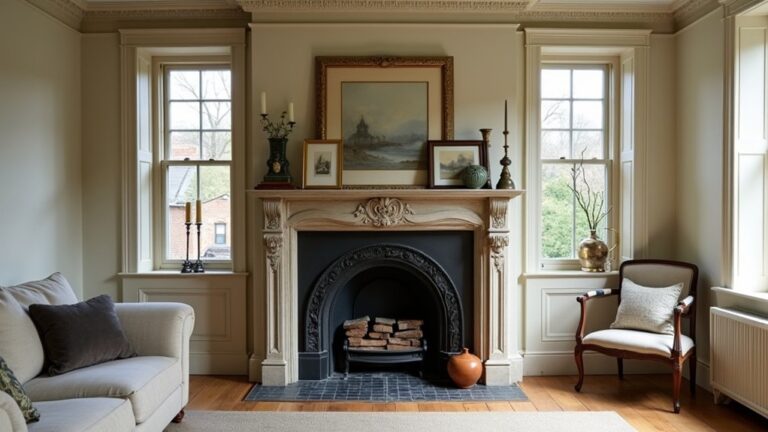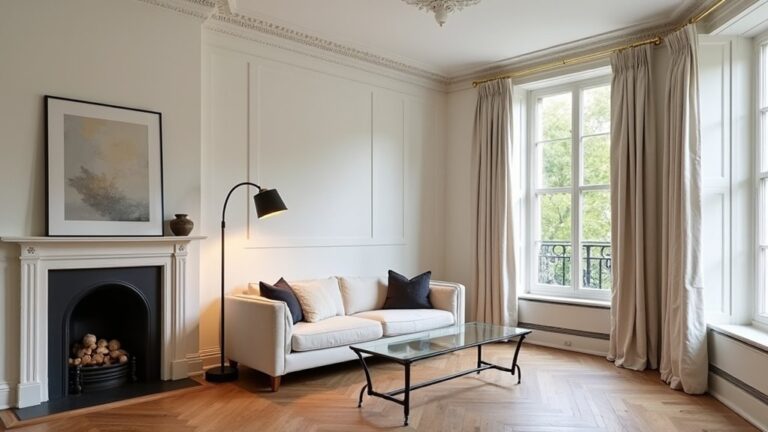

Your Victorian bedroom can feel like a foggy morning lifting, slowly revealing its best features. You keep the ceiling rose, cornicing, and chimney breast, then soften everything else with warm off-white walls and oatmeal-toned woodwork that won’t fight the period details. You add linen, wool, and a few sage or blush accents to warm it up without spending a fortune. But the real shift comes from one small choice that changes the whole room…
Key Takeaways
- Restored original Victorian joinery, floorboards, sash windows, and cast-iron fireplace to keep period character while improving condition and warmth.
- Chose muted heritage wall colours—soft stone, putty, and chalky off-whites—testing large patches to suit room light and orientation.
- Used matte or durable-matte on walls and satin/eggshell on trims to flatter imperfect plaster and uneven woodwork without a high-gloss shine.
- Layered warm neutrals with tactile textures—linen curtains, wool rugs, and mid-tone antique wood—to create a calm backdrop for ornate details.
- Added greyed-off accents like sage and dusty rose, plus opal glass or brass lighting with LED filaments, keeping decor cohesive and uncluttered.
Identify Your Victorian Bedroom Features to Keep

Before you strip anything back, take stock of the original Victorian elements that are already doing the heavy lifting—because keeping and restoring them often costs less than replacing them.
Start with joinery: check skirting, picture rails, architraves, and any ceiling rose for cracks you can fill and recoat rather than rip out.
Inspect floorboards under the carpet; a sand-and-seal often beats new laminate on price and character.
Keep fireplaces and cast-iron inserts, even if they’re capped—clean, blacken, and add a simple grate.
For sash windows, overhaul cords and draught-proofing, then plan Victorian window treatments like lined curtains or shutters.
Finally, prioritise Victorian furniture restoration: re-glue joints, strip only where needed, and swap knobs for period-appropriate brass.
Pick Victorian Bedroom Wall Colours (Soft Heritage Tones)
Start with muted heritage neutrals—think soft stone, putty, and pale mushroom—to suit Victorian plasterwork without paying for bold colour corrections later.
Balance warm and cool undertones so your wood trim and period features don’t look brassy or washed out in typical UK daylight.
Before you commit, paint large test patches on different walls and check them morning to night, because north- and south-facing rooms can shift the same shade dramatically.
Choose Muted Heritage Neutrals
If you want a Victorian bedroom that feels authentic but not heavy, choose muted heritage neutrals that echo period plaster and stone while keeping the room light. Aim for chalky off-whites, putty, linen, oatmeal, or a gentle greige; they flatter ceiling roses and picture rails without shouting over them.
In north-facing UK rooms, pick a slightly creamy base so the space doesn’t read stark. Use tester pots first, and paint big A3 swatches to check morning and lamplight.
To stretch your budget, keep walls simple and bring depth through muted colour palettes in accessories. Add heritage inspired textiles—herringbone throws, ticking stripes, and washed cotton—so the scheme feels layered, not flat.
Finish with matte paint to soften imperfections.
Balance Warm And Cool
Although Victorian bedrooms suit rich colour, you’ll keep yours feeling calm and current by balancing warm and cool undertones on the walls. Start with a soft, warm base—think putty, biscuit, or muted clay—then add a cooler counterpoint like greyed sage or a chalky blue-green on a single wall or above dado height.
This stops south-facing rooms feeling overly yellow and keeps north light from turning flat. Tie the mix to your Victorian window treatments: creamy walls flatter linen and lace, while cooler notes sharpen the look of darker curtains without going stark.
For antique furniture preservation, avoid high-contrast whites that exaggerate scuffs; mid-tones disguise knocks and suit touch-up wax. Stick to standard ranges to save cash.
Test Paint In Light
Before you commit to a soft heritage tone, test it in the exact light your Victorian bedroom gets across the day. North-facing rooms in the UK can mute colour, while south-facing sun can turn “calm” green surprisingly yellow. Buy small tester pots and paint A4-ish squares on every wall, including behind the headboard, so you don’t waste litres of premium matt.
- Check morning, midday, and evening: LEDs, bedside lamps, and streetlight spill all shift undertones.
- Compare against trims and fabrics: hold skirting white, curtains, and your duvet to the patch.
- Stand back and explore color psychology: does the shade feel restful, or does it press in?
You’ll test paint in light and avoid costly repaints.
Choose the Right Paint Finish for Period Walls
Since Victorian plaster and timber move with age, you’ll get a better, longer-lasting result by matching the paint finish to the wall’s condition rather than defaulting to “modern” choices.
If your walls show hairline cracks or a bit of waviness, pick matt or soft-sheen emulsion; it hides defects and suits rooms with Vintage patterns and Antique fabrics without shouting.
For sound, well-skimmed plaster, you can step up to durable matt (often scrubbable) so fingerprints lift off with a damp microfibre cloth.
On original woodwork, avoid high-gloss if the joinery’s uneven; satin or eggshell levels better and keeps costs down because it needs less prep.
Use water-based trims to cut fumes and drying time, then spend saved pounds on filler and decent caulk.
Layer Neutrals to Calm a Victorian Bedroom

When your Victorian bedroom already has busy cornicing, tall skirtings, and a strong fireplace shape, you can calm it fast by layering neutrals in different depths rather than reaching for one flat “magnolia” and hoping for the best. Build a quiet backdrop that still respects period detail, and you’ll make the room feel larger without erasing character.
- Start with warm off-white on walls, then add a slightly deeper oatmeal on woodwork or alcoves; tester pots from Dulux or Farrow & Ball’s sample pots keep costs down.
- Bring in Vintage textiles: a stone linen throw, ecru curtains, and a wool rug with subtle flecking to soften floorboards.
- Anchor with Antique furnishings in mid-tones—oak bedside tables or a walnut chair—then repeat those shades in lampshades and picture mounts.
Add Muted Greens and Blush Accents for Warmth
Layered neutrals give your Victorian bedroom that calm, roomy backdrop, but it can still read a bit flat without a gentle hit of colour.
Bring in Muted green accents first: a sage linen cushion, mossy wool throw, or a painted picture rail in a heritage green tester pot, so you’re not committing to a whole tin.
Then add blush decor ideas to warm the light—think dusty-rose lampshade, faded floral print, or a pale pink bedspread folded at the foot.
Keep tones greyed-off rather than sugary so they suit period details.
Shop budget-friendly at Dunelm, IKEA, or Vinted, and use remnants from a local fabric shop for ties and trims.
Repeat each colour twice for cohesion.
Add Modern Contrast: Black Accents, Clean Lines
To stop all those heritage tones from drifting into “too sweet,” add a few crisp black touches that sharpen the room without fighting the period features. Keep them slim and repeated, so they read intentional rather than gloomy, especially in a north-facing Victorian box room.
- Swap in a black metal bedside lamp or picture light (IKEA, Dunelm, Habitat) to outline the wall colour and boost task lighting.
- Anchor Mid century furniture with a black-framed mirror, low rail, or hairpin-leg stool; the clean lines make curves and coving look fresher.
- Layer contemporary textiles—ecru-and-black cushion covers, a graphic throw, or a striped wool runner—to tie accents together without repainting or replacing big pieces.
Stick to matte or satin finishes; they hide scuffs and feel calmer.
Update Victorian Bedroom Woodwork (Paint or Restore)

Where do you start with Victorian woodwork—strip it back or paint it smart? First, check what you’ve got: thick gloss, cracked filler, or decent pine. If profiles are crisp and timber’s sound, Victorian woodwork restoration can pay off. You’ll spend more time than money: a heat gun, scraper, and masks, plus a weekend of careful sanding.
Fill dents with a stainable wood filler if you’re keeping grain, or standard filler if you’re painting.
If the wood’s mismatched, badly chopped, or full of knots, paint gives you control. Choose durable water-based satinwood (low-VOC, quick dry) and prime properly to stop tannin bleed.
For paint vs. stain options, test patches: stain shows defects; paint hides them. Budget-wise, paint’s cheaper upfront, restoration lasts longer.
Style a Victorian Bedroom: Art, Lighting, Decor
Now that your woodwork’s sorted, you can tie the room together with heritage art pairings—think sepia family photos, botanical prints, or a single gilt-framed landscape sourced from a local charity shop or fair.
Keep the look authentic by matching frame finishes to your heritage tones and hanging pieces in a tidy line over the bed or chimney breast.
Then layer period lighting with a shaded ceiling pendant, a pair of bedside lamps, and a warm wall sconce on a dimmer so you’ll get softness without spending a fortune on rewiring.
Heritage Art Pairings
Although a Victorian bedroom can handle plenty of pattern and polish, your art should do the heavy lifting for “heritage” without making the room feel fussy. Choose pieces that echo your soft heritage tones and nod to the era, but keep the edit tight so the architecture still breathes.
- Portrait meets textile: Hang a small Victorian-style portrait above a chair draped in Vintage textiles or Heritage textiles. The repeat feels intentional, not themed.
- Botanical prints in thrifted frames: Pick muted florals (sage, clay, ink) and mount them in mismatched gilt frames from Oxfam or a car-boot. Unify them with one mount colour.
- Map or etching vignette: Pair a local railway map or architectural etching with a single ceramic jug on the dresser for grounded UK character.
Layered Period Lighting
If you layer your lighting the way Victorians did—overhead glow, task light, and a softer low-level wash—you’ll get that period warmth without turning the room into a museum.
Start with a ceiling pendant in opal glass or a small brass chandelier; rewired period lighting fixtures from UK salvage yards can cost less than new repros, especially if you fit LED filament bulbs (2700K).
Add bedside task lighting with vintage lamps—think ceramic bases or turned-wood standards—shaded in linen to soften the pool of light.
Finally, tuck a plug-in picture light above heritage prints, or use a slim uplighter behind the headboard to lift coving and cornices.
Put everything on dimmers and smart plugs so you’ll switch scenes cheaply and easily.
Conclusion
You don’t need to fight your Victorian features; you need to frame them. Keep the cornicing and alcoves, soften walls with warm off-white, and settle woodwork into oatmeal tones. Layer linen, wool and flecked rugs so the room feels calm, not flat. Add sage and blush in small hits—cushions, prints, a throw—then sharpen it with a touch of black. Paint smart, reuse what you’ve got, and let the period shine.
About the Author