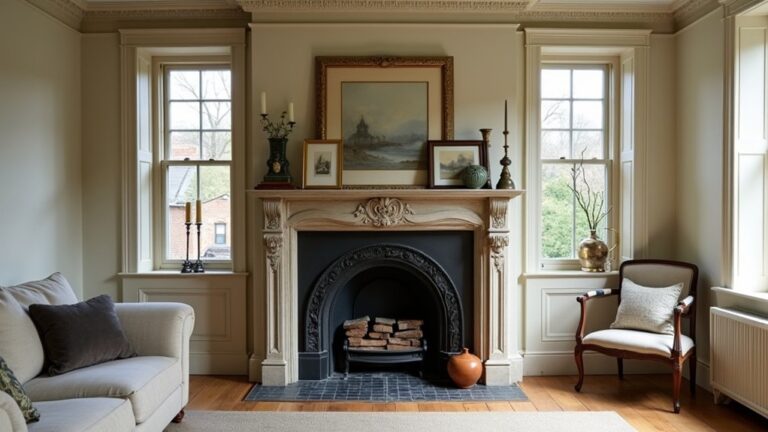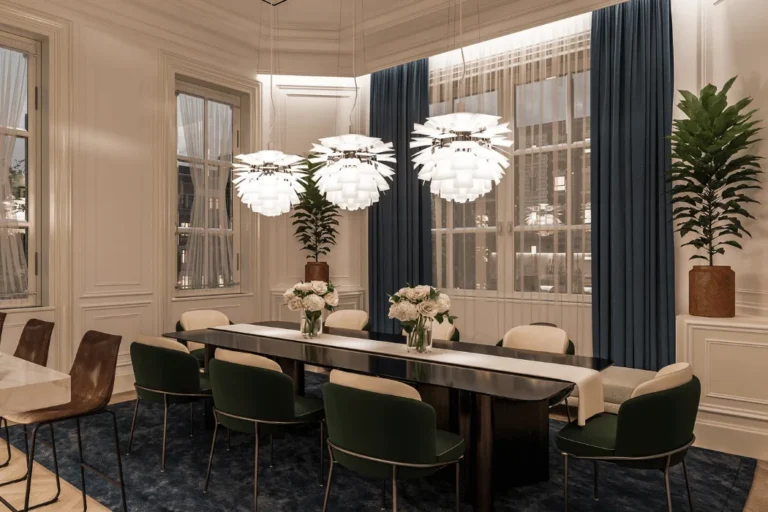
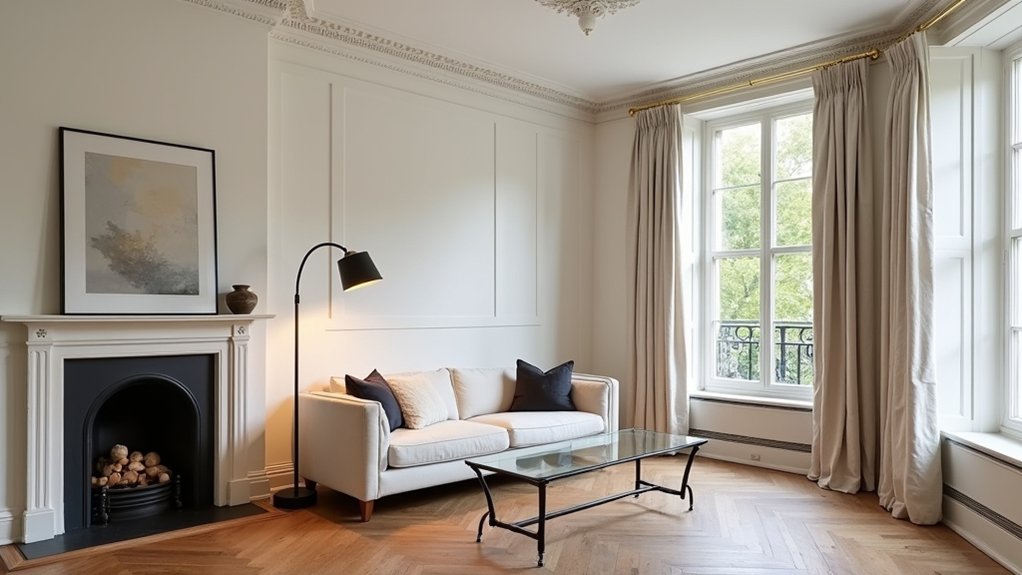
You’ll start by auditing what’s genuinely worth saving: cornices, fireplaces, sash windows, and original joinery, noting condition, rarity, and how each feature shapes the room. Then you’ll use modern paint in calm, layered tones to frame those details, and add warm, discreet lighting that grazes plasterwork rather than shouting over it. With clean‑lined furniture and era‑appropriate hardware, the balance can feel effortless—but only if you make a few key decisions first…
Key Takeaways
- Audit each room’s original features, photograph details, measure, and note damage or poor replacements to set conservation priorities.
- Stabilize and repair key architectural elements first, focusing on features that anchor sightlines, symmetry, and focal points.
- Use modern paint strategically: matte/eggshell finishes, layered neutrals, and selective accents on chimney breasts or alcoves to frame details.
- Layer warm, dimmable lighting with wall washers, picture lights, and discreet uplights to highlight cornices, fireplaces, and joinery.
- Pair period features with contemporary furniture using clean silhouettes, restrained finishes, and careful clearances to preserve circulation and feature legibility.
Audit Your Period Features (Condition, Rarity, Impact)
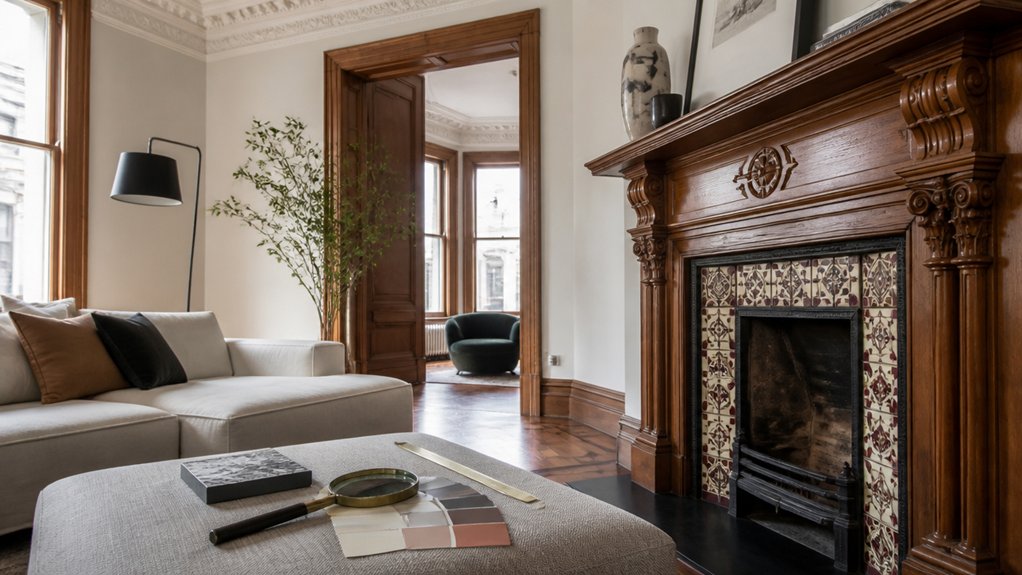
Before you choose any contemporary pieces, take stock of what your home already has by auditing each period feature for condition, rarity, and visual impact. Walk room by room and list originals: cornices, fireplaces, joinery, floorboards, stained glass, hardware. Photograph details, note dimensions, and flag previous repairs, cracks, rot, loose plaster, missing sections, or inappropriate replacements.
Next, rate rarity and Historical significance: is it original to the house, a later but valuable layer, or a common reproduction? Check how strongly each element anchors the space—sightlines, symmetry, and focal points.
Prioritise stabilising and conserving what carries the most weight for Architectural integrity. Finally, decide what must stay untouched, what can be repaired, and what can be gently adapted without loss.
Use Modern Paint Colors to Frame Period Features
Create Color contrast with carefully placed depth: a charcoal alcove behind a fireplace, a muted green within panelling, or a soft off‑black on window reveals to sharpen sash lines.
Keep sheen heritage-friendly—matte or eggshell on plaster, satin on woodwork—so imperfections don’t glare.
Use accent walls only where they reinforce architecture, like the chimney breast or inglenook, not random corners.
Test samples in daylight and lamplight, and mask mouldings with low-tack tape to avoid damaging edges.
Choose Modern Lighting to Highlight Period Features
Where do your period details disappear once the sun drops—into a flat pool of ceiling light, or into shadow? You can make cornices, ceiling roses, panelling, and plasterwork read clearly by layering light instead of relying on one central pendant. Start with Contemporary lighting that’s dimmable, so you control mood without bleaching patina.
Choose Modern fixtures with warm LEDs (around 2700K) to flatter aged timber and lime plaster. Use wall washers or slim picture lights to skim texture across mouldings and fireplaces. Add discreet uplights on top of bookcases to lift ceiling lines, and place task lamps to protect reading corners.
Keep wiring minimal, reuse existing routes, and pick finishes—aged brass, blackened steel—that respect your home’s era.
Pair Period Features With Clean-Lined Modern Furniture
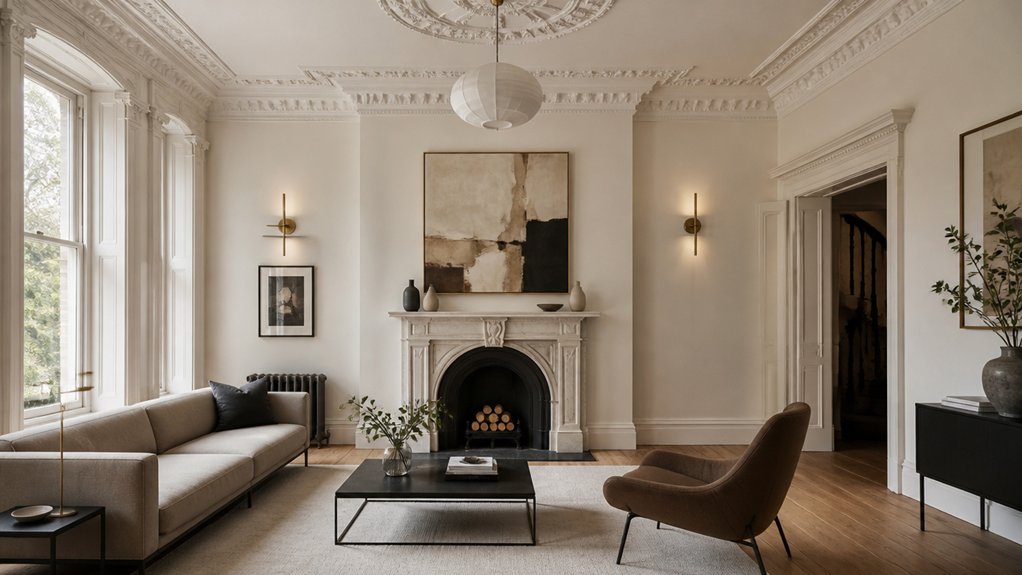
Once you’ve used layered lighting to pick out cornices, ceiling roses, and panelling after dark, the next step is choosing furniture that doesn’t compete with them. Aim for clean silhouettes: slim-armed sofas, straight-leg tables, and low-profile cabinetry that sits beneath sightlines to Decorative moldings.
Keep heights deliberate—tall bookcases can crowd chimney breasts, while modular pieces let you stop short of architraves and dado rails.
Use restraint with finishes. Matte timber, plain upholstery, and quiet stone tops read contemporary without shouting. If you’re keeping Antique furniture, treat it as a single anchor piece, then surround it with modern forms that echo its proportions, not its ornament.
Measure clearances carefully so circulation stays generous and original features remain fully legible.
Add Period-Safe Upgrades (Hardware, Softs, Décor)
Although new hardware and soft furnishings seem like small swaps, they can either sharpen your period details or visually erode them, so choose upgrades that respect original proportions and materials.
Start with touchpoints: fit antique hardware where it’s missing, or select unlacquered brass, aged bronze, or iron that matches the era’s finish and scale. Keep backplates, escutcheons, and screw heads consistent, and avoid oversized modern levers on slender doors.
Then layer softs. Use vintage textiles or faithful reproductions—linen, wool, or block prints—hung high on discreet poles so windows keep their original height. Add rugs with muted palettes, and cushion trims that echo existing mouldings.
Finally, display décor in restrained groupings, leaving fireplaces, cornices, and joinery visually legible.
Conclusion
You’ve now got a clear, practical route to honouring cornices, fireplaces, and joinery while letting contemporary choices breathe. Keep evaluating what’s rare, repair before you replace, and use modern colour and warm, layered LEDs to frame—not flatten—original detail. Choose clean-lined furniture that sits back and lets proportions lead. Don’t forget period-safe hardware and textiles. Significantly, 60% of buyers pay more for preserved character—so your restraint isn’t just tasteful, it’s valuable.
About the Author