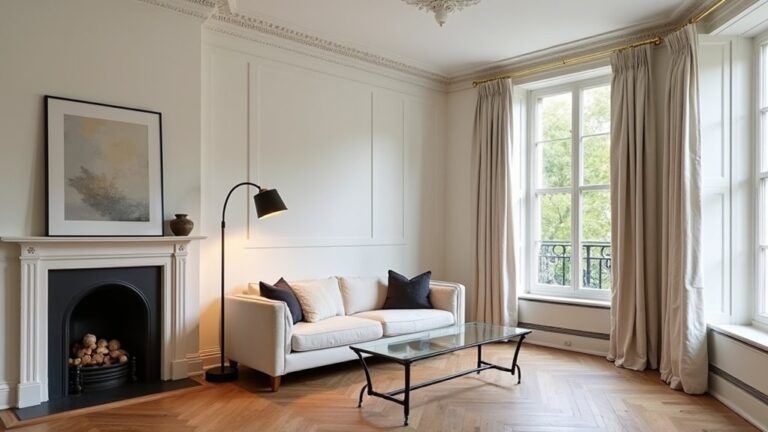
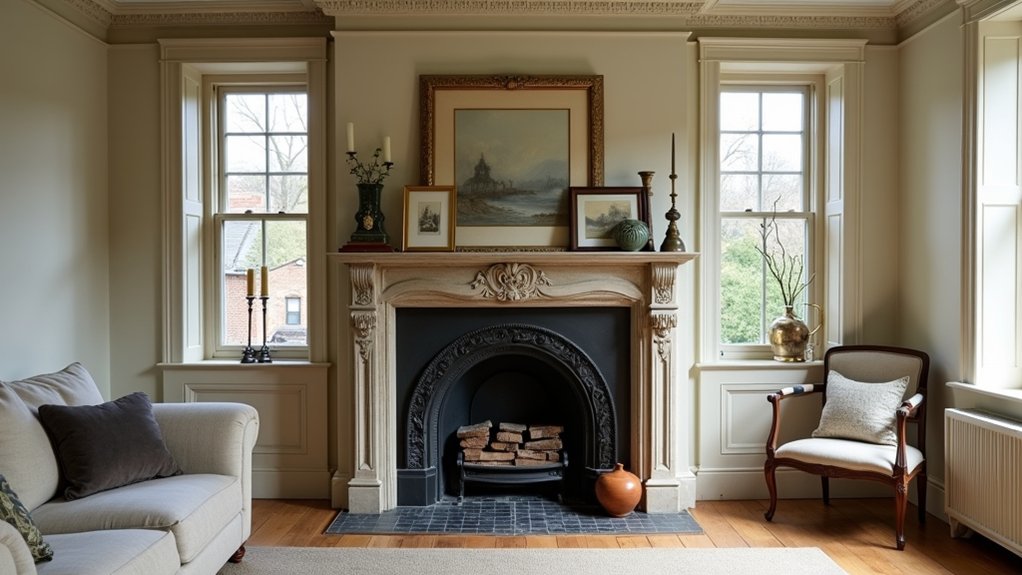
Like an Austen drawing room, your fireplace sets the tone before you’ve chosen a single cushion. Start by identifying what you’ve actually got: cast iron insert, tiled cheeks, carved stone, or a timber surround, and note any original vents, corbels, and soot staining. Then you can choose colours and finishes that sit well with those materials and arrange seating to frame the hearth, not fight it. The next step is where most rooms go wrong…
Key Takeaways
- Measure, inspect, and photograph original fireplace details, then check flue, lintel, and hearth integrity before decorating.
- Choose period-appropriate, breathable paints and finishes that complement marble, brick, slate, or cast iron without flattening texture.
- Arrange seating to face the fireplace, keep tall furniture off the chimney breast, and use balanced symmetry to preserve proportions.
- Define zones with rugs centered on the fireplace axis, matching tones to fireplace materials and keeping furniture legs partially on the rug.
- Layer warm, dimmable lighting to highlight mouldings and tiles, and keep accessories minimal to maintain airflow, visibility, and easy cleaning.
Identify Your Original Fireplace Type and Features
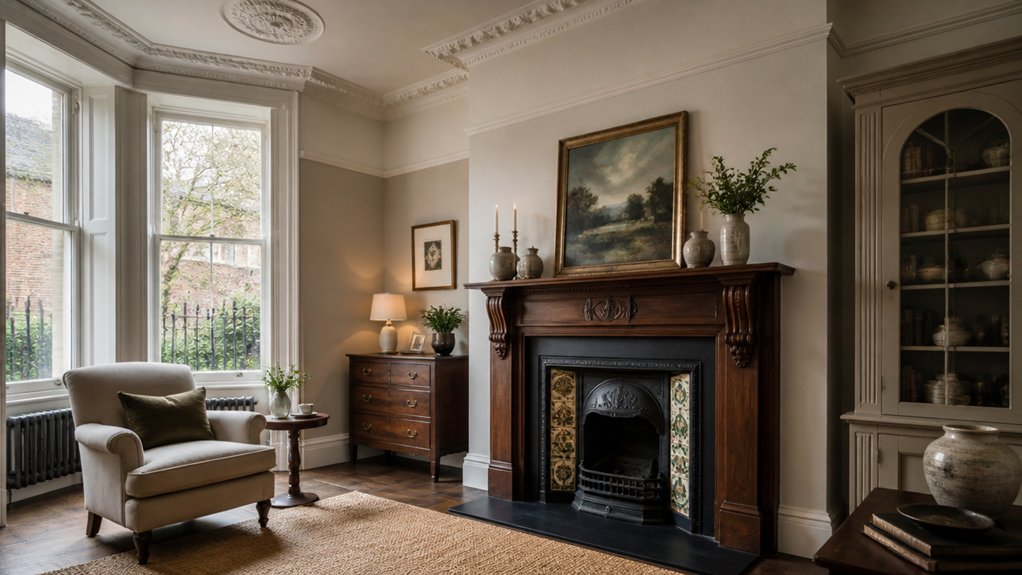
Before you pick a mantel style or paint color, take a close look at what you’ve actually got: is your original fireplace a Georgian brick surround with a deep, rectangular firebox, a Victorian cast-iron insert with tiled slips, an Arts and Crafts inglenook in oak and stone, or a mid-century minimalist opening with a slim hearth?
Measure the opening, hearth depth, and mantel height, then note materials and joinery. Check for rubbed brick, lime mortar, encaustic tiles, or machined stone edges that date it.
Look for maker’s marks on cast iron, original fenders, and repaired tile corners.
For fireplace maintenance, inspect the flue, lintel, and hearth cracks before you dress it up.
Photograph profiles and mouldings for period detail preservation and accurate sourcing later.
Pick Colours That Suit Original Fireplace Materials
Because the fireplace itself sets the temperature of your room palette, choose colours that echo its original materials rather than fighting them. Start by reading the undertone: marble often leans cool, brick and terracotta run warm, slate sits smoky, and cast iron skews blue‑black.
- Marble: Use chalky whites, dove greys, and muted celadon; avoid bright optic white that makes veining look dirty.
- Brick: Choose russet, buff, and tobacco; add soft cream to keep soot marks from shouting.
- Slate/stone: Pair with peat, lichen, and stormy blue; skip high‑gloss finishes that look modern.
- Cast iron: Try inky green, oxblood, or warm putty; keep metals aged.
These Fireplace colour palettes deliver period appropriate hues without overpainting character.
Arrange Furniture Around the Original Fireplace Focal Point
Treat the original fireplace as the room’s anchor, and you’ll keep clear sightlines by aiming your main seat toward the mantel and leaving a clean path across the hearth.
You can balance the composition with symmetrical seating—matching chairs or a pair of settees flanking the fire—so the period architecture reads as intentional, not accidental.
Then define conversation and traffic zones with rugs, sizing them so front legs sit on the pile and the fireplace remains the visual centre.
Establish Clear Sightlines
Although a fireplace naturally pulls the eye, you’ll get a room that feels properly composed only when the approach to it stays clear and the seating acknowledges it as the original focal point. Keep circulation generous, so you can walk in and read the surround, hearth, and mantel without dodging corners or cabriole legs.
In historical context, fireplaces once dictated the room’s order; today, renovation challenges like off‑center flues or boxed pipework can tempt you to crowd the chimney breast—don’t.
- Leave a direct path from the doorway to the hearth, ideally 90 cm.
- Keep tall furniture off the chimney breast’s edges.
- Float sofas to preserve the mantel’s view line.
- Angle occasional chairs so the grate stays visible, even when seated.
Balance Seating Symmetrically
When you balance the seating symmetrically, the original fireplace reads as the room’s anchor rather than a feature you’ve furnished around by accident. Start by centring your main sofa or settee on the chimney breast, then mirror armchairs at equal distance either side, angled slightly in. Keep the front legs aligned to a common line so the arrangement feels intentional, like a Victorian drawing room.
Match visual weight: if one side has a wingback, choose a chair of similar height and presence opposite. Place side tables in pairs, and use twin lamps or candlesticks to echo period symmetry.
If you prefer asymmetrical arrangements, keep symmetry in the largest pieces and vary only smaller accents. This steadies the whole composition.
Define Zones With Rugs
Once you’ve set that pleasing symmetry around the original fireplace, use rugs to mark where each group begins and ends so the hearth still holds the room together. Thoughtful rug placement keeps sightlines to the mantel clear, protects original boards, and makes zone definition feel intentional rather rather than improvised.
- Centre the main rug on the fireplace axis, letting front legs of sofas and chairs sit on it to “anchor” conversation.
- Float a smaller rug under a reading chair and lamp to one side, leaving a tidy border of floor to show off period trim.
- If you’ve a desk or games table, square it with a flatweave so chairs slide easily without scuffing.
- Keep rug edges parallel to skirting and hearth stones, and match tones to brick, tile, or cast iron for cohesion.
Use Lighting to Highlight Period Features
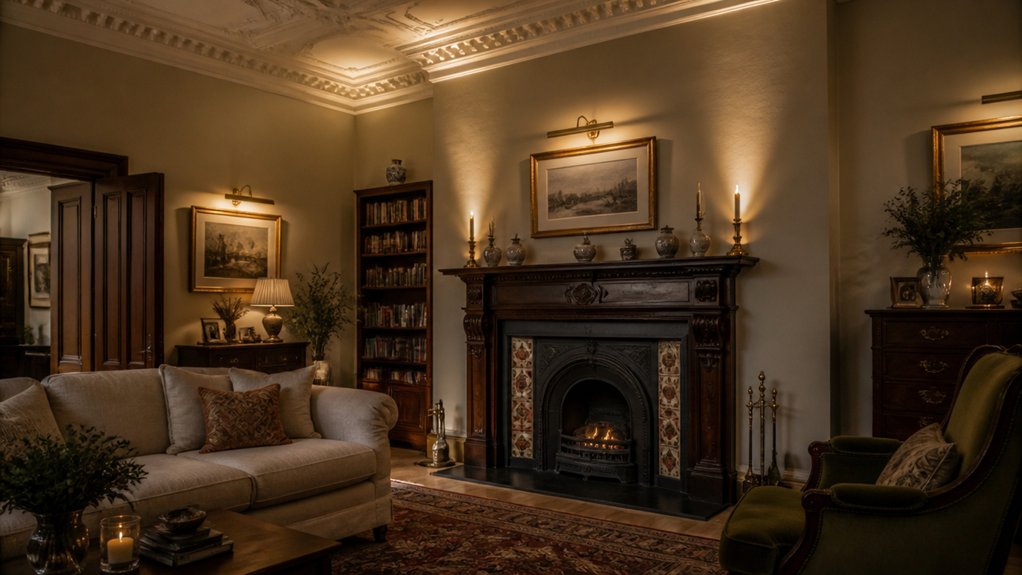
Layer your lighting so the fireplace’s original materials read clearly: a warm ambient glow, focused task light nearby, and a soft accent wash across the surround. You’ll bring out the texture in brick, tile, or carved timber and keep the mantel’s proportions true after dark.
Add period-appropriate accent fixtures—picture lights, shaded sconces, or a small table lamp—to pick out details like corbels, moulding, and hearth edging without glare.
Layered Lighting For Texture
Although a fireplace naturally commands attention, you’ll get far more depth and period authenticity by building a layered lighting plan that skims across its original details—moulded surrounds, carved corbels, tiled slips, and the mantel’s edge—rather than blasting the whole wall with a single overhead fitting.
Start with layered lighting to control shadow and create texture contrast between glossy tile, painted timber, and aged stone. Keep colour temperature warm so soot tones and patina read true.
- Set a soft ceiling wash on a dimmer to lift the room without flattening relief.
- Add low-level light near the hearth to graze tiles and reveal glaze ripples.
- Use bookcase or cornice bounce light to outline the chimney breast’s profile.
- Balance with a shaded table lamp nearby so faces stay flattering.
Accent Fixtures For Details
When you treat the fireplace as joinery rather than a single backdrop, small accent fixtures can pick out the period features that make it worth keeping. Position a picture light above the mantel shelf to skim the mouldings and sharpen the profile of corbels and dentils.
Add a pair of wall lights flanking the chimney breast, mounted at shoulder height, to graze brickwork or glazed tiles without glare. Choose Vintage fixtures in aged brass, bronzed steel, or opaline glass so the fittings read as sympathetic, not “new.”
Fit warm, low‑output LED lamps (around 2200–2700K) and put them on dimmers, so you can lift details quietly in the evening.
Hide a tiny uplight behind the fender to outline the arch and other Period accents.
Style an Original Fireplace Mantel (Without Clutter)
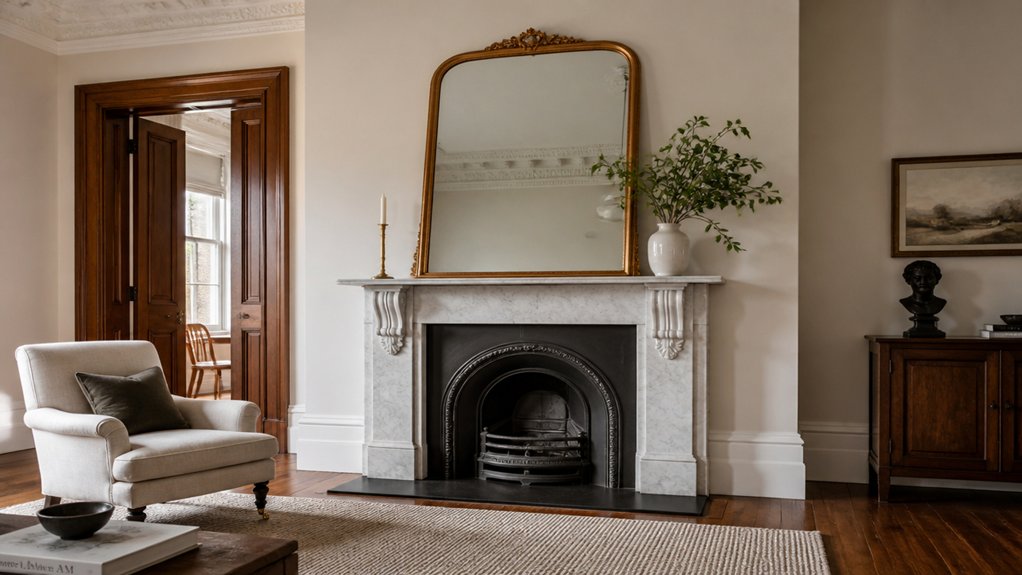
If you’re lucky enough to have an original mantel, treat it like built-in architecture, not a display shelf. Let the surround’s proportions lead, then choose Mantel accessories that feel era-appropriate and restrained. Aim for Color coordination with the room’s metals, woods, and textiles so the fireplace reads intentional, not busy.
Keep scale generous and groupings simple, leaving breathing space around mouldings, corbels, and carving.
- Anchor with one tall piece: an antique mirror, framed print, or overmantel clock.
- Add a matched pair: candlesticks or small urns in brass, bronze, or blackened iron.
- Include one low element: a lidded box or book stack that echoes period materials.
- Finish with a single organic touch: dried stems or a small greenery in stoneware.
Avoid Common Original Fireplace Decorating Mistakes
Because an original fireplace already carries strong proportions and history, most decorating missteps come from fighting its architecture instead of supporting it. Don’t overscale mirrors or art so they crowd the mantel shelf; keep frames within the pilasters’ width.
Avoid trendy paint finishes that flatten carved stone or cast iron—if you must change colour, choose breathable, period-appropriate coatings for historical accuracy.
Skip heavy garlands, candles, or batteries of objects that trap soot and complicate fireplace maintenance. Don’t block ventilation grilles or the register plate with baskets or logs.
Keep tiles and slips visible; hiding them behind screens or bulky fenders makes the opening look smaller.
Finally, don’t mix eras carelessly: pair Georgian fireplaces with restrained brass, not ornate Victorian clutter.
Conclusion
Funny how, once you stop fighting your original fireplace, the room suddenly clicks into place. You’ve measured the surround, noted the tile glaze, and matched paint to stone, and—by coincidence—the patina you thought was a flaw becomes your best finish. Keep furniture angled to the hearth, layer a rug to frame it, and use warm, low lighting to catch mouldings. Style the mantel with restraint: one mirror, one object, breathing space.
About the Author