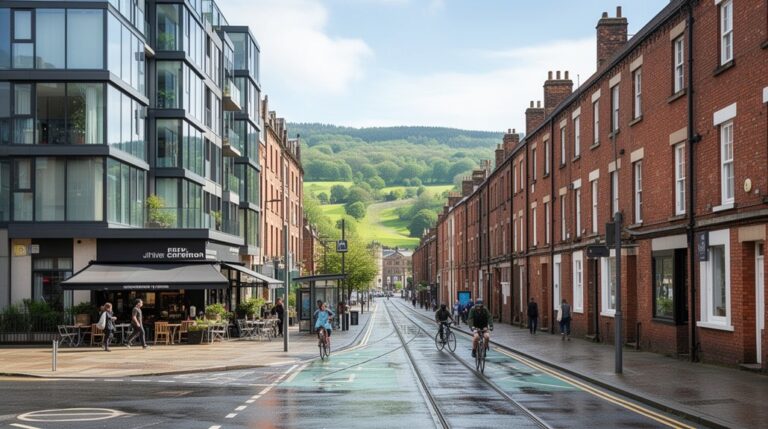

If you’ve tracked Liverpool since 2014, you’ve seen regeneration reprice whole micro-markets. You can link uplifts to specific catalysts—Liverpool Waters, the Knowledge Quarter, Baltic Triangle build-outs, and transport upgrades—because they change employment density, tenant mix, and amenity scores. That tightens void periods and pushes city-centre and waterfront premiums higher, while some fringe areas lag on fundamentals. The next wave looks set to redraw the map again—if you know where to look.
Key Takeaways
- Since 2014, Liverpool shifted from undervalued recovery to steady price discovery, with faster sales, smaller discounts, and tighter time-on-market.
- Regeneration zones like Liverpool Waters, Baltic Triangle, and the Knowledge Quarter have led price growth through new jobs, amenities, and high demand.
- Transport upgrades around Merseyrail and Lime Street improved commute reliability, reducing voids and supporting higher prices near frequent, late-running services.
- Rising rents and resilient yields have underpinned capital appreciation, while flat rents with rising voids signal oversupply in weaker submarkets.
- Premiums concentrate around walkable lifestyle and employment hubs, widening buyer demand beyond students and improving resale liquidity.
Liverpool House Prices Since 2014: Key Shifts

Since Liverpool’s regeneration pipeline gathered pace after 2014, you’ve seen the housing market shift from low-base recovery to sustained growth driven by investor demand and expanding employment hubs. Transaction volumes firmed up, discounting narrowed, and time-on-market tightened as more owner-occupiers and buy-to-let buyers competed for limited stock.
You can track Historical housing trends in the reset from post-crisis undervaluation to steadier price discovery: prime city-centre flats recovered first, then family housing in inner-ring suburbs followed as commuting patterns changed.
The Economic impact shows in higher rental benchmarks, stronger yields versus many southern cities, and improved mortgageability as lenders gained confidence in local liquidity. If you’re pricing or buying, you’ll belong to the winners by stress-testing affordability, rent cover, and exit demand by micro-location.
Which Liverpool Regeneration Projects Lifted Prices Most?
Although Liverpool’s uplift has been citywide, price growth has clustered most tightly around regeneration schemes that combined new jobs, transport upgrades, and high-volume residential delivery—because they compress the “risk premium” buyers and lenders price into the postcode.
If you track transaction volumes and new-build pipelines, Liverpool Waters, the Knowledge Quarter/Edge Hill corridor, and the Baltic Triangle’s mixed-use rollout consistently sit at the top of investor shortlists.
You’ll see the strongest uplift where Cultural revitalization is paired with measurable demand drivers: occupier job growth, walkable amenities, and station access.
Follow the planning data too: schemes with phased delivery and Section 106-funded Green space development reduce void risk and support tighter yields.
In practice, you belong in areas where homes, jobs, and public sphere arrive together.
Where Prices Rose Fastest: and Where They Lagged
You’ll notice laggards where pipeline delivery outpaced absorption, or where tenure mix stayed imbalanced, keeping valuations capped.
Cross-check Rental market trends: rising rents with flat yields can signal capital growth; flat rents with rising voids often flags oversupply.
If you want to stay with the market, prioritise postcodes showing both turnover and sustained rent resilience.
Waterfront & City Centre: What Drives the Premium

When you price Liverpool’s waterfront and city-centre stock, you’ll consistently see a premium where lifestyle and leisure amenities cluster—think Albert Dock, Baltic Triangle, and the commercial core—because demand compresses around walkable retail, dining, and cultural anchors.
You can often validate it in shorter void periods and stronger rent per sq ft versus outer postcodes, especially for modern apartments with views or proximity to night-time economy hotspots.
You’ll also find transport links amplify that uplift: proximity to Liverpool ONE, Lime Street, Merseyrail stations, and key road corridors tighten commuting catchments and supports higher achievable rents and resale values.
Lifestyle And Leisure Pull
As Liverpool’s regeneration has shifted demand from purely “affordable” stock to experience-led neighbourhoods, the waterfront and city centre now command a clear pricing premium because they bundle walkability, jobs, and amenities into one postcode. You’re not just buying square footage; you’re buying daily convenience and a community you can tap into immediately.
For valuation, you’ll see leisure density feed stronger rents and shorter voids: proximity to restaurants, gyms, and the Albert Dock keeps tenant demand resilient across cycles. Cultural festivals lift peak-weekend occupancy for serviced and short-let stock, supporting higher achievable yields where licensing allows.
Nightlife hotspots also push premiums, but you’ll price in noise and management costs—double glazing, concierge, and stricter referencing protect returns. Choose blocks with active frontages and well-run sinking funds to stay “in the mix” without asset drag.
Transport Links And Access
Leisure density sets the tone, but transport links lock in the waterfront and city centre premium by widening the tenant and buyer catchment. When you can walk to Liverpool ONE, Moorfields, James Street, and Lime Street, you cut commute friction and boost rental liquidity—key for valuers and lenders watching void risk.
Fast rail to Manchester and connections to the airport widen your weekday demand beyond local movers.
You’ll also see pricing uplift where public transport frequency is high and interchange is simple, because tenants trade a smaller flat for predictable travel times.
Back that with cycle infrastructure—segregated lanes, docked bikes, secure storage—and you capture professionals who want car-lite living.
In these micro-markets, you’re not just buying a unit; you’re joining a networked, well-connected neighbourhood.
Baltic Triangle: Buyer Demand and Price Growth

Despite its compact footprint, the Baltic Triangle has become one of Liverpool’s tightest demand markets, with buyer interest driven by rapid commercial uplift, a growing pipeline of build-to-rent and mixed-use schemes, and a clear shift in occupier preferences toward walkable, amenity-led neighbourhoods.
If you’re weighing Property investment here, track sales velocity, rental reversion, and scheme delivery dates, because price growth is increasingly tied to operational assets, not just headline comps.
You’ll often see competition for one- and two-bed stock near key employment clusters, pushing achievable rents and tightening yields.
To stay resilient amid market volatility, you’ll want fixed-rate leverage, realistic exit timelines, and an evidence-led view on service charges and ESG specs.
Buy well, and you’ll feel part of a district that’s still reshaping itself.
Knowledge Quarter: Student Demand and Prices
In Liverpool’s Knowledge Quarter, you’re seeing a sharp surge in student housing demand driven by expanding university populations and limited purpose-built supply.
You’ll typically pay a measurable price premium for units within walking distance of major campuses, and that uplift often shows up in faster lettings and firmer yields.
If you’re underwriting a purchase here, you should stress-test term-time occupancy, HMO licensing constraints, and rental comps against properties just outside the core campus radius.
Student Housing Demand Surge
As Liverpool’s Knowledge Quarter expands its academic footprint, student demand has tightened the local rental market and pushed pricing power toward well-located HMOs and purpose-built student accommodation (PBSA). You’ll feel it in faster let-up times, fewer voids, and sharper competition at September intake, especially for compliant, well-managed stock.
If you’re underwriting deals, you can’t ignore occupancy resilience: student-led demand typically sustains high utilisation even when wider renter sentiment softens. That supports rent growth, but it also raises Housing affordability pressure for non-students, so you’ll need a clear tenant profile and responsible pricing strategy.
Prioritise EPC performance, fire safety, and licensing-ready layouts to protect yields and reputation. When you deliver reliable Student accommodation, you’re not just filling beds—you’re anchoring a stable community around the universities.
Price Premium Near Campuses
When you buy or refurb close to Liverpool’s Knowledge Quarter, you’re not just chasing yield—you’re paying (and often capturing) a measurable price premium driven by walkability to Liverpool, LJMU, and the main clinical and research anchors.
Track sold-price heatmaps and you’ll typically see tighter price bands and faster time-to-offer within a 10–15 minute walk, because students and early-career staff bid up the same stock.
That Campus proximity also de-risks voids: you can underwrite shorter re-let periods and lower incentive spend.
To make it work, you’ve got to match specs to the micro-market: HMO licensing, robust management, and durable finishes that survive high turnover.
Done right, Rental yields stay resilient even as capital values re-rate, and you’ll feel part of the investor set backing Liverpool’s growth.
Transport Upgrades That Changed Liverpool Prices
Although regeneration headlines often focus on cranes and skylines, Liverpool’s biggest pricing shifts have tracked transport upgrades that cut journey times and de-risk rental demand. When Merseyrail reliability improved and Lime Street’s capacity uplift reduced peak disruption, you saw tighter yields around stations because voids fell and tenant churn slowed.
You can benchmark it: areas within a 10–15 minute walk of high-frequency stops typically price in a liquidity premium, especially for two-bed stock.
You’ll also notice transport-led placemaking: better bus corridors and active-travel links pull demand toward affordable housing schemes with green spaces, widening the buyer pool beyond students.
If you’re underwriting, stress-test walk times, service frequency, and last-train times; they’re the variables that turn “good” demand into bankable demand.
Next Regeneration Wave: What It Could Mean for Prices
Transport upgrades have already shown you what really moves Liverpool pricing: shorter, more reliable commutes that compress voids and stabilise rents. The next regeneration wave builds on that same mechanism but adds new supply, new employment anchors, and a re-rating of neighbourhood “risk” in lender and buyer eyes.
You’ll see pricing respond first where planning is consented, not merely proposed: track pipeline schemes, start-on-site dates, and pre-let percentages. When clusters form around universities, health, and knowledge workplaces, you can underwrite stronger tenant demand and lower arrears.
If schemes deliver urban green spaces, you’ll often capture a liveability premium and longer tenancies. Where historic conservation protects character stock, you’ll typically face tighter supply and better resale liquidity.
Align your buys with these nodes, and you’ll belong in the winning micro-markets.
Conclusion
You’ve seen Liverpool’s post‑2014 uplift track regeneration intensity: waterfront and city‑centre stock priced in investment, jobs, and amenity gains, while weaker corridors lagged. The theory that “student demand drives everything” doesn’t fully hold—Knowledge Quarter demand supports lettings, but Baltic Triangle and Liverpool Waters push owner‑occupier and investor competition, widening premiums. With transport upgrades reducing frictional vacancy and raising effective rents, you can expect the next wave to sustain capital growth more than headline yields.
About the Author