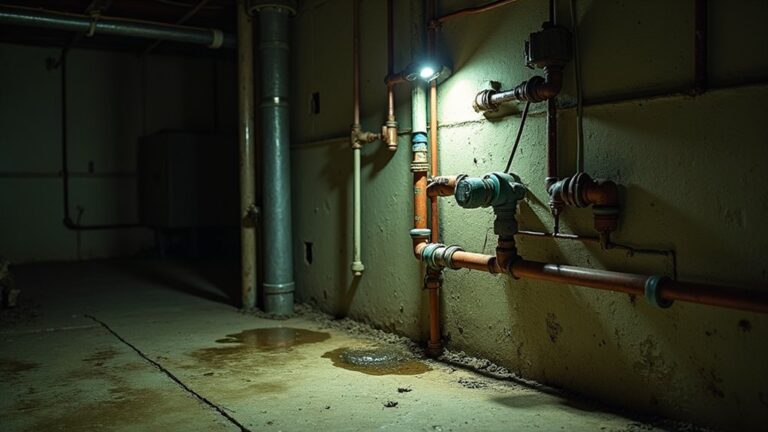
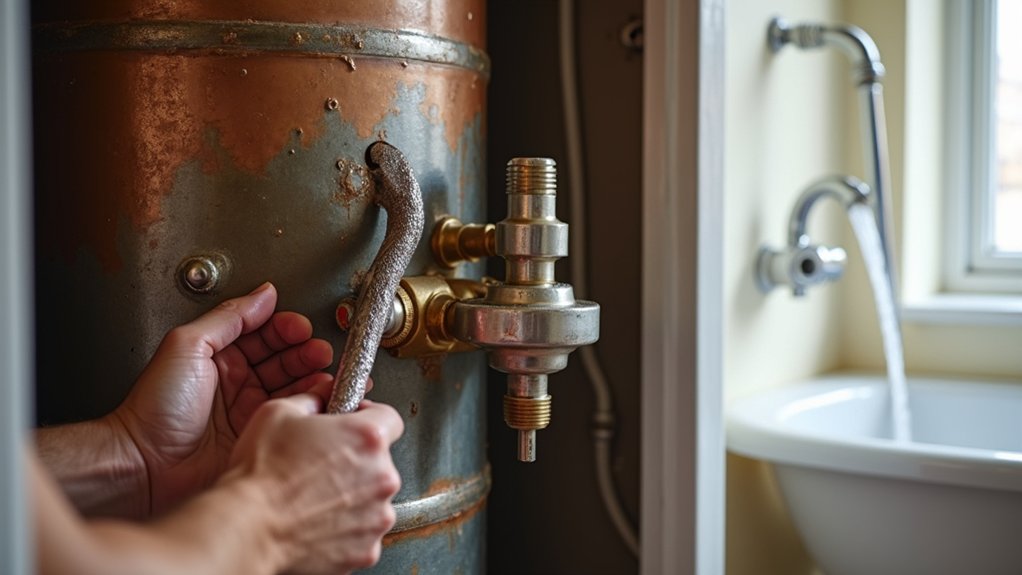
Low water pressure in an older British home can feel like trying to drink through a blocked straw. You need to work out whether it’s true low pressure or just poor flow from scaled aerators, tired tap cartridges, or a kinked flexi hose. Check if it’s one outlet or the whole house, then confirm your stopcock and any isolation valves are fully open. If it’s gravity-fed, the fix may be very different, because…
Key Takeaways
- Measure mains pressure and flow at an outside tap; compare morning and evening readings to confirm whether the issue is supply-side.
- Check the stopcock and all isolation valves are fully open, and inspect flexible tails for kinks or crushed sections.
- Clean or replace blocked tap aerators, shower filters, and cartridges; remove limescale with vinegar or descaler to restore flow.
- Identify old lead or galvanised pipes and undersized 15mm runs; upgrade long runs to 22mm/25mm with swept bends.
- If mains pressure is adequate but upstairs is weak, consider a correctly installed booster or shower pump; contact the water supplier for low mains pressure.
Is It Low Pressure or Just Low Flow?
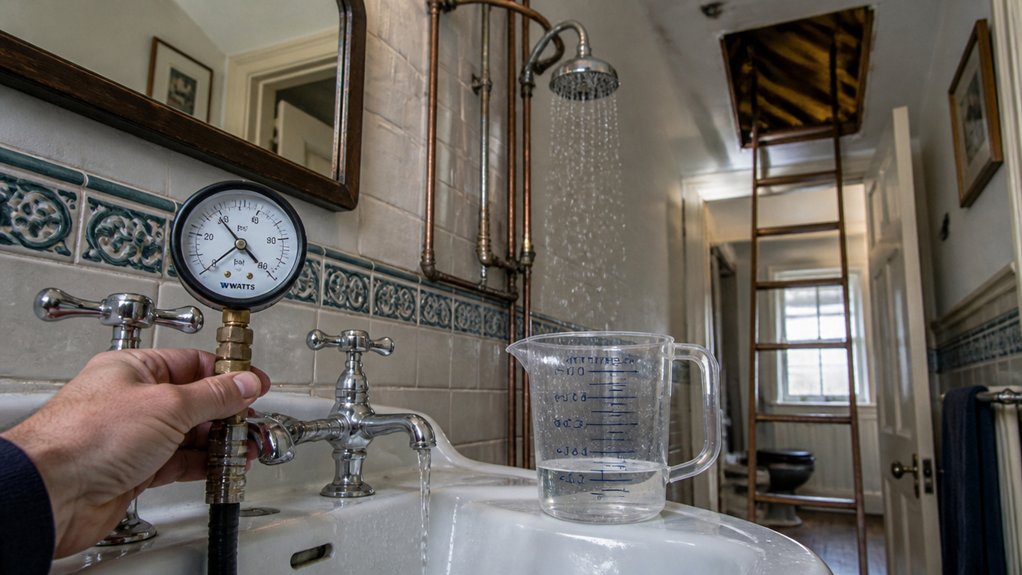
Fit a simple screw-on adaptor and use Pressure gauges on an outdoor tap or washing-machine valve to read static pressure. Most UK supplies sit around 2–4 bar.
Then open the tap fully and time how long it takes to fill a 10-litre bucket to estimate litres per minute.
If pressure stays decent but flow drops sharply, you’ve got restriction rather than supply. Clean or replace aerators, check stopcocks are open fully, and consider Water softening to slow future scale build-up.
Check If the Problem Is One Tap or Whole House
Before you start chasing pressure boosters or digging up pipes, check whether the issue shows up at one outlet or across the whole house. Turn on a cold tap in the kitchen, then the bathroom basin, then the shower, noting what changes.
If only one tap struggles, the cause is usually local: a scaled aerator, tired cartridge, or a kinked flexible tail under the basin. Compare hot and cold at the same fitting; if hot’s weaker, focus on that tap’s valvework rather than the entire system.
If every outlet is poor, you’ve confirmed it’s a house-wide symptom. Fixing single-outlet faults supports water conservation and avoids unnecessary work.
Choose replacement taps and filters with aesthetic considerations in mind, especially on period suites.
Mains Issue or Internal Plumbing? Simple Tests
Start with a quick mains pressure check by running the cold kitchen tap (fed direct from the mains) and timing how long it takes to fill a 10‑litre bucket.
Next, check your stopcock is fully open and, if you’ve got a water meter, see whether the dial still creeps when all taps are off, which can hint at a leak or restriction.
If the kitchen cold feels strong but upstairs or hot supplies are weak, you’re likely dealing with internal restrictions like tired pipework, partially closed service valves, or a scaled-up stop tap rather than the incoming main.
Quick Mains Pressure Check
If your showers and taps have gone feeble, a quick mains pressure check will tell you whether the problem sits with your water supplier or inside your own pipework. You’ll need a screw-on pressure gauge (¾” BSP) and a cold outside tap, if you’ve got one.
Test when demand varies to spot neighbourhood dips, and keep Water conservation in mind by capturing the run-off in a bucket.
- Fit the gauge to the cold tap, fully open it, and note the static reading.
- Turn on one cold tap indoors; watch how far the gauge drops under flow.
- Repeat early morning and evening; big swings suggest a mains-side issue.
- Compare results with your Pipe material and age; lead or old galvanised can restrict flow.
Stopcock And Meter Tests
Although low pressure often feels like “the whole street’s gone weak,” your stopcock and water meter can quickly show whether the restriction sits on the mains side or somewhere in your own plumbing.
First, locate the internal stopcock (often under the kitchen sink or in a hallway cupboard) and fully open it: turn anticlockwise, then back a quarter turn so it doesn’t bind.
Next, shut all taps and appliances, then check the water meter: if the little leak indicator still spins, you’ve got flow you didn’t expect, so find and fix it for Water conservation.
Finally, open a cold tap and watch the meter; weak rotation suggests a mains-side problem.
Keep panels neat for aesthetic considerations.
Internal Restriction Clues
When your stopcock and meter checks don’t give a clear answer, you can still narrow things down quickly by comparing how pressure behaves at different points inside the house. You’re looking for patterns that suggest a mains problem versus an internal restriction from old fittings or pipe corrosion.
1. Run the kitchen cold tap (usually nearest the rising main) and time how fast it fills a 1-litre jug; repeat upstairs.
Big drop upstairs points to internal pipework.
2. Flush the loo while a tap’s running.
If flow collapses everywhere, suspect incoming supply; if only one branch suffers, suspect local restriction.
3. Test hot vs cold at the same basin.
Weak hot hints at a scaled cylinder or blocked valve.
4. Check aerators, isolation valves, and shower filters for grit and limescale.
Check the Stopcock and Isolation Valves
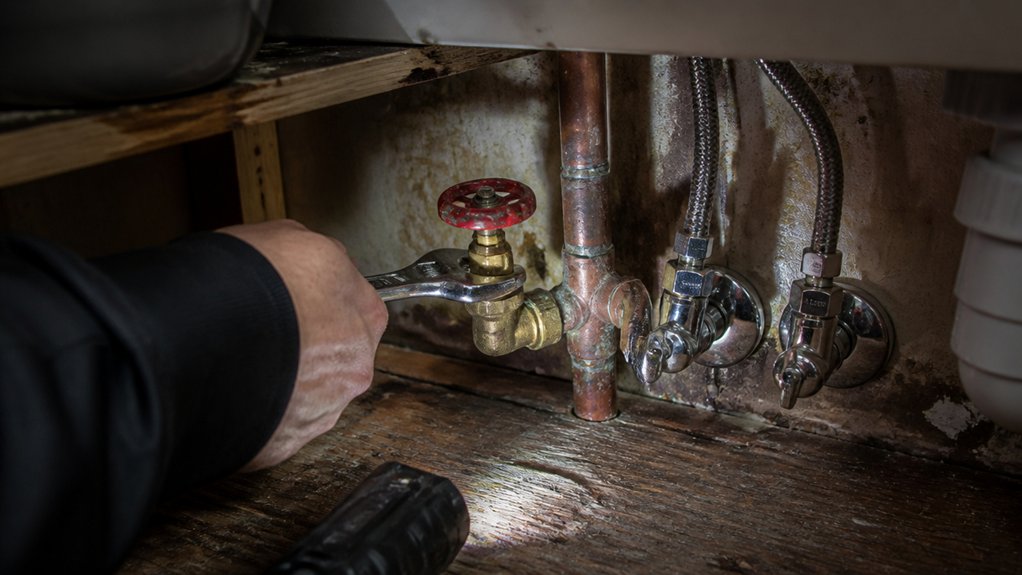
Before you blame the mains or your boiler, check your internal shut-off valves—because a partially closed stopcock or stiff isolation valve can quietly throttle pressure throughout an older British property.
Find the main stopcock (often under the kitchen sink, by the front door, or in a downstairs cupboard) and make sure it’s fully open: turn it anti-clockwise until it stops, then back a quarter-turn.
For stopcock maintenance, work it gently back and forth; if it’s seized, don’t force it—use penetrating oil on the spindle and call a plumber if it won’t budge.
Next, confirm each isolation valve location on the feeds to the WC cistern, basin, and washing machine.
Slotted valves should align with the pipe when open.
Check for crushed flexi hoses too.
Clean Tap Aerators and Showerhead Filters
If your kitchen tap or shower has gone weak while everything else seems fine, limescale and grit caught in the aerator or showerhead filter is often the culprit in older UK pipework.
You can sort it in minutes with basic tools and a bit of vinegar, and you’ll often feel the difference straight away.
- Unscrew Tap aerators (use a cloth and adjustable spanner if it’s tight) and note the order of the mesh and seals.
- Rinse debris under the cold tap, then soak parts in white vinegar for 20–30 minutes.
- For Showerhead filters, pop the handset off the hose, remove the insert, and scrub jets with an old toothbrush.
- Reassemble, open the tap slowly, and flush for 10 seconds to clear loosened grit.
Find Limescale Blockages in Valves and Fittings
Clean aerators and showerheads rule out the easy wins, but older British plumbing often loses pressure because limescale builds up inside the valves and fittings that control flow.
Check the isolating valves under basins and behind the WC: if they’re partially seized, you’ll get a weak stream. Turn them fully off, then back on, counting turns so you can return to the same position; if they’re stiff or gritty, suspect Limescale buildup.
Next, inspect stopcocks, service valves, and mixer cartridges. Look for white crust at compression nuts and around spindle glands, and for green staining that signals Valve corrosion.
If a valve won’t open fully, replace it rather than forcing it. For accessible fittings, remove and soak parts in descaler, then flush thoroughly.
Fix Weak Pressure on Gravity-Fed Systems
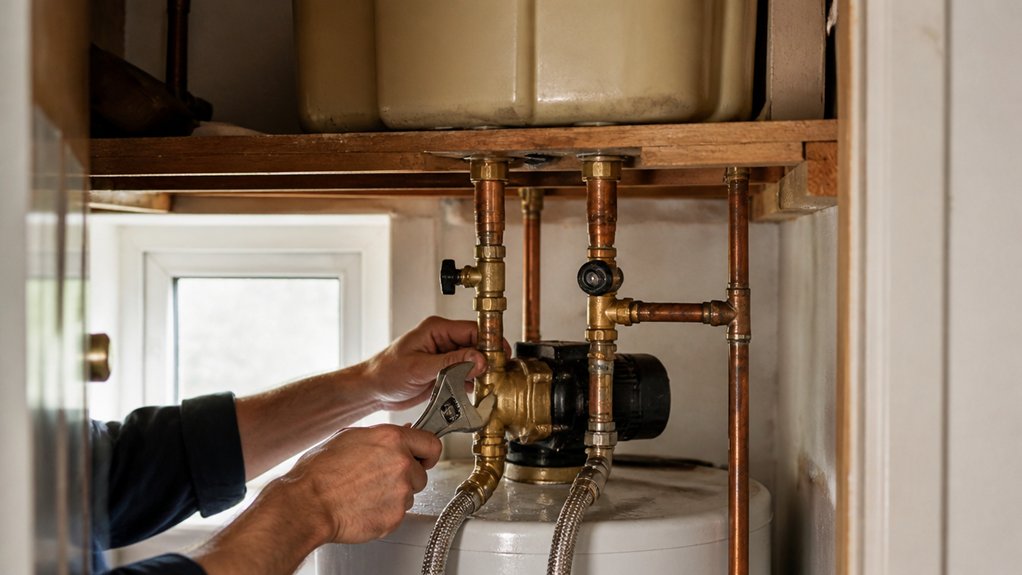
Because many older British homes still run a gravity-fed hot (and sometimes cold) supply from a loft cistern, weak pressure often comes down to head height: every metre between the tank’s waterline and the outlet only gives roughly 0.1 bar, so a low tank, long pipe runs, or a high shower can leave you with a feeble flow.
Don’t chase water pressure myths like “wider pipes always fix it”; instead, improve available head and keep flow losses down. Try:
- Check the loft cistern water level and float valve so it’s filling properly.
- Reduce unnecessary vertical rises by rerouting within joists (where possible).
- Fit a twin-impeller shower pump with a dedicated feed, plus correct strainers.
- Verify mains pressure regulation on any incoming PRV isn’t affecting mixed supplies.
Replace Old Lead or Galvanised Pipes (When Needed)
While a pump or new shower head can mask symptoms, old lead or galvanised steel pipework often throttles flow in older British houses by narrowing internally with scale, rust, and sludge.
Check your Pipe material first: lead is dull grey and easily scratched; galvanised steel has threaded joints and magnetic pipe.
Run a Corrosion assessment: look for pinhole weeps, brown staining, limescale crusts at fittings, and persistent discoloured water after flushing.
If you’ve got lead, replacement also supports UK drinking-water compliance, and many water companies offer guidance or schemes.
For galvanised runs, consider targeted swaps where flow drops, such as near stop taps or old tee-offs.
Use a Gas Safe or qualified plumber, notify Building Control when required, and pressure-test before boxing-in.
Upgrade Pipework Sizing for Better Flow
If your pressure looks fine at the stop tap but drops off at taps and showers, your pipe sizes may be the bottleneck. In many older UK homes, 15mm runs feed too many outlets, so friction losses eat into performance. Increasing pipe diameter on key sections boosts flow capacity without touching the incoming supply.
- Check the main from the internal stop tap: upgrading to 22mm (or 25mm MDPE on long runs) reduces restriction.
- Keep long straight runs larger, then step down to 15mm only near each tap or shower.
- Replace tight elbows and old tees with swept bends and manifolds to cut pressure drop.
- Prioritise high-demand lines (mixer showers, combi hot feed, garden tap) first.
Measure, map, and upgrade the worst choke points.
Booster Pump vs Plumber vs Water Supplier: Next Steps
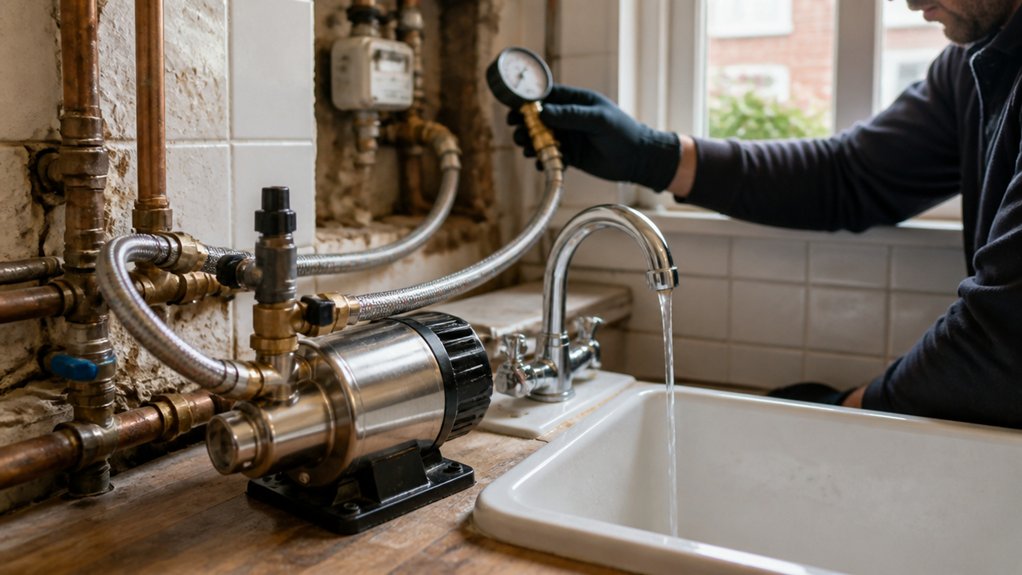
If your incoming mains pressure is consistently low (you can confirm it with a simple gauge at the kitchen tap), you’ll likely need a compliant booster pump—especially for top-floor showers in older terraces and conversions.
If the pressure is fine at the stop tap but drops at certain outlets, you should call a plumber to check for undersized runs, hidden leaks, blocked strainers, or tired valves.
If you suspect a street-side issue—low pressure at the external stop tap, noisy or fluctuating supply, or problems affecting neighbours—contact your water supplier to investigate the service pipe and mains.
When To Use Boosters
Before you spend money on a booster pump, work out whether the low pressure comes from your home’s plumbing, your incoming mains, or the water company’s supply, because each calls for a different next step.
A booster makes sense when your incoming flow is steady but upstairs outlets still feel weak, especially in tall Victorian terraces or loft conversions. You’ll get best results when you can place the unit near the cold-water storage cistern or at the point where pressure drops, and when you’ve checked your stop tap is fully open.
- You’ve got consistent flow, just not enough head to the top floor.
- Your combi struggles only at peak times, but cold mains is otherwise sound.
- You want Water conservation via low-flow taps plus a small, demand-led booster.
- You prefer Eco friendly solutions: quiet, efficient pumps with smart controls.
When To Call Plumber
Booster pumps can solve the right kind of low pressure, but they won’t fix a restricted pipe, a failing stop tap, or a poor mains supply, so you need to know who to call next.
Call a plumber if pressure drops at one tap, if hot flow is worse than cold (often a scaled heat exchanger or cylinder issue), or if you hear banging, see discoloured water, or find damp patches suggesting leaks.
If your stopcock’s stiff or won’t shut off, you’ll need it serviced or replaced before any pump goes in. Ask them to check old galvanised or lead runs, clogged strainers, and partially closed gate valves.
Request Water conservation and Eco friendly solutions: fix drips, fit aerated taps, and balance flows rather than over-boosting.
When To Contact Supplier
Although a booster pump can lift pressure inside your home, you should contact your water supplier when the problem clearly sits on the mains side—think weak flow at every cold tap (especially at the kitchen sink), sudden neighbourhood-wide drops, or pressure that’s worst at peak times.
Before you pay a plumber, run a quick check and report it with times and photos.
- Compare outside stop tap pressure (if accessible) to your internal kitchen cold tap.
- Ask a neighbour on the same street if their pressure’s also low.
- Check for visible leaks, wet patches, or a spinning meter—good for Water conservation and reducing environmental impact.
- Gather your postcode, account number, and recent pressure readings for the call.
Most suppliers log “low pressure” faults and may test or fix the main for free.
Conclusion
If your water feels weak, don’t guess—work through the checks. You’ll often fix it by fully opening the stopcock, clearing aerators and shower filters, or replacing kinked flexi hoses. If the whole house is affected, test the mains at the kitchen tap and compare. On gravity-fed setups, a correctly sized twin-impeller pump can transform showers. When pipework’s undersized or corroded, upsizing to 22mm/25mm may be the missing piece—don’t leave it to chance.
About the Author