
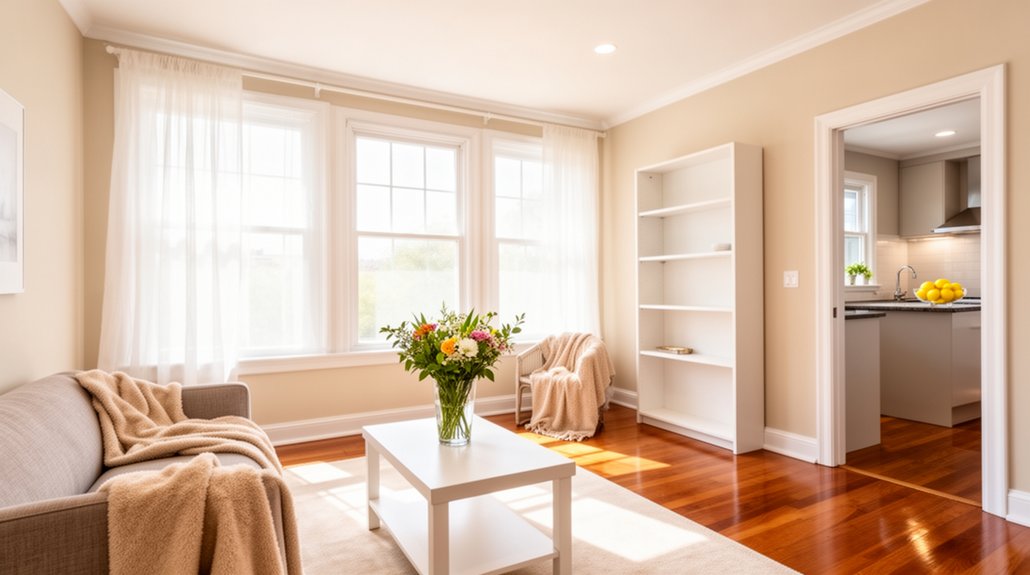
You’ll get a smoother sale when you treat prep like a checklist, not a weekend project. Start with a walkthrough to flag quick repairs, then declutter and depersonalize so buyers can picture their own life there. Tackle the obvious fixes, deep clean for photos and showings, and sharpen curb appeal with simple exterior upgrades. Stage each room to guide attention where you want it—because the next steps determine your price and timeline.
Key Takeaways
- Do a pre-listing walkthrough to identify quick repairs, lighting fixes, and curb-appeal upgrades that boost buyer confidence.
- Declutter and depersonalize by clearing surfaces, packing personal items, and editing closets to make rooms feel larger.
- Complete high-visibility repairs like patching walls, touching up paint, fixing leaks, and adjusting doors and windows.
- Deep clean top-to-bottom, including windows, baseboards, appliances, and grout, then neutralize odors for a fresh, move-in-ready impression.
- Stage and photograph strategically with balanced furniture layouts, bright lighting, and a tidy exterior that matches the interior’s presentation.
Prepare Your Home for Sale With a Checklist
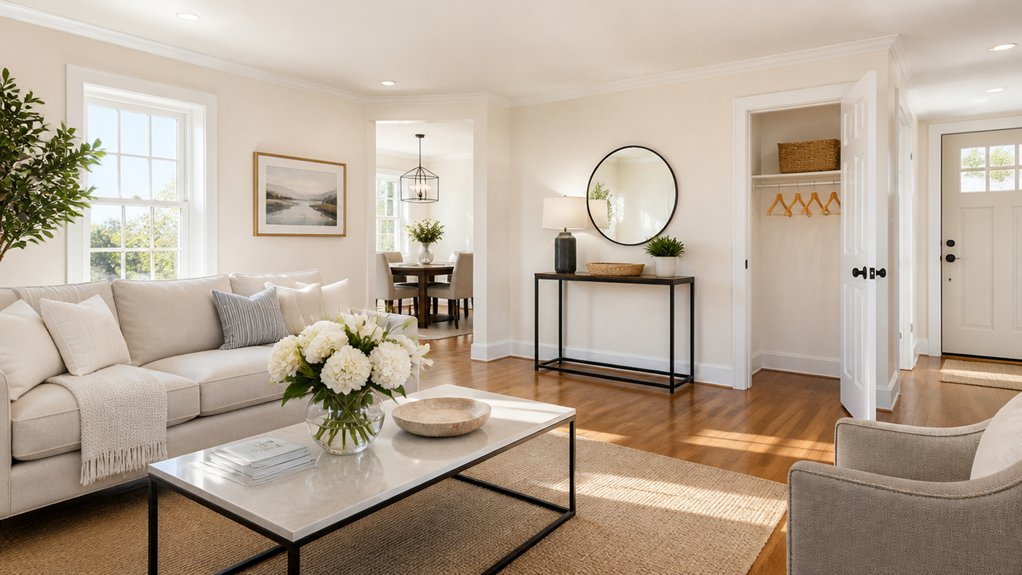
Before you schedule photos or open houses, build a simple prep checklist so you can tackle the work in the right order and avoid last-minute surprises. Start with a quick walk-through and note repairs, touch-ups, lighting fixes, and curb-appeal upgrades that buyers in your neighborhood expect.
Then line up vendors and dates: handyman, painter, cleaner, and photographer, so timelines don’t collide.
Next, map your home staging plan room by room: what stays, what gets swapped, and which focal points you’ll highlight for your target buyer. Add a pricing strategy step, too—pull recent comps, track active competition, and confirm how upgrades affect your list price.
Finally, schedule a pre-listing review with your agent so you feel confident and connected to the market.
Declutter and Depersonalize Before Listing
Although you may love the character your home has gained over the years, buyers need to see a clean, neutral space they can imagine as their own. Start by clearing countertops, open shelving, and floor corners so rooms feel larger and easier to live in.
Pack away personal photos, bold collections, and niche décor; these Personalization tips help strangers picture hosting friends there. Edit closets to one-third full, group similar items, and face hangers the same way for a boutique look.
Use labeled bins, under-bed boxes, and a temporary off-site unit as Storage solutions, especially for seasonal gear and extra furniture. Keep entryways and coffee tables simple so every showing feels welcoming.
Aim for “lived-in, not lived-over,” and you’ll attract more confident offers.
Do the Repairs Buyers Notice Most
Once you’ve cleared the clutter, tackle the repairs. Buyers clock in seconds because they signal how well you’ve maintained the home.
Patch and paint visible wall damage, fix any leaks and moisture issues, and replace or adjust sticking doors and drafty windows so showings feel clean, dry, and solid.
These quick, high-visibility fixes reduce objections, protect your price, and help inspections go smoother.
Fix Visible Wall Damage
Where do buyers’ eyes land first when they walk into a room? Right on your walls, because they frame everything else. Handle visible dings, nail pops, and corner scuffs before showings, and you’ll instantly signal “well cared for” to people picturing life here.
Start with a fast wall repair sweep: fill holes, skim dents, sand smooth, and re-texture to match nearby areas. Then do paint touch ups with the exact sheen and color—test in daylight, feather edges, and keep a clean cut line at trim.
Replace cracked switch plates and straighten crooked outlet covers so the wall reads crisp. Don’t skip high-traffic zones like hallways and stairwells. When the surfaces look consistent, buyers feel confident—and like they belong in a home that’s ready for them.
Address Leaks And Moisture
Smooth walls set the tone, but nothing spooks buyers faster than signs of water. Track leaks at their source: check under sinks, around tubs, at the water heater, and where supply lines meet shutoff valves. Replace worn washers, tighten fittings, and recaulk seams so the fix looks permanent, not patched.
In the basement, run dehumidifiers, clear floor drains, and improve basement ventilation to keep air moving. Pull stored items off concrete so buyers see clean, dry surfaces.
Treat any musty odor as a problem, not a scent—clean, dry, and paint with stain-blocking primer only after moisture is controlled. Document receipts and moisture readings; it signals you’re a careful homeowner and helps buyers feel confident joining the neighborhood.
Repair Doors And Windows
Even if your paint looks fresh, buyers will judge the home’s “care” the moment a door sticks or a window rattles. Fix these before showings so every entry feels effortless and every room feels quiet, solid, and lived-in the right way.
Start with doors: tighten hinges, shim sagging frames, and adjust strike plates so latches click cleanly. Replace worn door hardware with matching finishes, and verify deadbolts turn smoothly. Repaint scuffed edges and clean glass panels.
For windows, re-caulk gaps, repair screens, and replace cracked locks. Make sure they open, stay up, and seal without drafts. Lubricate tracks, then clean sills and remove stuck paint.
Finally, refresh window treatments—straighten rods, hem dragging curtains, and swap broken blinds—so light looks intentional and welcoming.
Deep Clean for Listing Photos and Showings
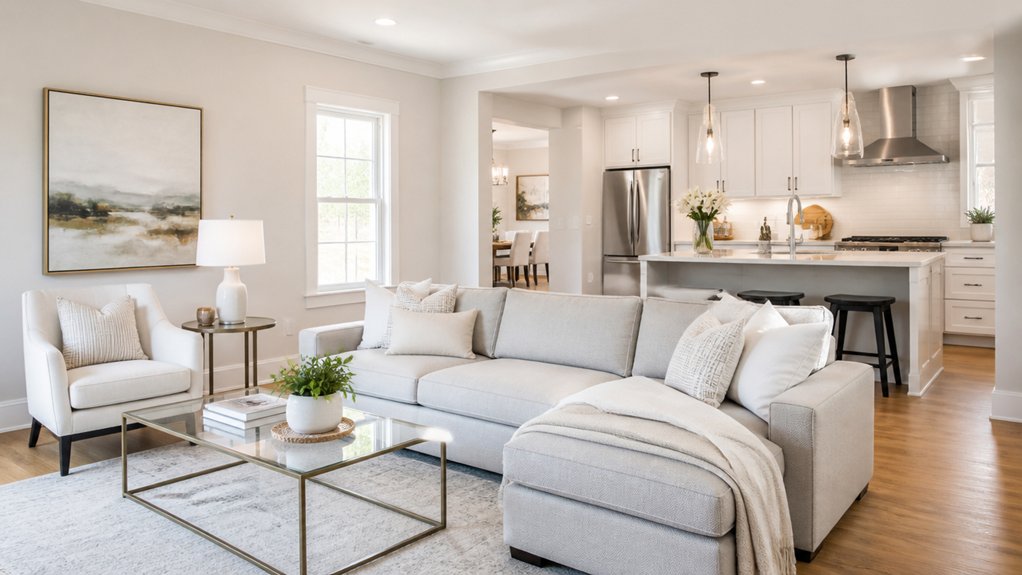
Before you schedule listing photos or open the door for showings, deep clean like you’re preparing a model home, not just tidying up. Start top-down: dust ceiling fans, vents, and baseboards, then wipe doors, switches, and trim so they read crisp in photos.
Wash windows inside, polish mirrors, and vacuum edges; buyers notice the details that signal care.
In kitchens and baths, degrease cabinets, scrub grout, descale faucets, and neutralize odors at the source. Clean inside appliances, empty trash, and stash personal items so the space feels shared, not lived-in.
After fresh paint, wipe smudges and remove tape residue. Finish by resetting staging furniture, smoothing linens, and keeping surfaces clear, so every room looks welcoming and easy to imagine.
Boost Curb Appeal Before Your First Showing
Once the inside looks photo-ready, buyers will judge your home again the moment they pull up, so make the exterior match that level of care. Start with Landscaping enhancements: edge the lawn, trim shrubs below windows, pull weeds, and add fresh mulch for crisp contrast. Plant one or two seasonal pots by the entry to signal pride of ownership without overdoing it.
Next, repair and refresh: power-wash siding and walks, touch up peeling paint, and clean gutters. Replace worn house numbers and make sure the mailbox and door hardware coordinate. Add Exterior lighting that feels welcoming and secure—clean fixtures, swap in bright, warm bulbs, and set timers for dusk. You’ll help buyers picture fitting in on this street.
Stage Each Room for Photos and Walkthroughs
After you’ve decluttered and deep-cleaned, stage each room to highlight how buyers will live there, not how you store things. Start with furniture arrangement: float pieces to create clear walkways, anchor seating around a focal point, and size down if a room feels tight.
In bedrooms, leave generous space around the bed and clear nightstands for a calm, hotel-like vibe.
Prioritize lighting enhancement for listing photos. Open blinds, replace mismatched bulbs with warm LEDs, and add lamps to eliminate shadows. Keep countertops sparse, hide cords, and tuck pet items away.
Add one welcoming touch per room—a throw, a plant, fresh towels—so visitors can picture themselves fitting in, comfortably and easily.
Conclusion
You’re not just listing a house—you’re setting a stage where buyers can see their next chapter. Run your checklist like a preflight: clear the clutter, fix the squeaks and drips, and scrub until photos sparkle. Outside, trim, wash, and refresh so curb appeal hits like a firm handshake. Then price with purpose and keep vendors lined up. Do this, and your sale moves like a well-oiled hinge, not a stuck door.
About the Author