

Sheffield is a well-priced compass, pointing you to more city life for less money. You can rent without stretching your salary, keep bills predictable, and still stay close to trams, venues, and major employers. You’ll also find neighbourhoods where your budget buys space, not compromises, whether you’re sharing or starting out solo. The real advantage shows up when you compare totals—and see where the smartest savings actually are…
Key Takeaways
- Sheffield’s day-to-day costs are lower than London, Manchester, or Bristol, making it easier to settle in quickly.
- Typical monthly household bills (council tax, energy, water, broadband) run about £180–£280, helping budgets stay predictable.
- Rents are relatively accessible: shared rooms £450–£650, one-bedroom flats £700–£900, with postcode-driven bargains in Kelham edges or Neepsend.
- Tram, bus, and bike links keep commuting cheap, with Hillsborough, Heeley, and Woodseats reaching the centre in 15–25 minutes.
- Affordable neighbourhoods still offer city living: independent venues, museums, festivals, parks, and lifestyle-fit areas for students, graduates, and families.
Is Sheffield Actually Affordable Compared to Other UK Cities?
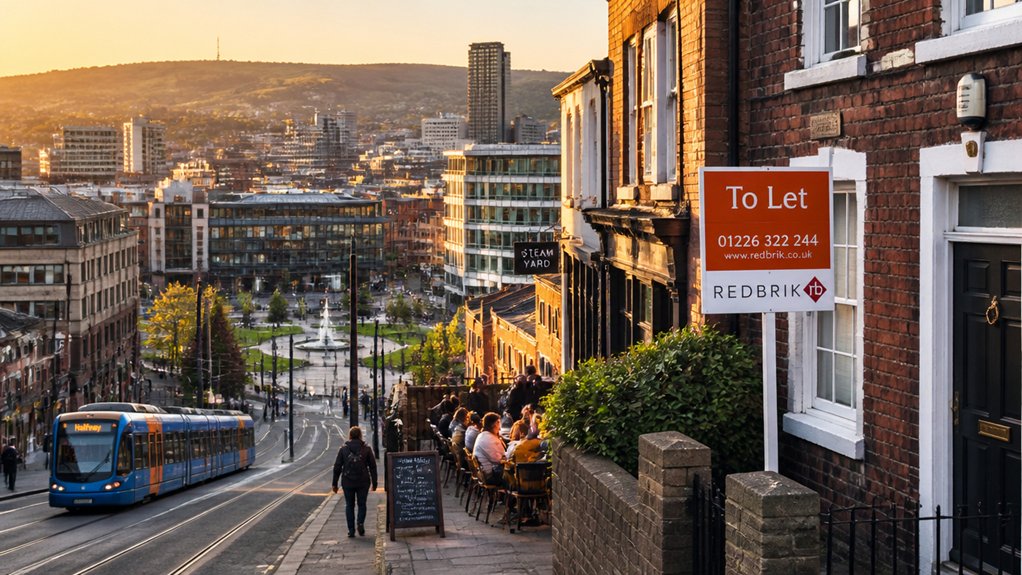
While UK city costs keep climbing, Sheffield still gives you noticeably more breathing room for your budget than most major hubs. You’ll typically find lower overall day-to-day prices than London, Manchester, or Bristol, and you won’t have to trade convenience for value: the city centre stays walkable, and reliable tram and bus links reduce costly add-ons.
You also get strong “value per weekend” thanks to Sheffield’s cultural scene—independent venues, museums, and festivals that feel local, not packaged.
Even the weather patterns work in your favor: cooler summers and frequent cloud cover can mean fewer pricey heatwaves and less pressure to chase constant paid indoor escapes. You can settle in fast and feel like you belong.
What Your Monthly Sheffield Budget Looks Like (Rent, Bills, Food)
To price Sheffield properly, you’ll map your monthly spend across rent and household bills first, because that’s where the biggest savings (or overruns) happen.
Then you’ll tighten the numbers with realistic grocery and dining costs based on your routine—cook-at-home, quick lunches, or regular nights out.
With those two buckets nailed down, you can set a budget that fits your income and still upgrades your quality of life.
Rent And Household Bills
Three numbers shape your Sheffield monthly budget fast: rent, household bills, and food.
Start with rent, where Affordable housing shows up in real listings: a room in a shared house commonly lands around £450–£650, while a one-bed flat often sits near £700–£900 depending on walkability to the centre and tram links. Choose areas like Hillsborough or Heeley to balance commute time and price, and you’ll feel part of an established neighbourhood quickly.
Next, lock down bills. Ask landlords what’s included, then run a Utility cost comparison: electric-only flats can spike in winter, while gas heating can smooth costs.
Typical monthly bills (council tax, energy, water, broadband) often total £180–£280 for a small place.
Grocery And Dining Costs
Once you’ve nailed down rent and bills, food becomes the budget lever you can adjust week by week in Sheffield. Stock up at local grocery stores near your commute, then build a repeatable shop: oats, pasta, veg, beans, and freezer staples. You’ll keep costs steady by planning three core dinners, packing lunch, and using loyalty prices and end-of-day reductions at Moor Market.
When you want to eat out, Sheffield’s diverse dining options let you stay social without overspending. Pick weekday set menus, share small plates, or meet friends for coffee instead of cocktails. Put a simple cap on takeaway nights, and track your spend in one notes app list.
You’ll feel part of the city’s rhythm while keeping your monthly budget predictable and flexible.
Best-Value Sheffield Neighbourhoods for Renters and Buyers
While Sheffield’s headline prices already look friendly, the real wins come from neighbourhoods where rent stays manageable, purchase prices still leave room to grow, and everyday costs don’t creep up on you.
Look at Hillsborough for steady demand, tram links, and resale resilience; you’ll feel part of a lived-in community with clear Neighborhood history and busy local festivals.
Consider Heeley if you want period terraces, walkable cafés, and strong buyer competition without centre-city premiums.
Choose Woodseats for family-friendly streets, parks, and reliable school catchment pull.
For central access on a tighter budget, target parts of Norfolk Park and Gleadless where regeneration keeps improving amenities and long-term upside.
Compare transport time, noise, and green-space proximity, then bid confidently on homes that fit your everyday rhythms.
Renting in Sheffield: Typical Prices and Where to Save
If you benchmark Sheffield rents by property type and postcode, you’ll spot quick savings without sacrificing commute time or day-to-day convenience.
City Centre one-beds often command the top end; shift to Kelham edges or Neepsend and you can trim monthly costs while staying walkable to bars, gyms, and tram links.
For sharers, look at Ecclesall Road side streets or Crookes pockets: you’ll still plug into cafés and campus routes, but avoid premium frontage pricing.
Families or remote workers can target Hillsborough, Woodseats, or Darnall for larger terraces at steadier rates, plus parks and fast bus corridors.
To secure Affordable housing, track listing velocity, offer longer terms, and negotiate on move-in dates.
Prioritise Lifestyle amenities you’ll use weekly.
Buying in Sheffield: Price Ranges and Starter-Friendly Areas

When you’re ready to buy in Sheffield, you’ll want clear price bands so you can match your budget to realistic stock and avoid wasted viewings.
You can target starter-buyer hotspots where entry prices stay competitive but resale demand remains strong.
You’ll also get the best value by prioritising transport-linked zones that cut commute time while keeping purchase costs in check.
Sheffield Price Bands
Although Sheffield’s prices vary sharply by postcode and property type, you can still buy smart by targeting the right bands and “starter-friendly” pockets. In today’s market, you’ll often see entry-level flats and smaller terraces sit in the lower band, giving you a manageable deposit target and quicker route into ownership.
Move up a band and you’re typically paying for extra space, stronger school catchments, and tighter supply, so you’ll need sharper negotiation and cleaner financing.
If you’re weighing Property investment, track rental demand near major employers and universities, then compare yields against service charges and refurb costs.
With Historical housing, budget for insulation, roofs, and damp proofing, but you’ll gain character and community credibility that helps you feel rooted fast.
Starter Buyer Hotspots
Because Sheffield’s best-value stock shifts street by street, you’ll get the strongest start by focusing on neighbourhoods where asking prices stay within first-buyer ranges, transport links cut commute costs, and resale demand remains consistent.
Start by tracking S2 and S6 pockets where modern flats and tidy terraces regularly list below city-centre premiums, yet still attract renters and future upgraders.
In Hillsborough, look for well-kept two-beds near local high streets; you’ll often secure more floor space for your budget and an easy community feel.
Heeley and Meersbrook reward buyers who can refresh kitchens and windows, lifting value fast.
If you prefer Luxury apartments, target smaller schemes on the edge of Historic districts, where character pricing supports steady resale.
Transport And Value Zones
Where do Sheffield’s best-value buy zones cluster once you map transport against asking prices? You’ll spot a strong ring along Supertram corridors and frequent bus routes, where commute certainty supports resale.
Look at Hillsborough, Heeley, and parts of Woodseats for terraces and flats that often price below the inner-west premium yet keep you 15–25 minutes from the centre.
If you want more space per pound, compare Manor, Parson Cross, and Gleadless: you’ll trade some café density for sharper yields, so budget for cosmetic upgrades to lift value.
Prioritise homes within a short walk of Public transport nodes and growing biking infrastructure links like the Porter Brook trail, so you feel connected, mobile, and rooted in your neighbourhood.
Getting Around Sheffield Cheaply (Walk, Bike, Tram, Bus)
If you plan your daily routes with cost in mind, Sheffield makes it easy to stay mobile without paying city-centre prices. Start by walking: the centre’s compact grid links shops, campuses, and parks fast, and you’ll feel part of the street-level buzz.
For longer hops, choose bicycle friendly routes like signed cycleways and canal paths, then lock up near key hubs to cut last-mile spend.
When weather turns, mix in tram and bus rides using fare caps, multi-journey tickets, and public transport discounts that reward regular travel. Check off-peak timings, tap-contactless where available, and bundle errands into one loop to reduce paid trips.
You’ll move confidently, save weekly, and keep up with your community’s pace.
Which Sheffield Areas Suit Students, Grads, and Families?
Even on a tight budget, you can match Sheffield’s neighbourhoods to your stage of life by weighing rent levels, commute time, and the day-to-day essentials you’ll actually use.
For students, look at Broomhill, Crookes, and City Centre: you’ll pay a bit more for walkable lectures, late buses, and Cultural attractions, but you’ll cut travel costs and feel plugged in.
As a grad, target Kelham Island or Ecclesall Road edges for modern flats, co-working-friendly cafés, and quick access to jobs; compare bills, parking, and Neighborhood safety street by street.
For families, consider Hillsborough, Meersbrook, and Dore: you’ll get parks, schools, and calmer streets, plus tram links for weekends. Tour at peak hours, then negotiate based on recent listings.
Conclusion
You’ll feel Sheffield’s affordability in the small wins: a lighter rent bill, steady utilities, and a grocery basket that doesn’t sting. Picture morning light on Kelham’s brickwork, then a quick tram glide to work, campus, or the Peaks’ edge—without London-level costs. Whether you’re renting smart in value streets or buying your first place in starter-friendly pockets, you can upgrade your lifestyle, not your expenses, and keep more cash for growth.
About the Author