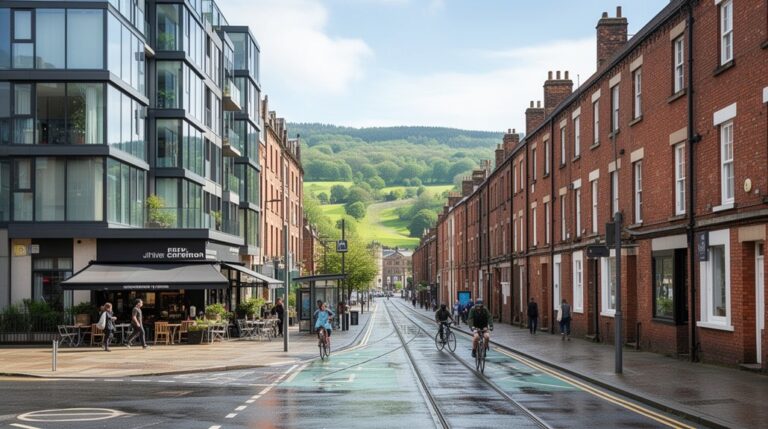

You might not know that Luton’s first-time buyer maths often beats other commuter towns once you factor in deposit size, season-ticket costs, and the gap in £/sq ft. You’ll find sub‑London pricing, fast Thameslink links, and a widening choice of terraces and new-build flats, while regeneration projects keep shifting “value” streets each year. But the real advantage isn’t just headline prices—it’s where the next uplift is likely to land.
Key Takeaways
- Luton offers entry prices 10–25% lower than nearby commuter towns, cutting deposit needs, stamp duty, and overall buying costs.
- Cooling mortgage rates improve affordability, letting first-time buyers secure 2–3 bed terraces, flats, or compact semis within £250k–£400k.
- Fast, frequent Thameslink and EMR trains reach London St Pancras in 25–35 minutes, plus easy M1 access for hybrid commuting.
- Regeneration around the town centre, rail/DART corridor, and Power Court is improving amenities and supporting long-term resale potential.
- Strong year-round rental demand from the airport, rail links, and colleges reassures buyers on future letting or resale flexibility.
Is Luton Right for First-Time Buyers Now?

While mortgage rates have cooled from their 2023 highs, Luton still looks timely for first-time buyers because entry prices tend to sit below many neighbouring commuter towns while keeping solid rail access into London.
If you’re budgeting on today’s stress tests, you’ll likely find more workable monthly payments, especially on smaller terraces and purpose-built flats close to stations.
To decide if it fits, you’ll want to map your daily life: check walk-time to supermarkets, gyms, parks, and cafés, because local amenities are uneven by neighbourhood.
You should also audit school accessibility—catchment boundaries, Ofsted ratings, and realistic drop-off routes—so you’re not forced into expensive last-minute moves.
If those boxes align, you’re not just buying space; you’re buying into a community you can actually use.
Luton Prices vs Nearby Commuter Towns
If you’re comparing Luton with nearby commuter towns, you’ll usually see a clear price advantage that stretches your deposit and monthly budget further.
You can quantify the gap by benchmarking sold prices in places like St Albans, Harpenden, and Hitchin, where similar homes often command a notable premium.
The practical trade-off is value versus travel time—if you’re willing to add a few minutes to your commute, you’ll often buy more space for the money in Luton.
Luton Price Advantage
Because buyers still benchmark value against nearby commuter towns, Luton’s pricing stands out as a clear advantage: average sale prices typically undercut St Albans, Harpenden, and Hitchin by a wide margin, so your deposit stretches further and your monthly mortgage costs stay lower without giving up fast rail links into London.
That headroom matters when rates move; you can keep repayments within lender stress tests and still target a home that fits your life. Track local market trends and you’ll see consistent demand from London commuters and local employers, which supports liquidity when you come to sell.
For housing affordability, the maths works: a lower purchase price often means a smaller required deposit, reduced stamp duty exposure, and more budget for surveys, refurb, and furnishings. You’re not compromising; you’re buying smart and joining a growing first‑time buyer community locally.
Commuter Town Cost Gaps
How big is the gap once you compare like-for-like homes across the commuter belt? Recent listing data typically shows Luton pricing a two‑bed terrace or starter flat 10–25% below nearby staples such as St Albans, Harpenden, Hitchin, and Berkhamsted, even when you match condition and walkability.
That discount can mean £30k–£90k less on common first‑home price points, which lowers your deposit hurdle and keeps repayments within lender stress tests.
You’ll also notice you’re not trading away day‑to‑day life: many neighbourhoods bundle strong local amenities—parks, schools, gyms, cafés—into the same radius you’d target elsewhere.
Add visible community diversity and you’re buying into a place where new households don’t feel like outsiders.
Value Versus Travel Time
While most buyers fixate on the fastest train, the smarter comparison weighs what each minute saved actually costs you. In many nearby commuter towns, you’ll pay a sizeable premium for a 5–15 minute quicker ride into London, yet your monthly mortgage can jump far more than your rail season ticket.
Luton often keeps entry prices lower while still offering frequent Thameslink services, so your “cost per minute saved” looks sharper.
You also buy into momentum: ongoing urban development around the station and town centre supports demand, not just headlines. Add improving local amenities—schools, parks, gyms, cafés—and you won’t feel like you’re compromising.
You’ll join a community of first‑time buyers choosing value, not vanity, and still arriving on time.
What £250k–£400k Buys in Luton
With £250k–£400k in Luton, you’ll typically choose between a 2–3 bed terrace, a modern flat, or a compact semi depending on how close you want to be to the station.
You can target buyer-tested areas like Stopsley, Wigmore, or Old Bedford Road for stronger resale demand, while pockets around Leagrave and Dunstable Road often stretch your square footage.
The trade-off is simple: pay toward the top of the range for quicker rail access into London, or spend less and accept a longer bus-and-walk commute.
Typical Property Types
If you’re shopping in Luton with £250k–£400k, you’ll find the market splits into three main options: entry-level two- and three-bed terraces (often older stock with smaller gardens), mid-range semis that trade up on space and off-street parking, and the occasional newer-build flat or townhouse near transport links.
At the lower end, terraces can deliver the best £/sq ft, but you’ll likely budget for EPC upgrades, roof work, or rewires—especially where historical architecture comes with dated layouts.
Semis in the mid band often add a driveway and wider rooms, which helps resale and school-run logistics.
Newer flats/townhouses tend to offer stronger EPCs and lower maintenance, but watch service charges and lease terms.
Prioritise walkable local amenities so you’ll feel part of the everyday community quickly.
Popular Neighbourhood Picks
Three areas dominate most first-time buyer shortlists in Luton at £250k–£400k: Stopsley and Wigmore for family-friendly semis and strong school catchments, Sundon Park and Leagrave for better space-per-pound near the station, and High Town/New Town for terraces and newer flats within quick reach of the town centre and rail links—each with a different trade-off between square footage, parking, and ongoing costs (service charges, EPC upgrade budgets, and lease length).
In Stopsley/Wigmore, you’ll typically land a 3‑bed semi with driveway; check loft potential and boiler age.
In Sundon Park/Leagrave, you can stretch to bigger gardens; budget for cosmetic refreshes.
In High Town/New Town, you’ll buy convenience, but scrutinise ground rent, cladding status, and sinking funds.
You’ll feel at home fast with Local cuisine spots and Cultural festivals nearby.
Value Versus Commute
Once you’ve narrowed down Stopsley/Wigmore, Sundon Park/Leagrave, or High Town/New Town, the next question is how much commute time you’re willing to trade for space and running costs.
At £250k–£300k, you’ll typically find a 2‑bed terrace or purpose‑built flat; value improves near Leagrave, where you’re close to rail links and solid community amenities.
Push to £300k–£350k and you can target a 3‑bed terrace or end‑of‑terrace, often with a garden and better parking, attractive for local schooling catchments.
At £350k–£400k, semi‑detached options appear in Stopsley/Wigmore, trading a slightly longer station run for quieter streets and family‑friendly blocks.
You’re buying into a neighbour network, not just square footage.
Best Luton Areas for First-Time Buyers

While Luton’s overall affordability draws first-time buyers in, the best areas come down to where you can balance entry-level prices with commute links and resale demand.
Wigmore and Stopsley typically command a premium because buyers consistently rate local school options highly and streets feel settled, which helps protect values.
For sharper pricing with improving demand, look at Leagrave and Limbury, where family homes and purpose-built flats trade steadily and you’ll find strong community amenities.
If you want a central, walkable vibe, High Town and parts of New Town offer period stock and rentals that support future liquidity, but you’ll need to choose streets carefully.
In all areas, prioritise EPC ratings, service charges, and planned regeneration so you buy into a neighbourhood you’ll feel part of.
Commuting From Luton: Trains, Roads, Time
Area choice in Luton often comes down to how fast you can get to work and how reliably you can do it, because commute time feeds directly into demand and resale strength.
If you’re London-bound, Thameslink and East Midlands Railway put you at St Pancras in roughly 25–35 minutes from Luton Airport Parkway, with frequent peak services that keep missed trains from wrecking your day.
For City routes, connections via Farringdon matter, so check door-to-door times, not just timetables.
On the road, the M1 (J10/10a/11) gives you quick north–south access, and solid road infrastructure supports hybrid working patterns.
Add Luton DART and strong Public transport options, and you’ll feel plugged into the commuter crowd and buyer demand.
Where Luton Is Regenerating (2026 Hotspots)
Because regeneration money follows transport upgrades and employment growth, Luton’s 2026 hotspots cluster around the town centre rail/DART corridor and the airport-facing edge of town—places where public-realm works, new homes, and commercial investment tend to tighten supply and lift resale.
Focus your search on the station-to-Mall spine, where Urban renewal typically brings better lighting, paving, and retail occupancy, making streets feel safer and busier.
Track plans near Power Court and the central business blocks: you’re buying into a clearer long-term use, not just a postcode.
On the airport side, look for walkable pockets with upgraded links to DART, jobs, and services; you’ll trade noise risk for strong amenity momentum.
Prioritise schemes that include Community development—schools, green space, and local hubs—so you’ll feel rooted, not transient.
If You Upsize Later: Luton Rental Demand
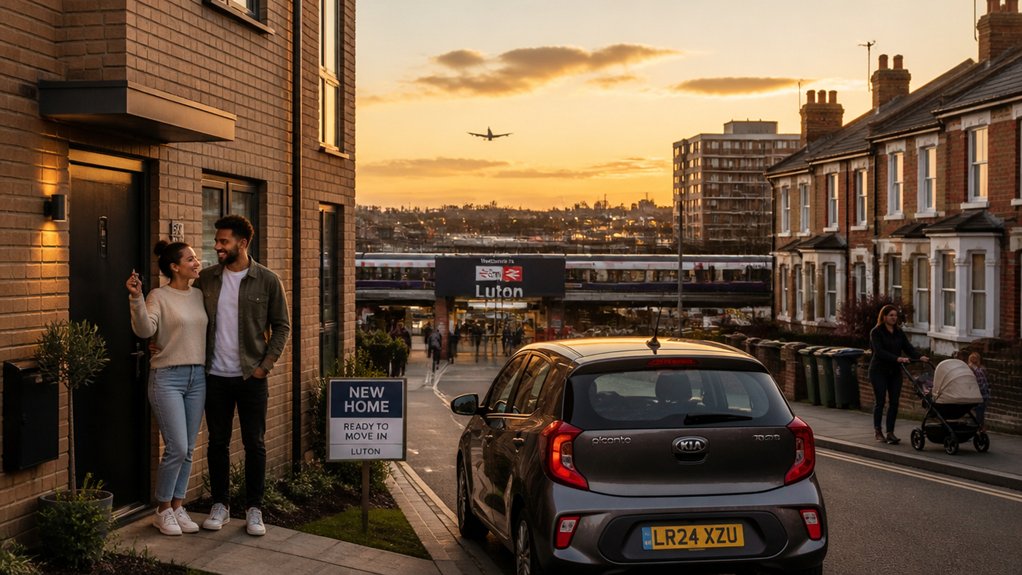
If you buy in Luton now and upsize later, you can often keep the first home as a rental because tenant demand stays anchored by the rail commute into London, the airport jobs base, and the town’s colleges and hospitals.
That mix supports year‑round lets, not just seasonal spikes, so you’re not relying on one employer or one tenant type.
You’ll typically find strongest demand for well‑presented one‑ and two‑beds near stations, employment hubs, and campus routes, where renters pay for time saved.
Price it to the local comparables, keep the spec durable, and you can reduce voids and maintenance surprises.
Tenants also stay longer when they can access affordable amenities and feel part of a local community that welcomes newcomers.
Downsides to Watch When Buying in Luton
While Luton can stack up well on price-to-commute value, you’ll want to pressure-test the downsides before you commit: aircraft noise and flight-path exposure near the airport, patchy street-by-street variance in crime and upkeep, and resale sensitivity to school catchments and station access.
Get granular: two roads apart can mean different buyer demand, parking pressure, and tenant quality. Track Market trends by comparing achieved prices, time on market, and price reductions by micro-area, not just postcode.
Budget beyond the mortgage—Property taxes (council tax bands) vary, and older stock can bring higher running costs and insurance loading.
If you’re aiming to feel settled, prioritise walkable amenities and community-led streets; they tend to hold value better when sentiment turns.
First-Time Buyer Checklist for Buying in Luton
Although Luton still offers one of the stronger price-to-commute ratios into London, you’ll make a better first purchase by running a tight checklist that stress-tests the numbers and the street.
First, benchmark the local market: compare sold prices on your road within 6–12 months, not asking prices.
Next, total your monthly cost—mortgage at 2% higher than today, service charges, insurance, and property taxes—then keep payments below 35% of take‑home pay.
Check EPC ratings and likely retrofit costs; D and below can shift your budget fast.
Walk the route to the station at commute times, and scan parking pressure.
Read the lease carefully (if applicable) for ground rent spikes.
Finally, choose a lender and solicitor who’ve closed in LU postcodes.
Conclusion
So yes, you’re “settling” for Luton—where £250k–£400k still buys real space, rail gets you into London fast, and deposits don’t demand a miracle. Funny how the “cheap option” comes with regeneration zones, improving amenities, and rental demand if you upsize later. You’ll just need to watch pockets with weaker resale, noise near main roads or flightpaths, and factor commute costs. Ironically, that’s exactly what smart buyers do.
About the Author