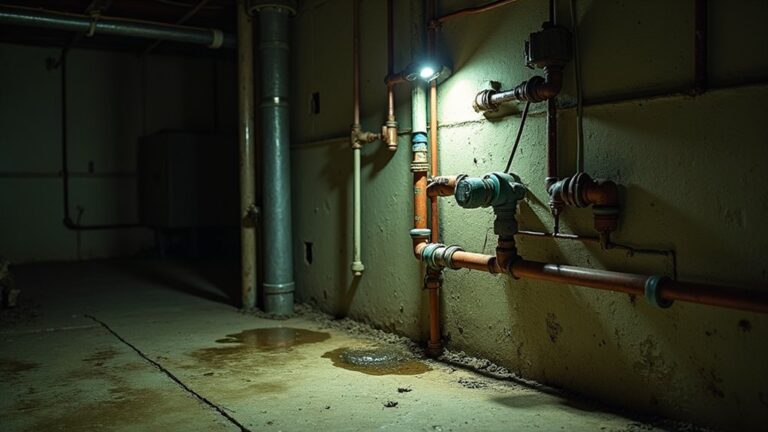
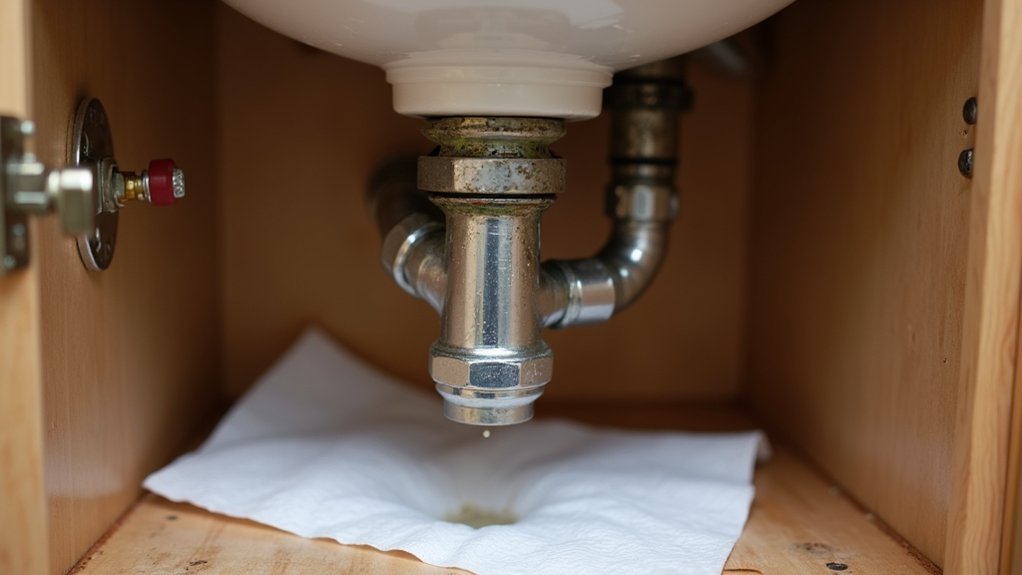
In the UK, escape-of-water claims make up roughly a third of home insurance payouts, and many start with small, ignored leaks. You can catch trouble early if you check exposed pipework for damp patches, staining, or swelling, and note any sudden drop in water pressure at different taps. You should also watch for slow drains, gurgling toilets, and unexplained jumps in your water bill. The next clue is often hiding in plain sight…
Key Takeaways
- Check stopcocks, visible pipes, and under-sink areas for dampness, staining, swelling, or active drips.
- Compare water pressure between taps; sudden drops often indicate restrictions, leaks, or failing valves.
- Watch for drainage warnings: slow drains, gurgling, bad smells, or multiple fixtures backing up suggest developing blockages.
- Track water use with a meter test; unexplained movement when taps are off points to hidden leaks.
- Inspect for damp damage: bubbling paint, soft floors, warped surfaces, musty smells, or warm patches over pipes.
Plumbing Problems Triage: What to Check First
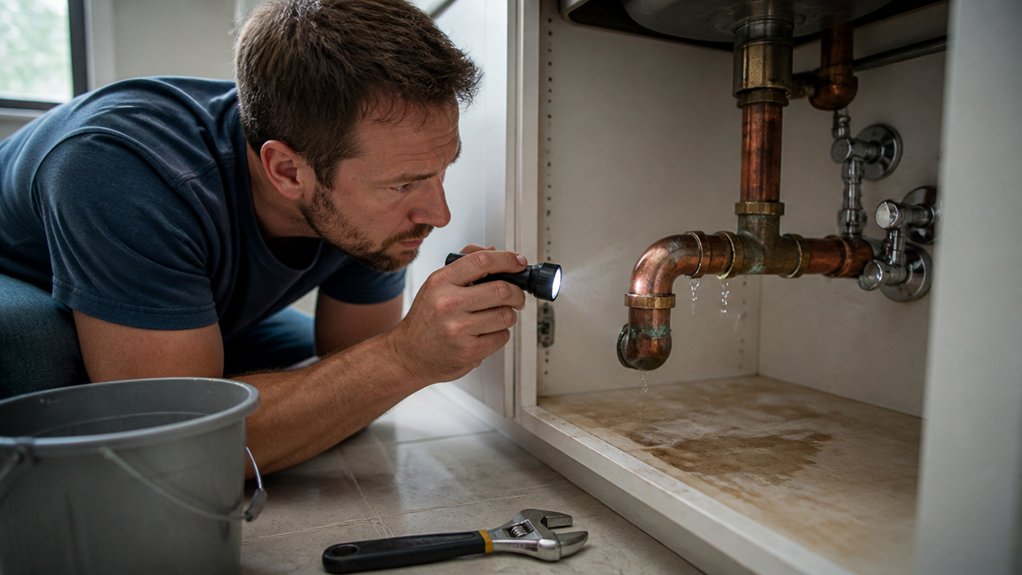
If you spot a plumbing issue, start by isolating where the problem sits so you don’t waste time (or money) chasing the wrong fix. Check your stopcock turns freely and note any damp around it, then scan visible pipe runs under the kitchen sink, in the airing cupboard, and behind the washing machine for weeps, green staining, or swelling chipboard.
Compare your water pressure at the kitchen cold tap versus bathroom basins; a sudden drop can point to a local restriction. Review your boiler pressure gauge and look for frequent top-ups.
Prioritise Fixture maintenance: tighten loose tap glands, replace tired washers, and re-seat shower hoses. In winter, confirm Pipe insulation covers loft and garage pipework to prevent freezing splits.
Drain and Toilet Warning Signs of Plumbing Problems
Although a slow drain or a temperamental loo can look like a minor nuisance, it often signals a developing blockage or failing seal that’s cheaper to sort early than after a back-up.
If your sink gurgles, smells sulphurous, or drains in stages, you’re likely dealing with early Drainage blockages from fat, hair, or limescale. Check whether multiple fixtures run slow at once; that can point to a deeper issue in the soil stack.
In the toilet, repeated partial flushes, rising water, or a wobbling pan suggest Toilet clogs or a worn pan connector. Don’t keep plunging if water returns quickly; you can force debris further along and raise the call-out cost.
Book a local plumber before overflow damages flooring.
High Water Bill? How to Spot a Hidden Leak
If your water bill jumps without any change in routine, you’re likely paying for water you’re not using, so check your usage for sudden spikes straight away.
You can run a quick meter test by turning off all taps and appliances, then watching the water meter for movement over 10–15 minutes.
If the reading still creeps up, you’ve got a hidden leak that can quietly add pounds to your monthly costs.
Sudden Usage Spikes
Why has your water bill suddenly jumped when your routine hasn’t changed? In the UK, a sharp rise often signals hidden wastage rather than price changes. Start with the obvious: check if a loo keeps trickling after a flush, or if a cistern refills at random. Listen for hissing behind walls near the bathroom or kitchen, and feel for warm patches on floors that could suggest a leaking hot-water pipe.
Scan your home for damp skirting boards, peeling paint, or musty smells in cupboards by the sink. Outside, look for persistently soggy soil near the stop tap or along the supply line. Acting fast supports Water conservation and keeps plumbing maintenance costs lower than emergency call-outs.
Meter Test For Leaks
When your water bill rises without explanation, a quick meter test can confirm whether you’ve got a hidden leak before you pay for months of wasted supply. Turn off every tap and appliance, then check the meter: if the dial or digital flow indicator still moves, water’s escaping somewhere.
Wait 15–30 minutes and recheck; movement points to a continuous leak. If nothing moves, run one tap briefly to verify Meter calibration and ensure the meter registers.
Then begin Leak detection room by room: toilets, outside taps, and buried supply lines are common UK culprits.
- You’ll stop that sinking feeling when another inflated bill lands.
- You’ll protect your budget from silent, overnight waste.
- You’ll avoid damp damage that wrecks flooring and plaster.
- You’ll gain confidence before calling a plumber.
Early Pipe Leak Signs on Walls, Floors, and Ceilings
Check your walls, floors, and ceilings for yellow-brown stains, dark patches, or fresh discolouration around skirting boards and light fittings, as these often flag a slow pipe leak.
Run your hand over surfaces for soft spots, warping, lifted laminate, or paint that’s bubbling and peeling—moisture trapped behind plaster and boards can spread fast.
If you spot any of these, you’re better off acting quickly, because fixing a small leak now usually costs far less than repairing damp damage later.
Visible Stains And Discoloration
Although a tiny pipe leak can stay hidden for weeks, it often leaves visible stains and discolouration on your walls, floors, or ceilings long before it turns into a costly repair.
Watch for staining patterns: soft-edged yellow halos, brown tide marks, or grey shadows that spread after showers or when the heating’s on.
Check Discoloration causes too—rust from old steel pipes, limescale-laden water, or dirty backflow can tint plaster and grout.
In UK homes, even a small leak can drive up your water bill and invite expensive call-outs if you ignore early clues.
- Seeing a fresh patch can make your stomach drop.
- Not knowing the source keeps you on edge.
- Each day’s delay risks a bigger invoice.
- Catching it early saves money and stress.
Warped Surfaces And Bubbling Paint
Even if the stain looks minor, a slow pipe leak can warp plasterboard, lift skirting boards, and make paint bubble long before you spot a drip.
Watch for surface deformation around radiators, bathrooms, and boxed-in pipework: walls that feel spongy, floors that spring, or ceilings that bow.
Bubbling, cracking, or peeling emulsion usually signals trapped moisture and paint deterioration, not just poor prep.
Press gently; if it gives, you’ve likely got wet substrate.
Check corners, window reveals, and behind furniture where damp lingers.
Don’t keep repainting—each coat hides the problem while water spreads to joists and electrics.
Call a plumber early; tracing and fixing a pinhole leak is far cheaper than replacing plaster, skirting, or flooring.
Water Pressure Changes That Signal Plumbing Problems
- That sinking feeling when the shower turns cold mid-rinse
- The frustration of waiting ages to fill a basin
- The worry of rising bills you can’t explain
- The dread of damage spreading behind walls
Gurgling, Banging, Whistling: Plumbing Noises Explained
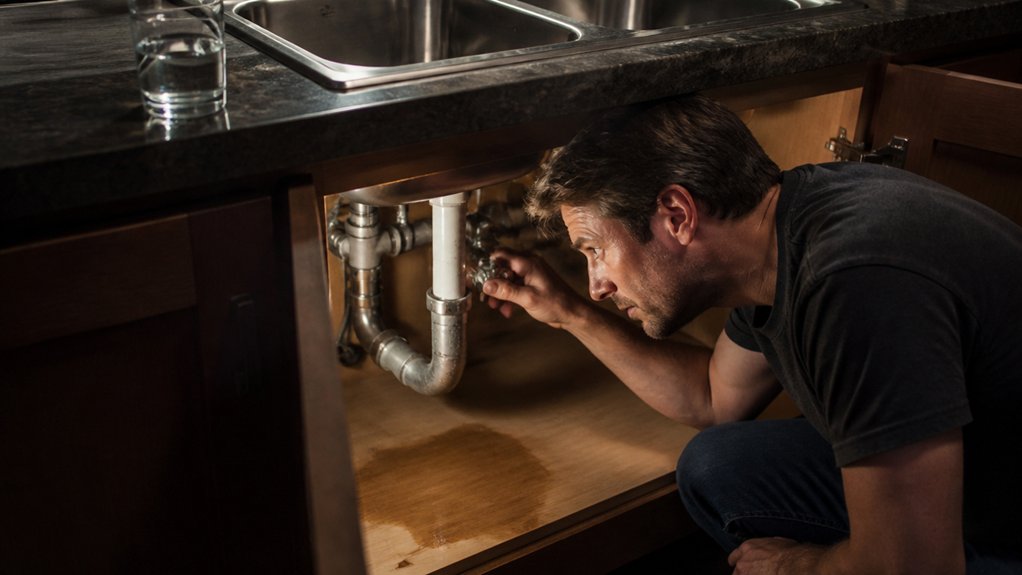
When your pipes start gurgling after you flush, banging when the heating kicks in, or whistling as you turn a tap, they’re not “just old plumbing” — they’re often early warnings of trapped air, loose pipework, high water pressure, or a drain venting problem.
Gurgling usually means water’s pulling air through a partially blocked waste or an under-vented soil stack, so flow turns turbulent.
Banging (water hammer) happens when valves close fast and shock waves hit unsecured copper runs; it can loosen clips and joints over time.
Whistling points to a worn washer, a scaled-up stopcock, or an over-pressurised combi system.
Track when plumbing noises happen, note noise causes, and check for vibration, slow draining, or intermittent drips.
When to Call a Plumber Before Damage Spreads
Plumbing noises give you the first hint; the next step is knowing when to stop troubleshooting and get a plumber in before a minor fault turns into a leak, damp patch, or failed boiler. If you’ve bled radiators, checked stopcocks, and the problem returns, don’t wait—call. Early attendance often costs less than plaster repairs, ruined flooring, or a full boiler shutdown, especially in winter.
- You spot recurring low pressure and feel that creeping dread of a frozen morning.
- You notice stained ceilings and panic about electrics and insurance excesses.
- You smell sewer odours and worry about family health and trapped gases.
- You hear hammering after taps close and picture pipes bursting behind walls.
Build Emergency preparedness: keep shut-off locations logged, and schedule plumbing maintenance annually.
Conclusion
Spotting plumbing trouble early saves you money and hassle. You should check drains, toilets, and taps for slow flow, odd smells, and sudden pressure changes. Keep an eye on gurgling or banging pipes, and compare your water bill and meter for unexpected usage. Look for damp patches, bubbling paint, or soft flooring—those clues are a canary in the coal mine. If anything persists, call a qualified UK plumber before repairs spiral.
About the Author