
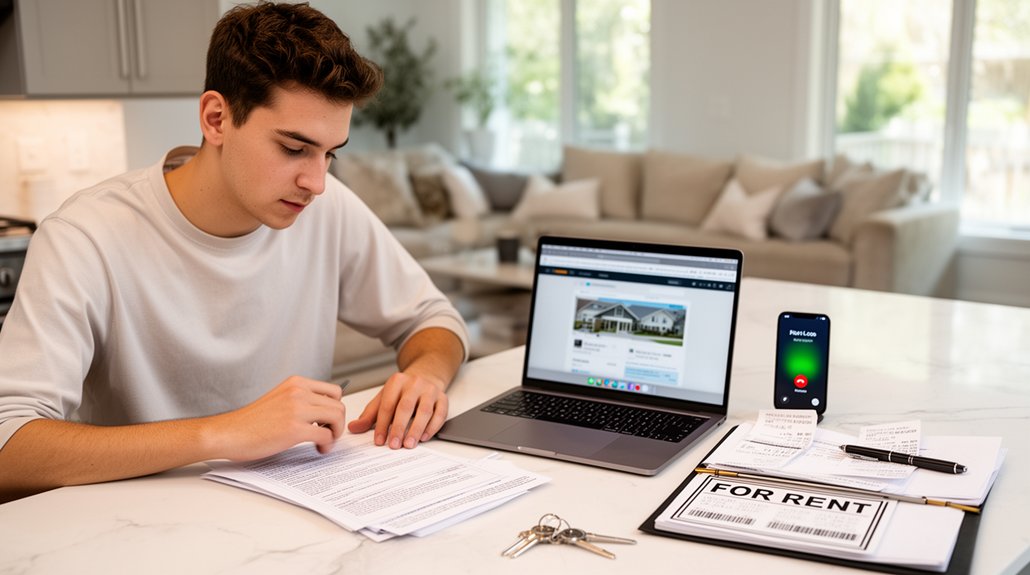
Renting out your first investment property is like running a relay race—you can’t drop the baton on compliance. You’ll choose self-management or a property manager, then confirm local ordinances, licensing, insurance, and habitability standards. Next, you’ll price rent using comparable data, prep the unit for safety, and market it without violating fair housing rules. Tenant screening and a tight lease protect your cash flow, but one overlooked step can cost you—start here.
Key Takeaways
- Decide whether to self-manage or hire a property manager by comparing fees, time requirements, vacancy risk, and your hourly value.
- Verify local rental laws, zoning, licensing, and inspection requirements, and secure landlord insurance plus required tenant renters insurance.
- Set rent using 8–12 nearby comparable listings, factoring costs, vacancy reserves, and any rent-control rules or notice requirements.
- Make the unit rent-ready with safety checks, repairs, deep cleaning, and documented photos of condition and compliance.
- Market, screen, and lease consistently: use clear listings, written screening criteria, fair-housing compliant showings, and collect deposits and rent via secure systems.
Self-Manage or Hire a Property Manager?
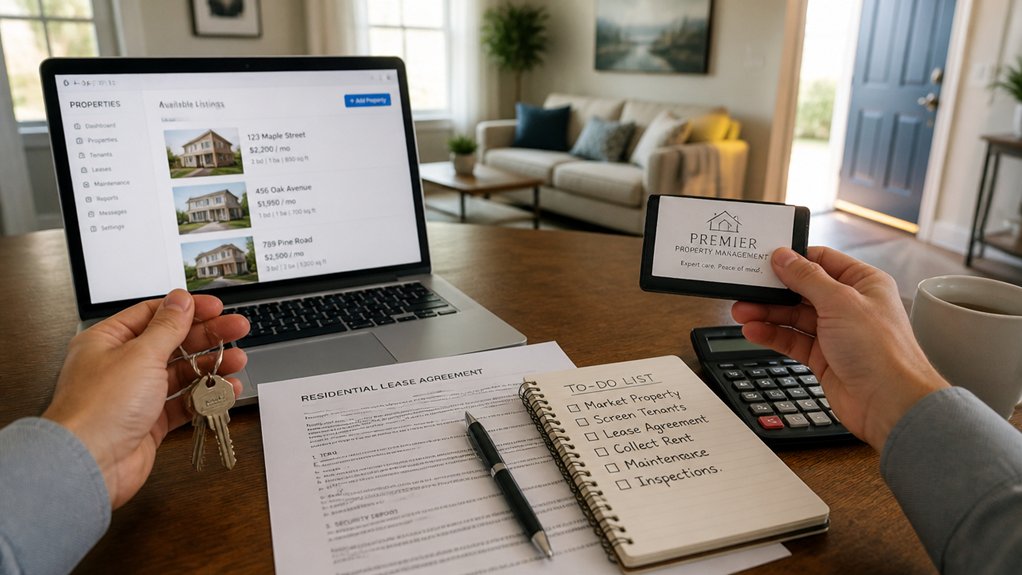
Before you list your rental, decide whether you’ll self-manage or hire a property manager, because that choice controls your compliance workload, risk exposure, and net operating income.
If you choose a DIY approach, you’ll run leasing, screening, maintenance coordination, notices, and recordkeeping; plan 5–10 hours monthly per unit, plus on-call time. You’ll also need a consistent process for handling funds, documenting communications, and responding within required timelines.
With property management, you typically pay 8–12% of collected rent plus leasing fees, but you buy standardized workflows, vendor networks, and buffer against missed steps.
Compare options using a simple model: expected rent minus fees, vacancy impact, and your hourly value.
Pick the path you can execute reliably and stay part of a landlord community you respect.
Check Rental Property Rules, Insurance, and Licenses
Before you list the unit, you’ll confirm your city and county rental rules—zoning, occupancy limits, registration, inspections, and any rent-control or notice requirements—so your lease and pricing stay compliant.
You’ll also lock in landlord insurance that matches your risk profile (liability limits, loss-of-rent coverage, and required endorsements) instead of relying on a standard homeowners policy.
Finally, you’ll secure every required license or permit and document renewal dates, because a missed filing can trigger fines, blocked move-ins, or invalid coverage.
Verify Local Rental Regulations
Since rental laws can vary by ZIP code and change year to year, verify your local requirements before you market the unit or sign a lease. Start with your city and county housing pages, then cross-check the municipal code for rental definitions, occupancy limits, and parking rules that affect day-to-day operations.
Confirm Zoning restrictions for your property type (single-family, ADU, or multifamily), and note any short-term rental bans or minimum-lease terms. Review local noise ordinances and quiet-hour standards so you can set enforceable house rules that align with community expectations.
Finally, compare your plan against state landlord-tenant statutes on disclosures, habitability, and security-deposit handling. When you follow the same playbook as responsible local owners, you’ll fit in—and avoid preventable violations.
Secure Insurance And Licenses
Local compliance gets you on the right side of the rules; insurance and licensing keep you protected when something still goes wrong. Start by confirming your city or county’s licensing requirements: rental registration, business license, inspection certificate, or short-term permit. Many areas fine unlicensed landlords per day, so calendar renewal dates and keep proof on file.
Next, price risk with your agent. Compare Insurance options beyond a standard homeowners policy: landlord (dwelling) coverage, liability limits, loss-of-rents, umbrella coverage, and flood or earthquake riders when maps show elevated risk. Require tenant renters insurance and document it in your lease.
Finally, align coverage with your property’s use—single-family, multifamily, or furnished—so your claim won’t be denied. This is how responsible owners operate.
Set the Right Rent for Your Rental Property
Even if you’ve upgraded the unit and picked great tenants, you’ll lose money if your rent doesn’t match the market and your legal limits. Start with Market analysis: pull 8–12 comparable rentals within a 1–2 mile radius, same beds/baths, similar amenities, and closed or active listings from the last 60 days. Track rent, days on market, and concessions, then target the 50th–75th percentile to stay competitive.
Next, confirm compliance: check local rent-control caps, notice rules for increases, and any licensing conditions tied to max rent. Build Pricing strategies around your costs—mortgage, taxes, insurance, HOA, utilities, and a vacancy reserve—then stress-test at 5% vacancy.
You’re not guessing; you’re joining the neighborhood standard and protecting cash flow.
Get Your Rental Property Move-In Ready
Before you hand over keys, get the unit to a verifiable “rent-ready” standard that meets habitability laws and reduces early maintenance calls. Use a checklist tied to your state and city codes: working smoke/CO alarms, secure locks, safe stairs/rails, no leaks, adequate heat, hot water, and GFCI protection in required wet areas. Document tests, dates, and photos so you’re aligned with how responsible local owners operate.
Prioritize Interior improvements that cut risk and costs: durable flooring, fresh low-VOC paint, sealed grout, serviced HVAC, and cleared dryer vents (a common fire trigger).
Then add Landscaping enhancements that support safety and curb appeal: trimmed sightlines, even walkways, drainage away from foundations, and exterior lighting.
Finish with a deep clean and pest prevention, and you’ll deliver a consistent standard tenants trust.
List Your Rental, Run Showings, and Stay Compliant
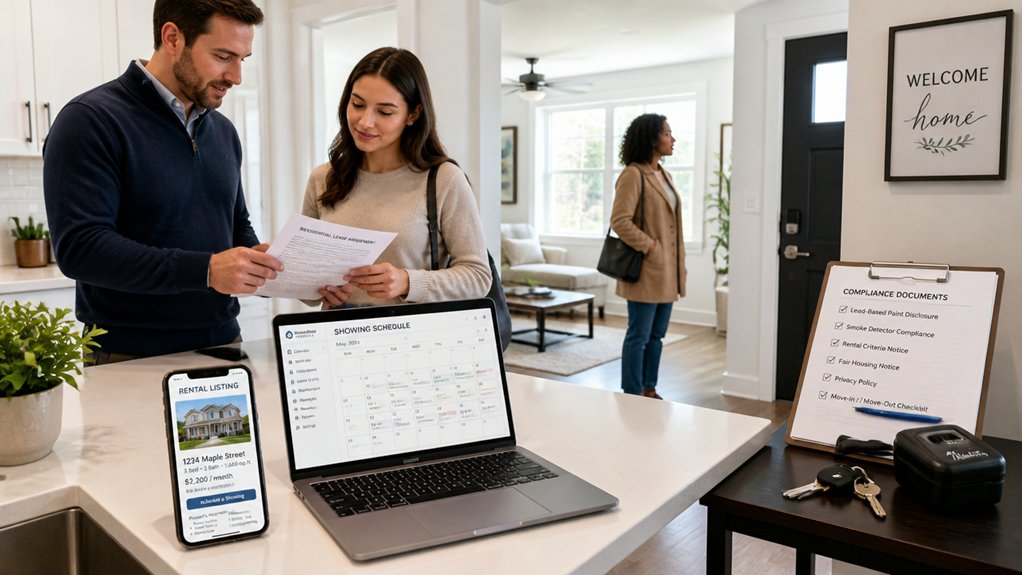
Once your unit meets a documented rent-ready standard, shift to marketing and access: write an accurate listing, set a defensible rent using comparable leases, and schedule showings with a compliance-first process. Use objective comps (same beds/baths, square footage, last 90 days) and disclose fees, utilities, parking, and required notices. Photograph exactly what you’re offering; misstatements can trigger consumer-protection claims.
Run showings with fair-housing discipline: same questions, same tour path, same application handout for everyone. Log inquiries and appointments for auditability. Protect privacy and safety with ID-verified entries, time-stamped access codes, and a written key policy. Keep Tenant communication consistent: confirm times, rules, and accommodation procedures in writing.
Line up Maintenance scheduling for quick turn fixes, and document repairs to meet habitability timelines and local inspection rules.
Screen Tenants, Sign the Lease, and Collect Rent
After your listing starts generating applications, you need a screening workflow that’s consistent, legally compliant, and documentable from first contact to first rent payment. Use written criteria you’ll apply to everyone (income multiple, credit range, rental history, occupancy limits) and follow Fair Housing and any state/local screening rules.
Run Tenant screening with signed authorizations, verify paystubs and employment, and call prior landlords using a standard script. Record decisions and send required adverse-action notices when you decline.
Once you choose, move fast: collect the security deposit in the allowed form, then complete Lease signing with all state addenda (lead-based paint, habitability, disclosures). Require renter’s insurance if permitted.
Set up ACH or portal payments, give receipts where required, and confirm first month’s rent clears before handing over keys.
Conclusion
You’ve turned the key from “owner” to “operator.” Whether you self-manage or hire help, you’ll protect cash flow by tracking comps, documenting condition, and following local licensing, fair-housing, and habitability rules to the letter. Picture a bright entryway, smoke alarms blinking, lease signed, and rent scheduled like clockwork. With compliant ads, consistent screening criteria, and insured coverage in place, you’ll reduce vacancy days, limit disputes, and scale confidently—one well-run tenancy at a time.
About the Author