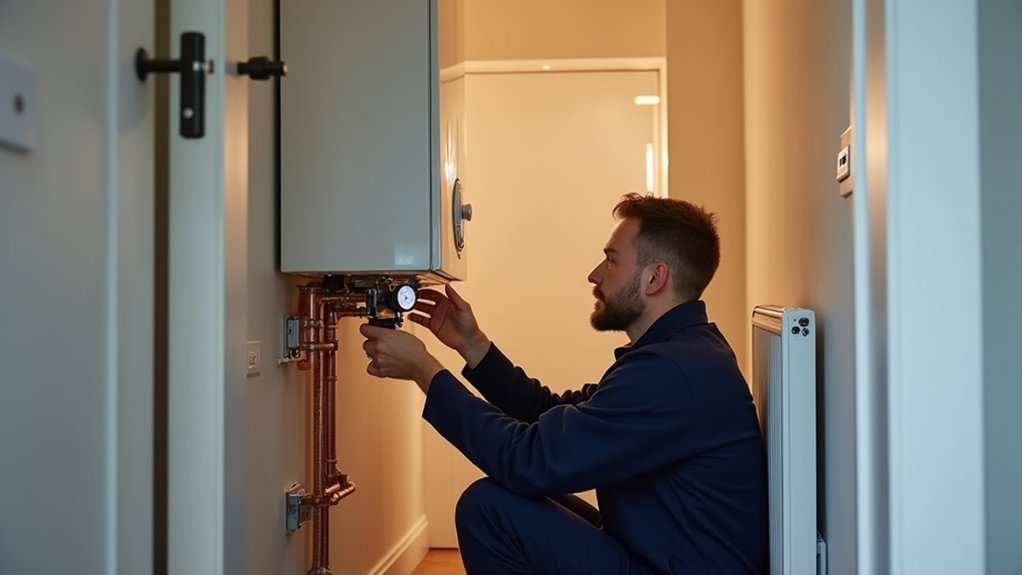
If you rely on a gas boiler in the UK, you can’t afford to treat servicing as optional. An annual check helps you catch worn parts early, keep combustion safe, and avoid efficiency losses that push up bills. You also reduce the risk of winter call-outs when engineers are booked solid, and you’re more likely to stay covered by warranties and some insurance policies. But what actually happens in a service—and what should you expect?
Key Takeaways
- Annual servicing checks combustion, flues and ventilation, reducing carbon monoxide and gas-leak risks in UK homes.
- Engineers test safety devices and seals, helping prevent hazardous failures like overheating, flame loss, and flue-gas spillage.
- Cleaning and tuning burners and components improves efficiency, helping lower gas use and energy bills.
- Servicing spots early wear, corrosion, leaks and pressure issues, reducing winter breakdowns and costly emergency repairs.
- Documented servicing supports manufacturer warranty terms, insurance claims, and compliance with UK safety expectations.
What’s Included in a Boiler Service?
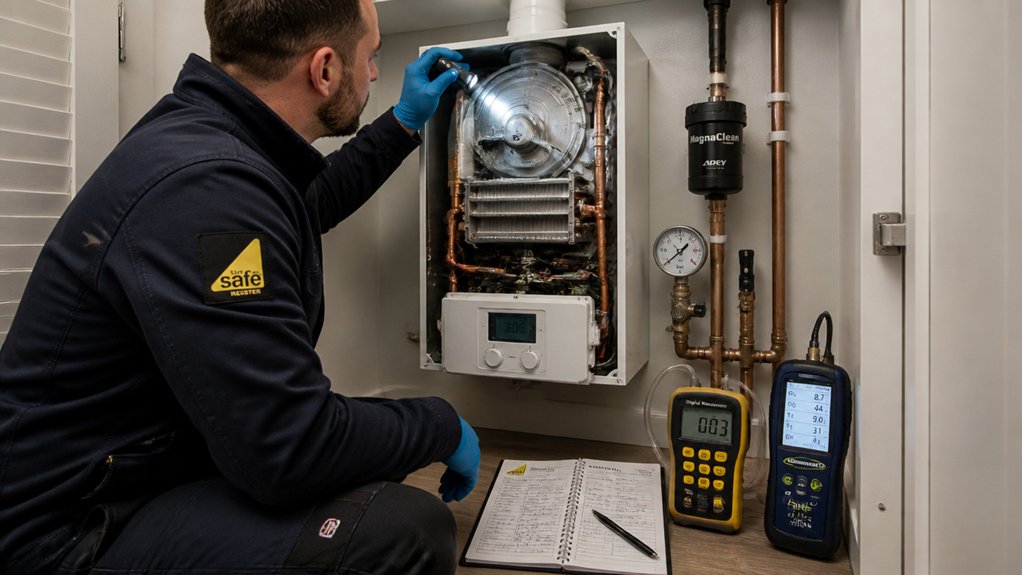
A proper boiler service usually covers a handful of core checks designed to keep your heating safe, efficient, and compliant. Your Gas Safe engineer will inspect the boiler casing, seals, and flue route, then test for gas tightness and check ventilation. They’ll run the appliance, record working pressure, and confirm burner and flame performance.
You’ll get Safety precautions such as carbon monoxide checks and verification of safety devices, including the flame-failure and overheat cut-outs.
For Efficiency improvements, they’ll clean key components where needed, assess the heat exchanger condition, and verify the condensate trap and pipework drain correctly. They’ll also check system pressure, expansion vessel charge, and controls like the thermostat and programmer, then note results in your service record.
How Long Does a Boiler Service Take?
You can usually expect a standard boiler service to take around 30–60 minutes, but it can run longer if the engineer finds faults, needs to access an awkwardly sited unit, or has to carry out extra tests.
You’ll also see the timing vary with boiler type (combi, system, regular), age, and whether it’s been serviced annually.
During the visit, the Gas Safe engineer checks safety and combustion, inspects key components, cleans where needed, and records the results for your paperwork and warranty.
Typical Service Timeframes
Typically, a boiler service takes around 45–60 minutes, but the exact timeframe depends on your boiler type (combi, system, or heat-only), its age and condition, and how accessible it’s for the engineer.
You’ll usually see a standard service booked into a one-hour slot, which suits most UK households and lets the engineer complete checks, tests, and basic cleaning without rushing.
If you’ve got a newer, well-kept boiler, you can expect it to stay near the lower end of that window.
Keep to sensible Maintenance schedules and you’ll help the engineer work efficiently while supporting long-term Boiler efficiency.
Plan to be home for the full appointment, keep your paperwork handy, and allow time for a brief run-through of findings.
Factors Affecting Duration
That one-hour booking works for many homes, but the real service time can stretch or shrink once the engineer sees what they’re dealing with. If your boiler sits in a tight cupboard, needs panels removed, or has awkward access to the flue, expect extra minutes.
Older units, heavy limescale in hard-water areas, or a history of intermittent faults can also slow the visit because the engineer must verify safe operation and consistent performance.
Your paperwork matters too: missing manuals, unclear fault notes, or no recent service history can add time.
Technician qualifications influence pace and accuracy; a highly experienced Gas Safe engineer will work methodically without unnecessary delays.
Finally, Scheduling flexibility helps—book off-peak slots and allow a buffer so minor surprises don’t derail your day.
What Happens During Service
How does a boiler service actually unfold once the Gas Safe engineer arrives—and why does it often take around 45–60 minutes?
You’ll first be asked about any faults, noises, or pressure drops. Then the engineer checks the boiler’s location, ventilation, and flue route for Gas safety.
They remove the case, inspect seals, test for gas leaks, and measure burner pressure. Next, they clean key components where needed (burner, electrodes, condensate trap), and assess the heat exchanger condition.
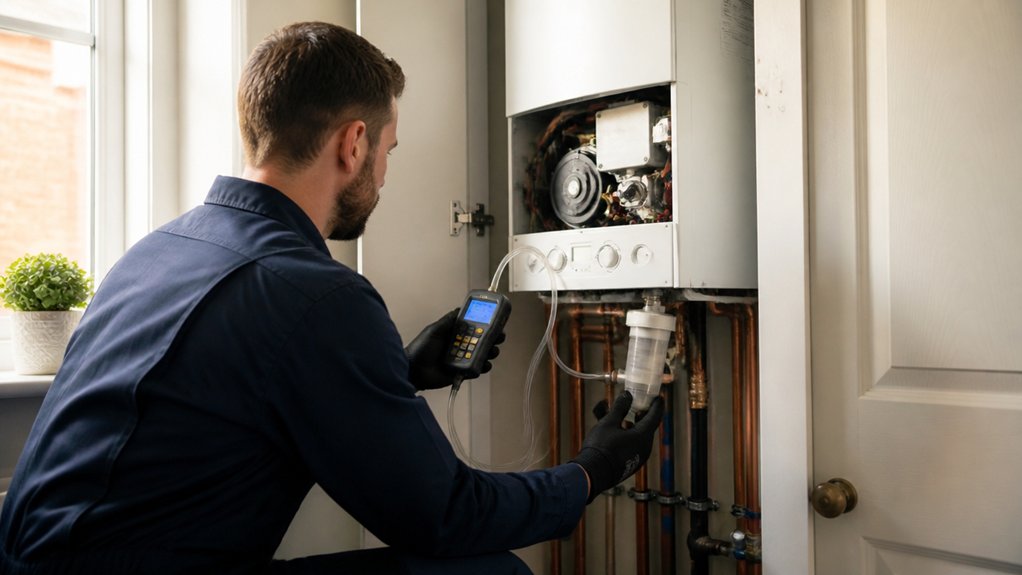
You’ll see combustion analysis with a flue gas analyser to confirm safe, efficient burning and protect boiler efficiency.
They’ll check controls, thermostats, and safety cut-outs, top up pressure if required, and review the condensate pipe for freezing risk.
Finally, you get a service record and clear next steps.
Boiler Service vs Repair: What’s the Difference?
Although both involve a Gas Safe engineer working on your heating system, a boiler service is planned preventative maintenance, while a repair fixes a specific fault that’s already affecting performance, safety, or hot water and heating.
You book servicing annually to keep your heating system compliant, reliable, and to protect boiler efficiency by spotting wear before it escalates.
Repairs are reactive: you call when you’ve got error codes, pressure loss, strange noises, leaks, or no heat.
- Service: checks, cleans, tests flue/combustion, verifies safety devices.
- Repair: diagnoses a fault, replaces failed parts, restores operation.
- Timing: service before winter; repair when breakdown symptoms appear.
- Outcome: service reduces risk; repair resolves an immediate problem.
How Much Does a Boiler Service Cost in the UK?
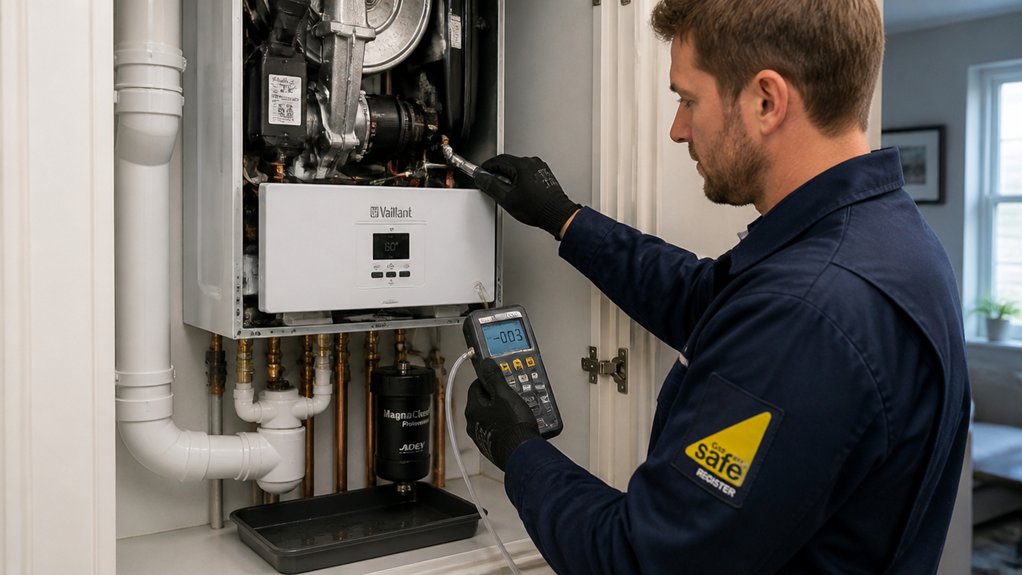
Expect a fixed-price service to cover safety checks, flue inspection, pressure and controls testing, and a basic clean.
Add-ons like replacing seals, topping inhibitor, or servicing system filters can raise the bill.
If you need Emergency repairs, they’re usually quoted separately.
How Does Servicing Help Prevent Winter Breakdowns?
A boiler service helps you avoid winter breakdowns by spotting early faults—like pressure drops, worn seals, or ignition issues—before they fail on a cold snap.
You’ll also get winter readiness checks that confirm safe combustion, steady heat output, correct system pressure, and smooth controls operation.
With these issues fixed in advance, you’re far less likely to lose heating and hot water when demand peaks in UK winter.
Early Fault Detection
How does a routine boiler service stop that dreaded mid-January breakdown? It lets you catch small faults before they turn into no-heat emergencies. A Gas Safe engineer tests performance, checks combustion, and spots wear early, so you’re not relying on luck when temperatures drop.
- You’ll uncover low system pressure, micro-leaks, and tired seals before they fail.
- You’ll identify noisy pumps, sticky diverter valves, and failing fans through proper readings.
- You’ll detect unsafe flue issues and poor combustion, keeping you aligned with Safety regulations.
- You’ll lock in Maintenance schedules, so parts get replaced on your terms, not during an expensive call-out.
That early warning saves you stress, protects your warranty, and helps your heating run efficiently.
Winter Readiness Checks
Once you’ve caught those early faults, a routine service also gets your boiler properly set up for winter loads, when it runs longer, cycles harder, and can’t afford weak links.
Your engineer checks burner pressure, combustion, and seals, then cleans the heat exchanger so efficiency doesn’t drop when frost hits. They verify the condensate pipe route, add insulation or reroute to reduce freezing risk, and test the pressure relief valve and expansion vessel to prevent lockouts.
You’ll also get radiator balancing, inhibitor checks, and a quick look at your programmer and thermostat so schedules match shorter days.
If you’ve had a Kitchen renovation or Solar panel installation, servicing confirms pipework changes and controls integration won’t trigger winter breakdowns.
Can a Boiler Service Lower Your Energy Bills?
For many UK households, a boiler service can reduce your energy bills by keeping the system running at peak efficiency rather than wasting gas through poor combustion, sludge build-up, or incorrect settings. You’ll often notice quicker warm-up times and steadier radiators, meaning you can run the heating for less time.
A Gas Safe engineer will also confirm your controls are set sensibly for your home, so you’re not overheating rooms or short-cycling the boiler.
To support Energy efficiency, focus on these Maintenance tips:
- Ask for a flue-gas analysis and proper burner setup.
- Get the system filter cleaned and magnets checked.
- Request a pressure check and expansion vessel test.
- Confirm flow temperature and TRV settings suit your property.
Can Servicing Spot Carbon Monoxide Risks?
A boiler service can give you an early warning of carbon monoxide risks by checking for incomplete combustion and poor airflow before they become dangerous.
Your Gas Safe engineer will inspect the flue for damage, blockages, and secure joints, and confirm it vents correctly to the outside.
They’ll also check your vents and room ventilation meet requirements, because restricted air supply is a common cause of CO issues in UK homes.
Carbon Monoxide Early Warning
How can a routine boiler service help you catch carbon monoxide (CO) risks before they become dangerous? Your engineer uses calibrated test equipment to check for Carbon monoxide in the appliance’s operation and looks for warning signs that could put your household at risk. They’ll also confirm the boiler’s safety controls respond correctly and that servicing records support compliance with Safety regulations, including Gas Safety requirements.
- They measure combustion performance to spot CO-producing faults early.
- They check seals and case integrity so fumes can’t leak into rooms.
- They test safety cut-outs and flame-sensing to prevent unsafe running.
- They advise you on fitting and testing a CO alarm and what symptoms to watch for.
If anything looks unsafe, you’ll get clear remedial actions before you keep using it.
Flue And Vent Checks
Because the flue and ventilation route exhaust gases out of your home, a routine boiler service always includes checks for damage, poor connections, obstructions, and signs of flue-gas spillage that could increase carbon monoxide (CO) risk.
Your engineer will confirm the terminal sits correctly outside, seals are intact, and the flue runs to the right fall, especially in lofts and extensions. They’ll look for staining, corrosion, loose joints, and inadequate clearances from windows and air bricks, then verify combustion readings.
If you’ve got an older setup, they may recommend a chimney inspection to spot blockages or liner defects. They’ll also carry out thermostat calibration so the boiler doesn’t short-cycle or overfire, which can worsen incomplete combustion.
You’ll leave with clear notes and safety advice.
Will Servicing Keep Your Warranty/Insurance Valid?
- Keep the Gas Safe engineer’s invoice and benchmark logbook entry.
- Check your warranty terms for “annual service” wording and approved parts.
- Tell your insurer about major changes (new boiler, relocations, flue work).
- Save photos of the service record and receipts in a cloud folder.
If you’re making a claim after a breakdown, leak, or carbon monoxide concern, clear paperwork helps you prove you’ve maintained the appliance properly.
How Often Should You Service a UK Boiler?
Good records help with warranties and insurance, but they only stack up if you service the boiler often enough in the first place. For most UK homes, book a full service every 12 months, ideally before autumn when demand rises and faults become urgent.
If you’ve moved into a property and don’t know the history, schedule one straight away, then reset to an annual cycle.
Shorten the gap if your boiler is older, runs constantly, or you notice slow hot water, pressure drops, odd noises, or frequent lockouts.
After upgrades like Home insulation or smart controls, still keep the yearly check; better efficiency can mask developing issues.
If you use Renewable energy add-ons, align servicing so the whole heating system stays balanced and reliable.
How to Pick a Gas Safe Engineer (Checklist)
Even if you’ve found a local engineer with great reviews, you still need to check they’re genuinely Gas Safe registered and qualified for your exact boiler type. Don’t rely on a logo on a van; confirm the licence on the Gas Safe Register website and match the engineer’s photo ID to the booking.
Ask what appliances they’re registered for (boilers, fires, cookers) and verify it covers your make and model.
- Verify Gas Safe ID: licence number, expiry date, correct categories.
- Request proof of recent training: Certification standards, manufacturer updates.
- Get a written quote: parts, labour, VAT, call-out, and service checklist.
- Confirm paperwork: Benchmark logbook, service record, and safety checks for Gas safety.
Conclusion
Book your annual boiler service to keep your home safe, efficient, and ready for winter. You’ll get key safety checks, cleaner combustion, and early fault spotting that can cut bills and reduce breakdowns. A Gas Safe engineer can flag carbon monoxide risks before they threaten your household, like a smoke alarm catching trouble early. Servicing also helps protect warranties and some insurance terms. Don’t wait for a cold snap—schedule it now and keep records.
About the Author