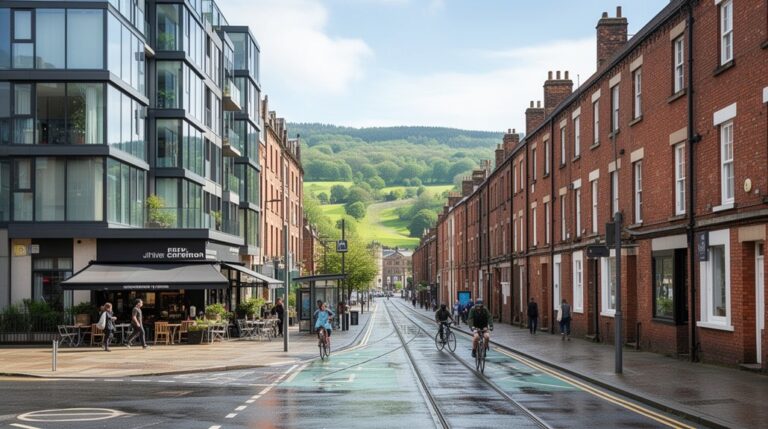

Liverpool’s housing market is moving like a tide with shifting rip currents, and you can’t rely on last year’s comps. You’re seeing agents track micro‑area trends street by street, validate prices with live demand signals, and tighten compliance so buyers trust the file. You’ll also notice leaner digital campaigns, sharper listings, and faster viewing workflows to keep deals from stalling. The key question is which signals matter most right now—and how you act on them before momentum flips.
Key Takeaways
- Liverpool agents use micro‑area sold comparables and days‑on‑market data to set evidence‑led prices and avoid optimistic overpricing.
- Regeneration premiums are now selective, with EPC ratings, service charges, and block management heavily influencing buyer willingness and valuations.
- Pricing and marketing target busy search bands, using clear offer windows and rapid adjustments when views‑to‑enquiry rates fall below benchmarks.
- Demand is measured in real time via viewings‑to‑offers, time‑to‑viewing, second‑visit rates, and buyer proceedability rather than portal clicks.
- Deal speed is protected through document‑ready compliance, high‑intent launch weekends, and proactive chain, solicitor, and lender nudges to reduce fall‑throughs.
What’s Changing in Liverpool’s Market in 2026?

While Liverpool’s housing market has always been shaped by regeneration and renter demand, 2026 is bringing sharper pricing discipline, tighter compliance, and more data-led decision-making from buyers, sellers, and landlords alike. You’re seeing listings priced closer to achieved values, not hopeful asks, as agents benchmark against micro-area comparables and days-on-market trends.
Urban regeneration continues to re-rate pockets around the waterfront, Knowledge Quarter, and key transport links, but premiums are getting more selective: EPC performance, service-charge transparency, and block management now move valuations.
Demographic shifts are also reshaping demand, with more young professionals and downsizers competing for walkable neighbourhoods, while families track school catchments and space-to-cost ratios. You’ll feel the market rewarding homes that are compliant, energy-aware, and accurately positioned within the community.
What Should Sellers and Buyers Do Right Now?
Because Liverpool’s 2026 market rewards accuracy over optimism, you’ll get the best outcome by acting like an analyst, not a gambler: sellers should price to micro-area sold comparables and current days-on-market, tighten EPC and compliance paperwork before launch, and choose an agent who can evidence strategy with viewing-to-offer and fall-through data.
Buyers should set a hard budget, track recent achieved prices street-by-street, and move quickly on correctly priced homes—especially where service charges, lease terms, and energy costs stack up cleanly.
Next, align your timeline with Market trends: if you need certainty, prioritise clean chains and pre-agreed movers. If you want upside, budget for negotiation and remedial works.
Read buyer behavior in offer terms, not comments: proceedable status, survey stance, and deposit strength. You’ll fit in by being ready, responsive, and evidence-led.
How Liverpool Estate Agents Measure Demand (Live Signals)
If you want to price and time a Liverpool listing with confidence, you can’t rely on portal “interest” alone—good estate agents measure demand with live signals that predict whether a home will convert, not just get clicks.
You’ll see them track viewing-to-offer ratios, time between first enquiry and booked viewing, and the share of viewings that include a second visit. They monitor buyer funding strength (AIP in place, cash status), chain complexity, and fall-through risk from recent local deals.
You’ll also benefit from weekly micro-area comparisons: which streets pull bids, which stall, and how Market trends shift by property type.
Agents read Demand signals in call logs, WhatsApp follow-ups, and open-day attendance, then adjust marketing pace, not just messaging, to keep momentum high.
How Liverpool Estate Agents Price Homes to Sell

To price a Liverpool home so it sells—rather than simply lists—top estate agents start with evidence, not instinct. You begin with a tight Market analysis: recent sold prices, fall‑through rates, time‑to‑offer, and how many buyers are currently shortlisting comparable homes.
Then you align Pricing strategies to buyer psychology: pitch within the busiest search bands, use price‑to‑comp ratios to justify the number, and set a clear “offer window” that creates urgency without undercutting value.
You’ll also stress‑test against mortgage valuations by modelling likely down‑valuation risk. If enquiries lag in the first 10–14 days, you act fast: adjust price, improve presentation, or tighten targeting.
That’s how you stay in the selling crowd, not the waiting crowd.
Where Liverpool Agents See Hotspots Rising and Cooling
While headlines often paint Liverpool as one market, estate agents track it as a moving patchwork: pockets where buyer demand and achievable prices are climbing, and streets where stock levels, longer days-on-market, and tighter mortgage affordability are cooling momentum.
You’ll see rising heat where transport links, rental yields, and family‑home scarcity align—often near upgraded high streets and new build phases tied to Neighborhood revitalization. Agents flag cooling where pricing overshoots comparable evidence, service charges pinch, or investor demand softens after rate resets.
To stay ahead, you benchmark micro‑areas weekly: sold‑price trends, listing absorption, and chain break risk. Market diversification matters—mixing first‑time buyer stock, upsizer semis, and turnkey terraces steadies enquiry flow.
You fit in by choosing the lane that matches your budget.
How Liverpool Estate Agents Market Homes Online (What Works)
To win online in Liverpool, you align your portal strategy with pricing that matches live demand signals, so your listing ranks well and converts viewings fast.
You track performance by portal—impressions, click-through rate, leads per day—and adjust price and photography to protect momentum in the first 7–14 days.
You then amplify reach with social media video tours that show layout flow and local lifestyle in under 60 seconds, turning scrolls into qualified enquiries.
Portal Strategy And Pricing
Because most Liverpool buyers start on Rightmove or Zoopla, your portal strategy and pricing have to work together. You’ll win attention in the first 7–10 days, when click‑through and saves peak, so launch with best‑in‑class photos, accurate EPC and tenure info, and a clear offer position.
Use digital marketing to test price bands: track views-to-enquiry rate, not vanity impressions, and adjust fast if you’re below local benchmarks. Price for the search filters buyers actually use (e.g., £200k–£250k), and avoid “just over” thresholds that bury you.
Keep customer engagement tight: respond within 15 minutes, confirm viewing slots quickly, and feed portal Q&A into your listing updates. That’s how you stay competitive and part of the market’s top tier.
Social Media Video Tours
If you want more booked viewings in Liverpool, social media video tours need to do more than “look nice”—they must stop the scroll and qualify buyers fast.
Lead with the hook in the first 2 seconds: price band, postcode, and one standout feature. Keep it under 45 seconds for Reels/TikTok, then retarget watchers with a longer walkthrough.
Use on-screen captions, not voiceover-only, because most views are muted.
Add virtual staging to show layout potential in terraces and flats without overpromising.
For family homes, include drone footage to prove plot depth, parking, and nearby green space.
Finish with a clear CTA: “DM ‘VIEW’ for slots,” and track saves, 3‑second holds, and click-to-call so your team optimises weekly.
How Liverpool Estate Agents Speed Up Viewings and Deals
While the average UK home sale can take months from listing to completion, Liverpool estate agents cut that timeline by engineering momentum from day one—pricing with live local comparables, launching marketing fast across the right portals and buyer lists, and pre-qualifying applicants before they step through the door.
You’ll feel the pace in how they batch viewings into high-intent “launch weekends,” then use Virtual tours to filter time-wasters and widen reach to out-of-town buyers. You get faster feedback loops: same-day viewing notes, instant offer updates, and chain mapping that spots weak links early.
Agents push deals forward with document-ready checklists, lender and solicitor nudges, and tight diary control. That consistency boosts Customer retention, because you stay informed, included, and confident through every milestone.
How to Choose a Liverpool Estate Agent (Questions to Ask)

Although Liverpool’s market moves at different speeds street by street, you can choose the right estate agent quickly by asking questions that expose their local pricing accuracy, buyer demand, and process control.
Ask how they’ll justify your Property valuation: which sold comps within 0.25 miles, what adjustments, and their average % from asking to sold in your postcode.
Check demand: current buyer list size, viewing-to-offer rate, and days-to-offer for similar homes.
Probe marketing: portal ranking strategy, floorplan/photography standards, and how they handle fall-through risk.
Test Client communication: what you’ll receive weekly (views, enquiries, feedback), who’s your day-to-day contact, and response-time targets.
Finally, ask about fees tied to performance and their chain management plan so you feel part of a smooth, local deal team.
Conclusion
In 2026, you can’t rely on gut feel in Liverpool—you need agents who read live demand like a satnav in rush hour. You’ll win with evidence-led pricing, hyperlocal comparables, and compliant paperwork that keeps buyers moving. Expect digital-first marketing, virtual tours, and rapid feedback loops to convert clicks into viewings. Choose an agent who tracks micro-trends, explains strategy in numbers, and pushes transparent deal progression from offer to completion.
About the Author