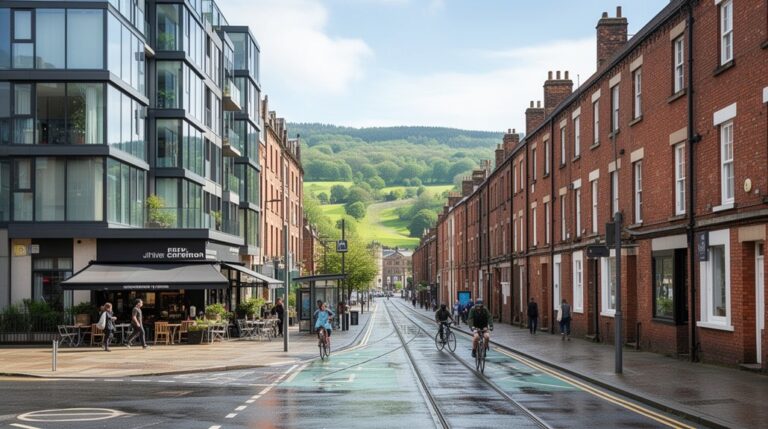

If you’re weighing Beaconsfield as a 2026 luxury commuter base, you’re really pricing convenience against long-term asset security. You get a 25–30 minute Marylebone run, low-density estates with larger plots, and protected character that limits overdevelopment. But you’ll also face higher entry prices, ongoing running costs, and a narrower resale pool. The key is knowing where the premium is structural versus purely cosmetic, and what that means for your next move…
Key Takeaways
- Beaconsfield pairs a 25–30 minute Marylebone rail commute with a low-density, prestige housing environment.
- Planning constraints preserve mature streetscapes, larger plots, and consistent character, supporting long-term desirability.
- Homes commonly offer luxury specifications—private drives, high-end kitchens, smart controls, security, gyms or pools—rare for commuter towns.
- A village-scale retail core and local amenities make daily life convenient without sacrificing privacy and space.
- Prices carry a London-linked premium, with higher running costs, but strong schools and amenities underpin resale liquidity.
Why Move to Beaconsfield in 2026?

If you’re weighing up a high-end move in 2026, Beaconsfield stands out because it combines prime commuter access with a low-density, prestige housing stock that’s hard to replicate elsewhere on the corridor. You’re buying into tight supply: larger plots, mature landscaping, and planning constraints that protect streetscape character and reduce overdevelopment risk.
You’ll find Luxury amenities that match executive expectations—private gyms, pools, gated drives, and high-spec kitchens—while still retaining a village-scale retail core for daily convenience.
For belonging, you can plug into curated local networks through clubs, independents, and school communities that anchor long-term residency. You also get genuine cultural attractions nearby, from heritage buildings to galleries and seasonal events, which reinforces place identity and supports resale premiums.
Beaconsfield Commute: Rail Times, Costs, Reliability
While Beaconsfield trades on countryside calm, its rail link does the heavy lifting for weekday practicality. You’ll use Beaconsfield station on the Chiltern Main Line, with fast services to London Marylebone typically around 25–30 minutes, plus frequent peak departures that keep timetable risk manageable.
You can plan costs with season tickets, flexible carnets, and off-peak fares, and you’ll find clear fare boundaries for Zone-free commuting.
Reliability matters, and you benefit from multiple peak trains, alternative stopping patterns, and real-time disruption alerts via operator apps. On arrival, you’re plugged into the Marylebone-to-West End transfer network, so meetings stay predictable.
Back home, the commute supports Luxury amenities and easy access to local Cultural attractions, helping you feel part of a well-paced commuter set.
Beaconsfield Property Prices and Running Costs
Because Beaconsfield sits in the top tier of Chiltern commuter markets, you’ll price property using a London-linked premium and then stress-test the ongoing cash costs—mortgage servicing at current rates, council tax bands, insurance, utilities, broadband, and routine maintenance—against your net take-home and commuting spend to confirm the home still delivers value on a total-cost-of-ownership basis.
Track recent sold-price benchmarks by road and catchment, not just asking prices, and model downside liquidity if rates stay higher for longer.
If you’re buying into a luxury estate, budget for service charges, private road contributions, and higher rebuild costs.
Factor premium amenities into running costs: EV charging, security systems, landscaping, and faster connectivity.
When the numbers align, you’re not just purchasing; you’re joining a stable, high-signal address.
What You Get for the Premium (Plots, Homes, Finish)
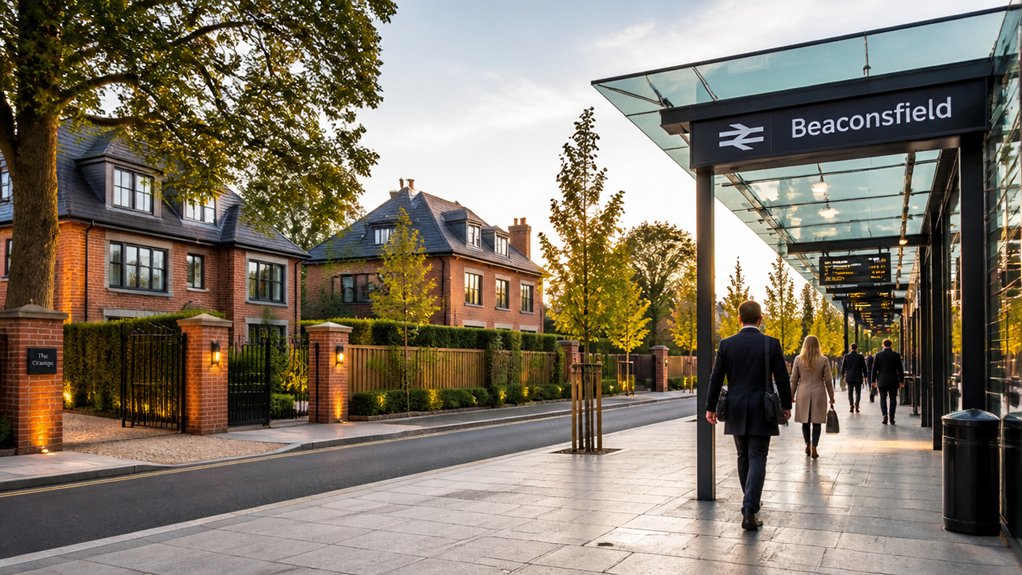
Once you pay Beaconsfield’s London-linked premium, you’re typically buying more than postcode cachet: larger plots with proper frontage, deeper rear gardens, and off-street parking that scales to modern life. You’ll often find exclusive plots on private roads or tucked cul-de-sacs, where sightlines, boundary treatments, and set-backs protect privacy and resale appeal.
Inside, you’re paying for floorplans that work: wider halls, higher ceilings, proper studies, and open-plan kitchen zones that still separate formally when needed. Specification tends to justify the delta—underfloor heating, MVHR, zoned smart controls, acoustic glazing, and integrated security.
Expect luxury finishes as standard: engineered oak, stone worktops, premium appliances, bespoke joinery, and hotel-grade bathrooms. You’re buying consistency, not compromise.
Beaconsfield Lifestyle: Schools, Shops, Food, Green Space
Where does Beaconsfield’s day-to-day value really show up after the purchase completes? You’ll feel it in schooling density and catchment clarity: multiple high-performing primaries, respected secondaries nearby, and a prep/independent mix that supports long-term planning.
For errands, you get a walkable high street with premium grocers, specialist retailers, clinics, and service-led independents that reduce travel time and friction.
Food and social spend stay local: modern British dining, cafés, and destination pubs create reliable midweek options and weekend rituals.
You’re also buying green-space access—Beeches, commons, and well-surfaced footpaths that connect to sports clubs and family routines.
Add Luxury amenities like gyms and salons plus cultural attractions and you’ll plug into a polished, quietly confident community network.
Who Beaconsfield Suits: and Better-Value Alternatives Nearby
You’ll get the most from Beaconsfield if you’re pricing in a premium for fast rail-linked commuting, top-performing schools, low-density streets, and a higher-spec housing stock.
If your brief prioritises value metrics—£/sq ft, plot size, and renovation headroom—you can often improve the trade-off in nearby suburbs that sit one stop out or just beyond the core catchments.
Next, you’ll map your household profile to Beaconsfield’s cost base, then benchmark close alternatives where you can buy more space or a similar lifestyle for less.
Ideal Residents And Lifestyles
Although Beaconsfield sits at the premium end of the Buckinghamshire commuter belt, it suits buyers who’ll pay for low-friction London access (fast rail from nearby stations and strong road links), a high-performing school catchment profile, and a “finished” residential environment with larger plots, period character, and reliable resale liquidity.
You’ll fit best if you value predictable day-to-day operations: short school runs, low-crime streets, and planning control that protects streetscape quality. If you’re trading up, you’ll like the depth of detached stock, gated drives, and turnkey refurb potential without compromising conservation-era aesthetics.
Your lifestyle skews toward privacy and membership: golf, country pubs, and curated high-street spend, supported by luxury amenities and exclusive communities. You’re buying belonging as much as bedrooms, and you’ll hold value through cycle shifts.
Nearby Better-Value Suburbs
Beaconsfield prices in a “fully de-risked” commuter package—schools, streetscape protection, and liquidity—so it won’t suit you if you’re optimising for £/sq ft and can trade a bit of polish for better entry value.
If you still want fast trains and a village feel, look at Gerrards Cross edges, where you can buy larger plots per pound but accept more variance in finish and planning control.
In High Wycombe’s premium pockets, you’ll price in less cachet yet keep Chiltern access and scope to add value through refurbishment.
Amersham-on-the-Hill can undercut Beaconsfield on older stock while keeping Luxury amenities and stronger weekend footfall.
You’ll still plug into community events, but you’ll tolerate a wider buyer mix and slightly softer resale velocity.
Conclusion
You move to Beaconsfield for certainty: a 25–30 minute Marylebone run, predictable service patterns, and a low-density housing stock with bigger plots and higher-spec envelopes. You pay more—purchase price, council tax, maintenance—yet you buy down risk: school catchments, protected streetscapes, and resale liquidity. It’s city-speed access beside estate-scale calm; curated amenities beside mature green buffers. If you need the commute without the premium, you’ll trade space, finish, or stability.
About the Author