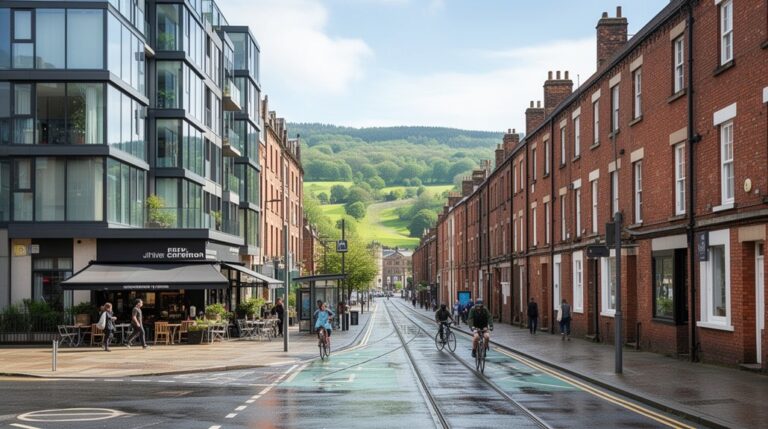

You might not know Romford’s best-value streets aren’t the obvious ones near the station, but the walkable pockets just beyond them where prices haven’t fully caught up with the new rail links. If you’re London-bound and cost-conscious, you can still buy space, parks, and day-to-day convenience without paying inner-zone premiums. The key is knowing which micro-areas, property types, and lease terms quietly swing the numbers in your favour…
Key Takeaways
- Romford offers Zone 6 affordability while staying inside Greater London, often cheaper than inner East hubs for similar space.
- Fast trains reach Liverpool Street in 30–40 minutes peak, keeping City commutes predictable for London-bound workers.
- Door-to-door journeys to the West End average 45–55 minutes, and Canary Wharf 45–60 minutes depending on interchange.
- A strong town centre mix of shops, gyms, dining, and services reduces day-to-day travel and supports a convenient lifestyle.
- Best value often sits near the station and emerging pockets like Rush Green, but buyers should assess parking, noise, and leasehold costs.
Is Romford Good Value for London Buyers?

Although Romford sits on the outer edge of London, it can still look like strong value if you’re trying to balance purchase price, commute time, and day-to-day costs. You get fast rail links into the City, so you can keep travel predictable without paying inner-zone premiums.
You’ll also find big-name retail and essentials close by, which helps you control weekly spend and skip costly convenience shopping.
You don’t have to trade lifestyle for budgets, either: you can build a routine around local dining on South Street and hit nearby nightlife hotspots for evenings that feel social, not splurgy.
If you want a place where you can plug into a community, run errands on foot, and still feel London-connected, Romford fits the brief.
Romford House Prices: How Do They Compare Nearby?
If you’re weighing Romford against nearby postcodes, house prices usually land in the “Zone 6 value” band—cheaper than the inner East hubs you’d compare on commute (Stratford, Leyton, Walthamstow), but often pricier than farther-out Essex options once you match for property size and condition.
You’ll typically pay a premium for walkable streets near the town centre, newer builds, and parking, while older semis can look sharper value if you’ll budget for upgrades.
Compare like-for-like: floor area, EPC rating, and lease length for flats.
Romford’s pricing reflects practical demand plus improving retail, gyms, and other Luxury amenities, yet it still benefits from a community feel around markets and Historical landmarks.
If you buy smart, you’ll feel local without overpaying.
Romford Commute Times: How Fast to Key Stations?
If you’re weighing Romford’s value, you can’t ignore what peak-time commute minutes do to your daily costs and flexibility.
You’ll want to benchmark typical rush-hour journeys from Romford to major hubs like Liverpool Street, Stratford, and the West End, including transfer time and service frequency.
Once you price in season tickets and time saved, you’ll see whether Romford’s links to key stations genuinely outperform nearby alternatives.
Typical Peak-Time Journeys
How quickly can you clear Zone 6 and hit London’s main hubs at rush hour? From Romford, you’ll typically see 30–40 minutes to Liverpool Street on fast services, with 10–15 minutes extra if you catch a stopping train.
Need the West End? Budget around 45–55 minutes door-to-door once you factor in a brisk walk and a platform change.
Canary Wharf usually lands in the 45–60 minute range, depending on your interchange timing.
You keep costs predictable by using Public transportation rather than driving, and you won’t pay peak parking premiums.
Better still, Local amenities near the station let you grab coffee, top up groceries, and feel like a regular before you commute. That routine builds community, fast.
Links To Major Hubs
Those peak-time figures matter most when you map them to the stations you actually need week in, week out—because Romford’s value shows up in how quickly you can reach London’s biggest job and leisure nodes without paying Zone 1 rents.
From Romford, you can target Liverpool Street for City roles, Stratford for Canary Wharf links and shopping, and Paddington for Heathrow runs, all without changing your whole routine.
If you work hybrid, a reliable fast line means you can buy a bigger place and still keep your start times. You’ll also feel plugged in: quick hops back let you use Local amenities after work, not just at weekends.
That’s where the Community vibe strengthens—more time at home, less money burned commuting.
Which Parts of Romford Are Best Value Right Now?
If you’re hunting value in Romford right now, you’ll want to compare station‑adjacent starter areas where walkability trims commuting costs and keeps resale demand liquid.
You should also watch emerging East Romford pockets where pricing still lags local amenities and school catchments.
Finally, track Crossrail‑linked price corridors, because even small shifts in distance-to-station and service frequency can swing £/sq ft and rental yields fast.
Station‑Adjacent Starter Areas
While Romford’s wider postcode can look pricey at first glance, you’ll often get the best starter‑home value by staying within an easy walk of the station and targeting the “in‑between” streets rather than the headline addresses.
Focus on Victorian and interwar terraces just off the main routes, where historical development means solid layouts, usable loft space, and predictable maintenance costs. You’ll typically pay less than on the showcase avenues yet still keep a fast, reliable commute.
Check walkability to local amenities: supermarkets, the Brewery, gyms, cafés, and schools, because everyday convenience protects resale value.
Prioritise quieter side roads with permit parking, good lighting, and tidy frontages—signals neighbours care.
If you need a flat, look for low service charges and healthy reserves nearby.
Emerging East Romford Pockets
Station-adjacent “in-between” streets still set the baseline for value, but your next best gains often come from east Romford pockets where prices haven’t fully caught up with demand.
Look around Rush Green edges and the quieter roads toward Havering-atte-Bower’s approach for family semis and modest terraces that trade a little polish for stronger upside. You’ll spot Urban regeneration spillover in refreshed parades, small infill schemes, and better-managed blocks, without paying the town-centre premium.
Prioritise streets with consistent frontage, low conversion density, and walkable schools, then negotiate hard on tired interiors—your capex can be targeted and predictable.
You’ll also feel Cultural diversity in local shops and community hubs, which helps you settle in fast and stay long.
Crossrail‑Linked Price Corridors
The Elizabeth line has turned Romford into a set of price corridors, and you’ll get the best value by targeting streets that still “price off” older TfL Rail assumptions rather than today’s faster commute. Start within a 10–15 minute walk of the station, but look just behind the retail core where noise discounts persist.
North of the centre, pockets near Lodge Farm Park often undercut Gidea Park’s premium while keeping strong Local amenities and school access. South‑east, around Oldchurch and Queen’s Hospital, you’ll pay less than you expect for dependable demand, thanks to Historical development that favours practical semis over showcase avenues.
If you want belonging, favour settled roads with active residents’ groups, then budget for cosmetic upgrades, not structural work.
Romford Flats vs Houses: What Do You Get for £X?

A house at the same headline budget usually means compromising on condition or location, but you gain a garden, loft potential, and freedom from service charges.
You’ll also budget for roof, heating, and extensions, while enjoying streets near historical landmarks and a stronger “this is home” feel.
Romford Town Centre: What’s Improved (and What Hasn’t)?
Choosing between a flat and a house only tells half the value story—day-to-day liveability often comes down to what Romford town centre actually gives you.
You’ll notice the biggest uplift around the station and main retail core: cleaner frontages, steadier footfall, and better-linked routes that make popping in feel less like a trek and more like part of your routine. For cost-conscious buyers, that matters because you’ll use the centre more often without defaulting to London spending.
Local dining has broadened beyond chains, so you can host friends without leaving the borough.
Nightlife options are still hit-and-miss: weekends feel lively, but midweek can be thin, and some late-night areas remain scruffy. You’ll want to choose streets carefully for noise and vibe.
Romford Schools, Parks, and Day-to-Day Convenience
While headline prices grab attention, your real value in Romford often hinges on schools you can actually get into, parks you’ll use weekly, and errands you can knock out without jumping on a train. Check Ofsted reports, but also walk the routes at drop‑off time; you’ll quickly see which primaries feel calm, consistent, and well‑run.
For free downtime, you’ve got Raphael Park and Lodge Farm Park for playgrounds, pitches, and weekend loops that replace paid activities.
Daily convenience stacks up: supermarkets, the market, pharmacies, gyms, and quick services sit close enough to bundle trips and cut travel spend.
Add Community events, from fairs to library sessions, and you’ll meet neighbours fast. Try Local cuisine on South Street to make it feel like home.
Buying in Romford: Leases, Noise, Parking, and Risks

If you’re buying in Romford, you’ll get better value by stress-testing the unglamorous details—lease terms, train-line noise, parking rules, and building risks—before you negotiate.
Start with Leasehold issues: check remaining years, ground rent clauses, service-charge history, planned major works, and whether the freeholder or managing agent runs a tight ship. Price in remediation for cladding, lifts, roofs, and fire-safety reports, not wishful thinking.
Visit at rush hour and late evening to gauge Elizabeth line and A12/A127 spillover noise; ask for the seller’s windows spec and any soundproofing receipts.
For houses and flats alike, map Parking congestion, permits, and visitor bays, then test actual availability.
Finally, scan flood risk, subsidence indicators, and recent insurance premiums before you commit.
Who Romford Suits Best (First-Timers, Families, Investors)
Where does Romford make the most sense for your money—first home, family upgrade, or yield play? If you’re a first-timer, you’ll like the price-to-commute trade: look for well-managed blocks near the station, check service charges, and you’ll still have Local dining for weeknights.
If you’re upsizing, you’ll get more square footage than inner zones and a community feel that’s easy to join—parks, schools, and weekend errands all stay close. Target quieter streets away from late-night routes if you want sleep and driveway parking.
If you’re investing, you’ll chase renters who want London access plus nightlife scenes; studios and two-beds near transport move fastest. Run numbers on ground rent, lease length, and void risk, and budget for maintenance upfront.
Conclusion
You want London access without paying Zone 1 ransom, so Romford’s your cheeky compromise. You’ll still get fast trains, decent parks, and a town centre that’s trying hard—sometimes too hard—but your budget won’t faint. Pick walkable streets or Rush Green for sharper value, and watch leases, station noise, and parking like a hawk. If you’re a first‑timer, family, or investor, you’ll like the maths—and tolerate the bustle.
About the Author