

You might feel it when a Monday peak ticket from a big regional city jumps again, like a meter ticking faster than your train. If you commute from here, you often get quicker rail options into London, lower season-ticket costs than nearby hubs, and extra savings from railcards and off-peak travel. Add walkable neighbourhoods near the station and decent bus links, and your monthly budget can shift noticeably—provided you pick the right route and postcode…
Key Takeaways
- Fast GWR trains reach London Paddington in about 23–30 minutes, keeping door-to-door commutes competitive with closer, pricier areas.
- Reading’s season tickets and peak fares are often lower than nearby regional hubs, supporting predictable, value-focused commuting budgets.
- Off-Peak travel, split tickets, and advance singles can cut rail costs by roughly 20–40% compared with peak fares.
- Living near Reading Station enables walking or cycling to work and amenities, reducing add-on costs like buses, parking, and taxis.
- Housing in Reading can be better value than London zones or nearby towns, so rent savings can outweigh commuting costs.
Is a Reading Commute Good Value? (Quick Verdict)

So, is commuting into Reading actually good value? For many UK workers, yes: you’ll typically find season-ticket and peak fares lower than comparable regional centres, and you can keep total costs down by walking or cycling from stations to offices.
You also get solid local pay density, with Thames Valley employers and a busy town-centre economy, so your travel spend can map to real earning power.
Beyond the spreadsheet, you’ll feel part of a practical commuter community: you can meet people through Reading hobbies, from clubs and classes to weekend groups, without paying London-level prices.
Plus, library memberships add low-cost perks—workspace, Wi‑Fi, events, and borrowing—that stretch your budget and your social life.
Reading to London Commute Time: Fastest Routes?
While costs matter, your daily time cost often decides whether Reading really works as a commuter base. Fast GWR services can reach London Paddington in about 23–30 minutes, and most peak “fast” trains land around the half‑hour mark.
If you work near the West End, Paddington plus the Elizabeth line can keep door‑to‑door times competitive. For the City or Canary Wharf, check trains to London Waterloo (often 60–70 minutes) or use Paddington to Tottenham Court Road and onward on the Central/Northern lines.
You’ll also get frequent departures, so you can flex around meetings and still feel part of the commuter crowd. That spare time powers Reading leisure—think train reads and book clubs.
Reading Rail Costs: Season Tickets, Off-Peak, Railcards
You’ll keep Reading–London costs under control by comparing the annual, monthly, and weekly Season Ticket maths against how many days you actually travel.
You can often cut spend by shifting to Off-Peak and checking the time restrictions on your specific route, rather than defaulting to Anytime fares.
You’ll also want to test whether a Railcard applies (e.g., 16–25, 26–30, Two Together, Network Railcard) and confirm eligibility and exclusions before you buy.
Season Tickets Cost Breakdown
Because fares add up fastest on the Reading–London corridor, it pays to compare season tickets against off‑peak returns and railcard discounts in pounds and pence.
If you travel most weekdays, a Reading–London Terminals annual season (around £5,000) can beat buying daily peak returns, and it locks in budget certainty for your household.
A monthly option spreads cashflow, while weekly suits trial periods or hybrid patterns.
Season ticket flexibility matters: with an annual you can add a Gold Card for reduced leisure fares in the South East, and you’ll often get partner offers via your operator.
Check Commuter discounts such as employer season‑ticket loans, carnet packs, and smartcard auto‑renew to avoid missing valid travel days.
Off-Peak Fare Saving Strategies
Season tickets lock in predictable costs, but if you’re travelling fewer than four or five days a week you can often beat them by shifting journeys off‑peak and stacking discounts.
From Reading, compare an Off‑Peak Day Return versus Anytime on your usual route; the gap is often 20–40% when you avoid peak departures.
Use split ticketing on longer trips (e.g., Reading–London via an intermediate) and you can shave more off without changing trains.
Book Advance singles for fixed plans; prices typically rise as trains fill.
If you’re flexible, travel after the morning peak and back before the evening rush.
Keep costs down locally too: use cycling routes to reach the station, and meet mates at the Local library instead of paying for city-centre coffee.
Railcards And Eligibility Rules
While off‑peak timing cuts the headline fare, a Railcard often delivers the bigger, repeatable saving: most give 1/3 off eligible Off‑Peak and Advance tickets, which can quickly outweigh the annual fee on regular Reading routes.
Check your eligibility: 16–25, 26–30, Senior (60+), Two Together (travel as a pair after 09:30), Family & Friends, Veterans, Disabled Persons, and Network Railcard (for the South East, including Reading).
Use Railcard discounts on non‑Season fares; Season Tickets usually don’t qualify, so compare a weekly/monthly Season versus Railcard‑priced singles if you only commute 3–4 days.
Watch minimum fares and time restrictions, as they can reduce Ticket flexibility.
Register the Railcard in your app so you travel like locals and avoid penalties.
How Predictable Are Reading Commute Fares Year-to-Year?
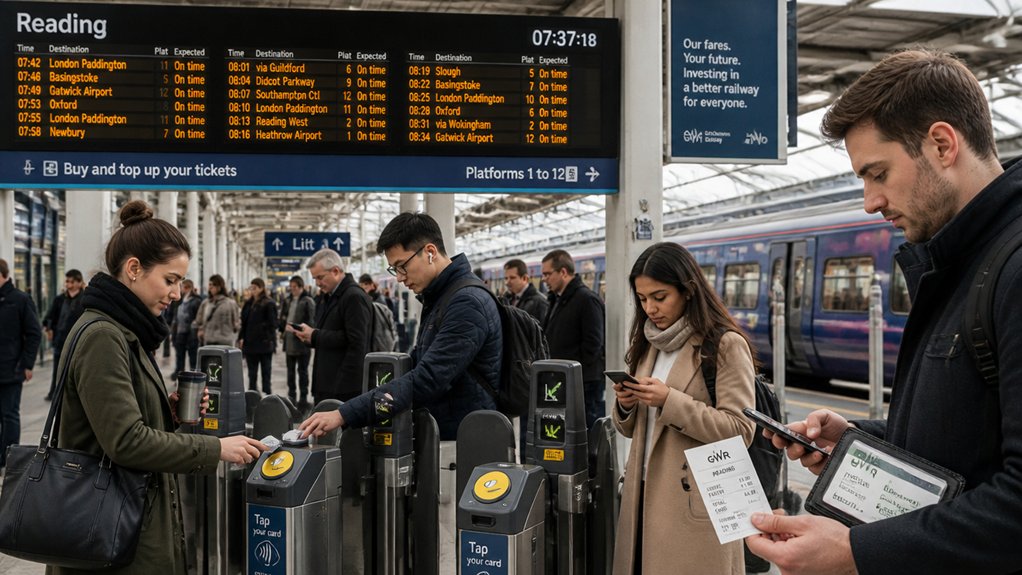
If you commute from Reading, you’ll usually see fares rise once a year, often around January, and the percentage change tends to track the government’s regulated-fares formula rather than random swings.
You can’t control the drivers—inflation measures, Department for Transport policy on regulated tickets, and operator pricing on unregulated fares—but you can watch them to spot whether next year’s increase is likely to be mild or sharp.
To budget, you’ll want to build in a small buffer for fare variability and plan key purchase dates (like season ticket renewals) around the annual change window.
Annual Fare Change Patterns
Although rail fares rarely jump at random, you can still forecast Reading commute costs year to year by watching the same UK-wide triggers. Most regulated season tickets reset once annually, typically around early March, so you can treat that as your planning window and compare last year’s percentage change to the next one.
Track three patterns: the annual “RPI-linked” headline cap, the gap between Anytime/Off-Peak and season pricing, and whether advance purchase fares tighten or loosen as trains fill. Use Travel technology like fare alerts and split-ticket checks to log what you actually pay.
Then benchmark your commuter habits—days in-office, peak departures, Railcard use—so you’re comparing like for like. Do that, and you’ll feel in step with other Reading regulars.
Key Drivers Of Increases
Because most Reading commute fares follow national rail pricing rules, you can usually predict next year’s jump within a narrow band by watching a handful of inputs rather than guessing. Track the DfT’s regulated fare cap announcement (often tied to July RPI or a government-set figure), because Season and Anytime rises typically anchor the rest.
Watch PAYE wage growth and inflation prints too: operators and ministers cite them when justifying uplifts. Check franchise or National Rail Contract updates for local “rebalancing” that shifts increases between peak, off-peak, and contactless.
Engineering or service level changes rarely set price, but they can trigger route validity tweaks that affect what you pay. When you travel for Reading leisure or meet your book clubs, the same drivers still apply, so you’re not out of step.
Budgeting For Fare Variability
While you can’t lock in next year’s Reading commute price to the penny, you can usually budget within a tight range by treating fares like a capped annual uplift rather than a weekly surprise.
In the UK, regulated rail fares often rise around the January change, typically linked to inflation measures and government policy, so big mid‑year shocks are less common on core season products.
For commuter budgeting, assume a modest annual increase, then stress‑test your plan with a slightly higher buffer to cover Fare fluctuation on Anytime and off‑peak tickets.
You’ll stay aligned with other Reading commuters by reviewing your operator’s annual fares announcement, checking Railcard eligibility, and comparing monthly versus annual seasons to smooth cashflow.
Build in a contingency line, not guesswork.
Buses and Park-and-Ride for Reading Commuters
If you want to keep commuting costs predictable without relying on peak-time rail fares, Reading’s bus network and park-and-ride options give you a practical middle ground. You can use real-time Bus schedules via apps and stops, then plan around frequent corridors into the centre and business parks.
That predictability helps you cap weekly spend and avoid last-minute rail upgrades.
Park-and-ride lets you drive to the edge, pay clear parking fees, then finish by bus with fewer city-centre miles. You’ll often trade fuel and town-centre parking risk for a set daily bundle, which makes budgeting easier.
Check first and last bus times, weekend service, and multi-trip tickets so you’re travelling like locals, not guessing. You’ll feel part of the rhythm fast.
Best Places to Live: Reading Station vs Suburbs
Choosing between living near Reading Station and settling in the suburbs usually comes down to how you trade time for money: station‑adjacent postcodes cut walk‑to‑train time to minutes and make London commutes more reliable. But you’ll typically pay higher rent, face tighter parking, and rely more on paid permits or car clubs.
If you want maximum convenience, central areas like Town Centre, Katesgrove, and Caversham Bridge put you close to Reading amenities: Thames-side walks, gyms, supermarkets, and late trains. You’ll feel plugged into the city’s social life, with more meet-ups and fewer “last bus” worries.
If you’re prioritising space and quiet, suburbs such as Tilehurst, Earley, and Woodley often offer larger homes, calmer streets, and more green space. You’ll get a stronger suburban lifestyle and community feel, especially near schools and local parades.
Can You Live Car-Free in Reading and Save Money?
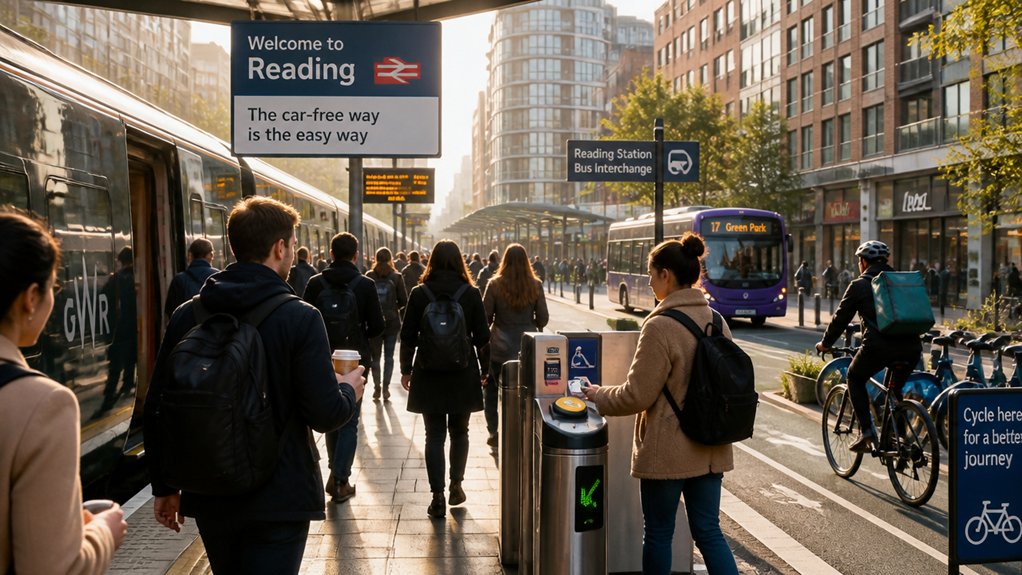
Living near the station or out in Tilehurst or Earley also shapes whether you can skip a car altogether—and that’s where some of Reading’s biggest day‑to‑day savings sit.
If you’re within a 20–30 minute walk or a short bus ride of shops, schools, and GP services, you can treat a car as optional, not essential.
Car ownership costs add up fast: fuel, insurance, VED, MOT, servicing, tyres, and parking can easily run into thousands a year.
Swap that for a mix of buses, rail, and cycling and you’ll control spend month to month.
Reading’s cycle routes, secure bike parking, and growing e‑bike use make Eco friendly transport feel normal—so you’re part of the same routine as your neighbours.
Where Can You Work From Reading Quickly? (Job Hubs)
How far can you realistically commute from Reading before the time cost outweighs the savings? For most people, keeping door-to-door travel under 60–75 minutes each way preserves weeknight time and still unlocks big job markets.
From Reading station you can reach London Paddington in about 25 minutes, Slough in roughly 20, and Maidenhead in around 15; that puts West London, the Thames Valley, and Heathrow-linked roles within easy reach. Head west and you’re quickly in the M4 tech corridor toward Newbury and Swindon.
You don’t have to be on a train daily. Many teams now blend Remote work with one or two office days. When you need focus and community, use coworking spaces in central Reading and near the station.
Reading Housing Costs vs Commute Savings: Do the Maths?
Because rent and rail fares rise (and fall) at different speeds, you’ll get the clearest answer by running a simple monthly trade‑off: what you save on housing in Reading versus what you spend to reach your workplace.
Start with median rent or mortgage for your target postcode, then subtract what you’d pay closer in (Zone 2–4, Slough, Maidenhead).
Next, add your rail season ticket (or pay‑as‑you‑go) plus bus, parking, and the odd taxi after late trains.
Convert time to money: value each commuting hour at your after‑tax hourly rate.
If Reading’s Housing affordability gain still beats the total commute cost, you’re ahead.
Bonus: you’ll use local amenities daily, so factor in fewer weekend trips and a stronger sense of community, too.
Conclusion
You’ll find Reading delivers strong commuter value: rail links are fast, fares are often lower than bigger regional hubs, and you’ve got flexible routes plus railcard discounts. One standout stat: the fastest trains reach London Paddington in about 23 minutes, putting a major jobs market within easy reach. Live near the station, and you’ll trim daily time and spend; choose buses, park‑and‑ride, cycling, and libraries, and you’ll cut costs further.
About the Author