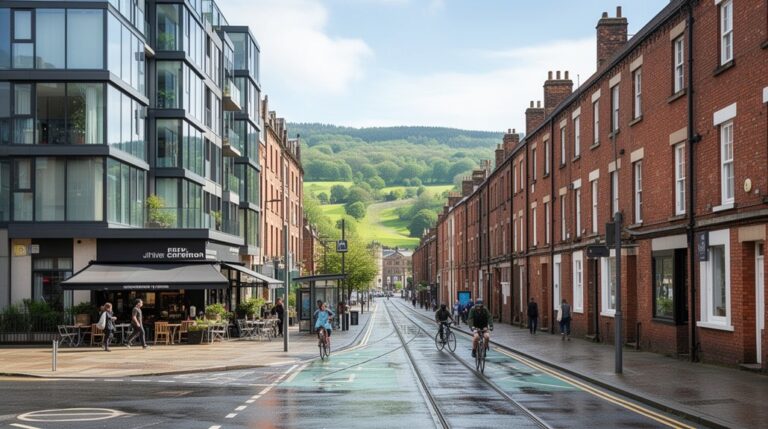

You might not know Birmingham often lets you buy into multiple neighborhood types—historic, emerging, and suburban—without the price spikes you see in many peer metros. If you’re weighing a move, you’ll want to look past list prices and focus on total monthly costs, taxes, commute time, and job access to UAB and downtown. The trade-offs aren’t obvious at first, and one factor usually decides whether your budget actually works…
Key Takeaways
- Birmingham offers strong value and stability, with steadier long-term appreciation and lower volatility than many peer metros.
- Buyers can often afford larger homes, bigger lots, and better layouts, improving everyday livability without oversized monthly payments.
- Diverse neighborhoods fit different lifestyles, from walkable districts near dining to quiet suburbs with top-rated schools and predictable inventory.
- Strong highway connectivity and practical public transit reduce commute stress and link residents to major employment hubs like UAB and downtown.
- Quick, predictable access to Birmingham-Shuttlesworth Airport enables easier travel and hosting, reinforcing the city’s convenience for work and leisure.
Should You Buy a Home in Birmingham Now?
While mortgage rates and inventory still shape your monthly payment, Birmingham’s market remains compelling if you’re buying for value and a stable cost of living. You’ll see that historical real estate trends here favor steady appreciation over boom-bust volatility, which helps you plan a longer hold with less regret.
If you’re buying now, you can act like a local: target neighborhoods where demand stays resilient because commutes are manageable, amenities are close, and local school rankings support consistent buyer interest.
You’ll also want to track days-on-market and price reductions weekly; they signal where you can negotiate without overreaching. Get pre-approved, lock a budget, and keep inspection contingencies tight.
When you choose a community that fits your routines, you’re not just purchasing—you’re joining Birmingham.
Birmingham Home Prices, Taxes, and Monthly Costs
Because your real budget lives in the monthly payment—not the list price—you’ll want to price Birmingham by the full carrying cost: today’s median home price range in your target neighborhood, Jefferson County property taxes, homeowners insurance, and any HOA dues layered on top of principal and interest.
In Birmingham real estate, submarket spreads matter: updated homes near core amenities often price above metro medians, while nearby blocks can reset the payment fast.
Ask lenders to quote with current rates, points, and estimated escrows so you can compare apples to apples.
Jefferson County property taxes are generally moderate, but millage varies by municipality and school district—verify the exact parcel.
Then stress-test your payment with insurance and maintenance reserves.
When you know the true monthly number, you’ll shop confidently—and feel at home faster.
What You Get for Your Money in Birmingham
Once you plug Birmingham’s numbers into your budget, you’ll see the value show up in square footage, lot size, and location flexibility. Compared with many peer metros, you can often step up to an extra bedroom, a dedicated office, or a usable yard without jumping price tiers. That translates to livability: more storage, larger kitchens, and better entertaining flow for everyday routines and weekend hosting.
You’ll also buy into amenities that feel established, not manufactured. Many homes sit near parks, trail access, and commuting routes, while newer builds and renovated stock can bundle luxury amenities like quartz counters, energy-efficient systems, and smart-home wiring.
If character matters, historic districts deliver mature streetscapes and enduring curb appeal, helping your purchase feel rooted and connected.
Birmingham Neighborhoods Buyers Target by Lifestyle

Value in Birmingham doesn’t just show up in bigger floor plans—it also shows up in choice, since you can match a neighborhood to how you actually live instead of forcing your lifestyle to fit the zip code.
If you want walkability, you’ll gravitate to areas with clustered restaurants, parks, and daily errands within a short drive, where resale demand stays consistent.
If top-rated schools and quieter streets anchor your Lifestyle preferences, you’ll look for established suburbs with larger lots and predictable inventory.
If you’re optimizing commute time and monthly costs, you’ll target up-and-coming pockets where pricing per square foot still lags the metro average.
Compare Neighborhood amenities like trail access, retail density, and HOA fees, then tour at peak hours to see where you’ll feel at home.
Birmingham Jobs and Growth Areas Attracting Movers
If you’re moving to Birmingham for work, you’ll likely track housing demand around major employment hubs like UAB, the downtown finance core, and key logistics and manufacturing centers.
You can cut commute time and boost resale prospects by targeting fast-growing neighborhood corridors where new retail, infrastructure upgrades, and infill development are clustering.
In the next section, you’ll see which job nodes and growth corridors are pulling the most movers—and what that means for pricing and competition.
Major Employment Hubs
As employers continue to expand across Greater Birmingham, you’ll see why job access has become a primary driver of new-home demand. UAB and the Health System anchor a large medical workforce, while downtown finance, law, and professional services keep hiring steady.
You can also tap growing logistics and manufacturing roles tied to I-20/59 and the airport, plus tech and engineering teams supporting utilities and advanced industry.
When you buy near these hubs, you shorten commutes, protect resale value, and plug into Urban revitalization that’s lifting office occupancy and street-level retail. You’ll also find Cultural diversity across workplaces and after-hours gathering spots, making it easier to feel like you belong.
In practical terms, more employers mean deeper talent pools and steadier household incomes for communities.
Fast-Growing Neighborhood Corridors
Job access sets the baseline, but neighborhood momentum often seals the deal for new homebuyers. In Birmingham, fast-growing corridors like Avondale, Uptown, Lakeview, and the Hwy 280/Grandview area keep stacking wins: new retail leases, infill housing, and transit-adjacent projects that shorten commutes and lift walkability.
When you track building permits and rent comps, you’ll notice these pockets outperform slower-growth ZIPs, signaling durable demand.
You can also feel the pull day to day. Urban development brings sidewalks, lighting, and mixed-use blocks, while community amenities—parks, breweries, farmers markets, gyms, and school upgrades—help you plug in quickly.
If you want belonging plus resale confidence, target corridors with planned projects, low days-on-market, and steady employer access nearby.
Getting Around Birmingham: Commute and Airport Access
If you’re buying in Birmingham, your daily math starts with highway access—how quickly you can hit I‑65, I‑20/59, or US‑280 and what that does to peak-hour commute time.
You’ll also want to size up public transit options like MAX bus routes for cost control and backup mobility when traffic tightens.
For travel, Birmingham–Shuttlesworth (BHM) keeps trips efficient, so you should compare typical drive times from your target neighborhoods to the terminal before you lock in a home.
Major Highway Commutes
Because Birmingham sits at the crossroads of I‑65, I‑20/59, and I‑459, you can map most daily commutes around a few high-capacity corridors that keep job centers and suburbs tightly connected. That Highway accessibility lets you live in Hoover, Trussville, or Pelham and still reach Downtown, UAB, or the Summit with reliable routing options.
For commute efficiency, I‑459 acts like a beltway shortcut, while I‑65 and I‑20/59 give you straight shots north-south and east-west, reducing unnecessary surface-street mileage.
If you’re buying, track peak-time drive ranges to target neighborhoods that stay under your personal threshold, not just “close on a map.” You’ll also appreciate quick highway access to Birmingham-Shuttlesworth, supporting work trips and weekend plans.
Public Transit Options
Highway access does a lot of the heavy lifting in Birmingham, but public transit can still sharpen your commute math—especially for Downtown and UAB corridors. You’ll find MAX Transit bus routes that concentrate frequency where jobs and campuses cluster, letting you trade parking hunts for predictable stops.
If you work standard hours, scheduled headways can tighten your arrival window and reduce daily wear on your car.
For buyers, Transit infrastructure signals where the city keeps investing: corridors with steady ridership often align with higher-demand rentals and walkable nodes. You can also pair buses with short first/last-mile rides or biking to stretch coverage and boost commuter convenience.
When you plug route maps into your home search, you’ll feel plugged into the same daily rhythm as your neighbors.
Airport Access And Drive Times
Whether you travel for work or just want easy weekend getaways, Birmingham-Shuttlesworth International Airport (BHM) stays within a practical drive for most buyers: many central neighborhoods reach the terminal in roughly 10–20 minutes in light traffic, while farther suburban pockets often land closer to 20–35 minutes depending on your route and rush-hour timing.
That predictability helps you price commute stress into your home search and feel confident hosting family who fly in. You’ll also see solid flight frequency to major hubs, which keeps same-day business loops realistic.
Inside the terminal, airport security lines usually move faster than larger metros, so you’re not burning hours before takeoff. Add quick access to I-20/59 and I-65, and you’ll stay connected while still feeling rooted in your neighborhood.
Is Birmingham Right for You? A Quick Checklist
How do you know Birmingham fits your next-home plan? Start with your budget: compare current list prices and property-tax costs to your target monthly payment, then stress-test rates.
Next, map your commute: if you can stay within a 20–30 minute drive to work, schools, and healthcare, you’ll protect both time and resale value.
Check neighborhood fundamentals: crime trends, school performance, and planned development tell you where demand is rising.
Walk the daily-life test—grocery, parks, gyms, and coffee—because strong local amenities keep you connected.
Finally, sample the social fabric: attend community events, talk to neighbors, and note how quickly you feel welcomed.
If the numbers pencil out and the vibe feels like home, you’re ready.
Conclusion
If you’re waiting for the “perfect” market, Birmingham won’t. With steady demand, reasonable property taxes, and prices that still undercut many Southern metros, your monthly numbers can stay predictable. You can pick historic charm, an up-and-coming pocket, or a family-ready suburb—often within a practical commute to UAB, downtown, and major highways. But here’s the suspense: the best value isn’t the neighborhood—it’s timing. The longer you wait, the tighter inventory gets.
About the Author