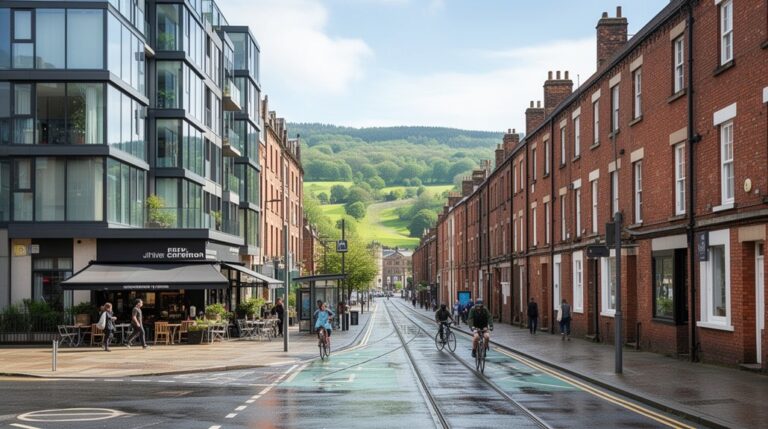

If you’re weighing St Albans for 2026–2036, you’re betting on a tight‑supply, high‑income commuter market where schools and fast rail keep demand sticky even when rates bite. You’ll get the best downside protection from well‑located family homes, but you won’t extract real outperformance unless you renovate with intent—add usable bedrooms, fix layouts, and upgrade EPC efficiently. The question is where growth beats yield, and what could break the pattern…
Key Takeaways
- Resilient historical pricing and affluent, family-led demand make St Albans less rate-sensitive than many outer-London commuter markets.
- Strong drivers—top schools, London-linked earnings, parks, cafés, and rail access—support long-term capital growth and liquidity.
- Green Belt and planning constraints restrict new supply, keeping quality family homes scarce and underpinning prices over time.
- Best upside comes from value-add refurbishments—kitchens, insulation, layout upgrades, lofts/extensions, and EPC improvements—aligned with hybrid-work needs.
- Expect mid-single-digit gross yields in prime areas; station-adjacent premiums compress yields but improve tenant depth and exit demand.
Is St Albans Still a Safe Investment (2026–2036)?

Although higher rates and tighter lending have cooled parts of the UK, St Albans still looks like a comparatively safe 2026–2036 hold because it combines constrained supply (Green Belt limits and a mature, low‑development core) with durable demand from London-linked commuters, top-performing schools, and a persistent shortage of quality family housing.
Conditions that tend to protect downside and reward renovation-led value adds like EPC upgrades, reconfigured layouts, and high-spec kitchens/bathrooms that lift achievable rents and resale pricing.
Historical investment trends show resilient pricing through past cycles, with faster recoveries than many outer-London markets.
You’ll also benefit from demographic shifts: affluent professional households, downsizers trading up for turnkey quality, and renters prioritising schools and rail access.
Focus on street-level micro-markets, target C–D EPC stock for uplift, and you’ll fit the local “quality-first” buyer tribe.
What Returns Can You Expect in St Albans?
Because St Albans trades like a “quality premium” commuter market, you should anchor return expectations to two levers: modest-but-resilient capital growth plus renovation-led uplift.
In practice, you’ll often see steadier gains than faster-growth outskirts, especially once Market saturation caps easy wins on turnkey stock.
Target dated 1930s semis, ex-rentals, or tired Victorian terraces where you can add value with insulation, layout tweaks, loft conversions, and high-spec kitchens that match local buyer norms.
For yield, expect mid-single-digit gross rents on well-located family homes; higher yields usually mean compromising on schools or walkability.
Demographic shifts toward professional families reward three-plus bedrooms, home offices, and energy upgrades.
If you execute well, your total return can outperform the area average without chasing riskier postcodes.
What Drives St Albans House Prices Long Term?
Those return targets only hold up if the long-run price drivers stay in your favour, and in St Albans they usually do. Historical price trends show resilient growth through cycles, backed by London-linked earnings, top-tier schools, and commute convenience that keeps demand deep.
You’ll also see demographic shifts: more professionals and young families trading up for space, while downsizers stay local, keeping transaction flow balanced. That mix supports higher-quality stock and rewards smart refurb work.
If you modernise kitchens, add insulation, and reconfigure layouts for hybrid working, you’re aligning with what buyers bid hardest on. Track sold-price per square foot by street, then target “ugly ducklings” with strong bones.
Done right, you don’t just buy a property—you join a stable, aspirational market.
Planning Rules in St Albans: Will Supply Stay Tight?

In St Albans, you’re investing in a market where Green Belt constraints cap land release, so most “new supply” pressure shifts to extensions, conversions, and refurb-led value uplift.
You’ll want to track the Local Plan’s housing targets versus actual delivery, because any shortfall tends to keep resale stock tight and support pricing.
If approvals stay restrictive, your best edge is buying layouts you can rework fast—then exiting into a supply-constrained buyer pool.
Green Belt Development Limits
Although buyer demand keeps rising, St Albans’ Green Belt designation still fences off large-scale expansion, and that planning constraint has real pricing power. Green belt restrictions curb urban expansion, so fewer new plots compete with the homes you’re upgrading, extending scarcity.
That’s why well-presented stock near rail links and the Cathedral Quarter can command sharper premiums than comparable Hertfordshire towns with looser boundaries.
To play it smart, you’ll win by adding value inside the existing envelope: loft conversions, rear extensions, and energy upgrades that lift EPC ratings and cut running costs.
You’re not just buying a postcode—you’re joining a community that protects its edges, so quality refurbishments signal pride and fit.
Keep a contingency for design-led planning, heritage constraints, and neighbour scrutiny.
Local Plan Housing Targets
Green Belt boundaries keep the physical footprint tight, but St Albans’ Local Plan housing targets decide how much supply actually shows up year to year—and that’s what buyers price in.
Track allocations, delivery rates, and appeal outcomes; when targets slip, listings thin and renovated stock commands a premium. You’ll want to read the pipeline like a trader: permissions granted, starts, completions, and the mix of flats versus family houses.
Historical housing trends show price resilience when delivery lags demand, especially near schools and rail.
Local government policies on density, design codes, and heritage constraints can slow smaller sites, so focus on refurb-friendly homes where you control value: lofts, rear extensions, energy upgrades.
If targets rise, expect more competition, but also better comparables and neighborhood momentum you can join.
How the London Commute Lifts St Albans Prices

You’ll see St Albans price in a “commute-time premium”: shave minutes off the trip into London and buyers bid up fast, especially for walkable, turnkey stock.
When rail connectivity tightens demand around St Albans City station, you can justify renovation spend on kitchens, bathrooms, and layouts that convert quickly at a higher £/sq ft.
Track sold-price gaps by distance-to-station and fastest-train times, then target refurb projects that sit inside that highest-demand catchment.
Commute Time Premium
Why does St Albans command a consistent price premium over many nearby Hertfordshire towns? You’re buying minutes back. Buyers routinely pay more for shorter, predictable door‑to‑door commutes, and valuers capitalise that time saving into stronger comparables and tighter yield spreads. That premium holds up because it’s reinforced by cultural amenities and local employment, which reduce reliance on London while keeping demand deep.
If you renovate, target layouts that suit time‑pressed professionals: open kitchen‑diners, fast bathrooms, and a quiet WFH nook. Data from local listings shows refurbished two‑ and three‑beds attract quicker offers and narrower negotiation bands than “project” stock, especially within walking distance of schools and the centre.
You’ll feel part of a high‑commitment buyer pool that prizes efficiency.
Rail Connectivity Demand
That commute-time premium shows up most clearly in the rail numbers: St Albans City’s fast Thameslink services into St Pancras/Farringdon create a larger, more competitive buyer pool that bids up prices around the station and compresses yields compared with towns on slower or less frequent lines.
If you’re renovating to capture that demand, prioritise walk-to-station stock: compact terraces, flats above shops, and tired semis within a 10–15 minute radius. You’ll typically see faster lettings and stronger resale because London-linked buyers pay for time certainty and Public transport optionality.
Focus spend on EPC upgrades, sound insulation, and layout tweaks that suit hybrid workers. Then protect the lifestyle pitch: highlight nearby Green spaces for weekend balance and school runs.
You’re not just selling bricks—you’re offering membership in a well-connected, commuter-friendly community.
WFH and Hybrid Work: Impact on St Albans Demand
As hybrid work cements itself in the South East, St Albans has shifted from being a pure commuter play to a “work-near-London” hub. That’s kept buyer and tenant demand resilient even as wider market sentiment has softened.
Remote work and lifestyle changes mean you’re underwriting space, not just stations: extra bedrooms for offices, garden studios, and faster broadband-ready layouts now price in at a premium.
You’ll see strongest enquiry for turnkey homes, but smart value still sits in light renovations—opening kitchen-diners, upgrading electrics for home-office loads, and improving EPC with insulation and heat pumps.
That lets you meet renters’ “live here” expectations and join a stable, family-led demand base that’s less rate-sensitive than pure commuter stock.
Best St Albans Neighbourhoods for Growth vs Yield
While St Albans often trades as a single “premium postcode,” you’ll get very different outcomes depending on whether you buy for capital growth (school catchments, period streets, walkability to the City station) or for yield (rent-to-price efficiency, HMO potential, and refurbishment upside).
For growth, focus on the Conservation Area, Fleetville, and Bernards Heath: tight supply, strong owner-occupier bidding, and Historical development that protects streetscapes. Pay a premium, then add value with sympathetic lofts, garden studios, and EPC upgrades to stay within planning norms.
For yield, look to New Greens, London Colney edges, and parts of Sopwell: lower entry prices, better rent-to-price ratios, and scope to reconfigure layouts.
Cultural influences around cafés, parks, and the Abbey quarter still pull demand, so buy where you’ll feel “local” quickly.
Who Rents in St Albans: and Where Do They Choose?
Tenant demand in St Albans isn’t one-size-fits-all, so the rental profile you target should drive both your postcode choice and your refurb spec.
If you’re aiming for rail-commuter professionals, they’ll cluster near City and Abbey stations and the walkable core, so prioritise sound insulation, fast broadband, and sleek, low-maintenance kitchens.
If you’re targeting families, they’ll pay for school-adjacent streets and parks, so add durable flooring, storage, and a reliable heating system.
Student demographics skew smaller and budget-led, gravitating toward bus links and shared houses; spec for resilience: hardwearing paint, extra bathrooms, and compliant fire doors.
Track Retail development around the centre and London Road—tenants follow convenience, and good lighting, secure entry, and bike storage help them feel at home.
St Albans Rental Yields by Property Type (Guide)
To price St Albans for cash flow, you’ll benchmark rental yields by property type—units, townhouses, and houses—then stack them against typical purchase and light-reno costs.
You’ll see tenant demand split sharply: smaller, low-maintenance stock pulls steady renter volume, while family homes compete on bedrooms, parking, and upgraded kitchens/bathrooms.
Use that yield-and-demand read to target the asset where a cosmetic renovation lifts rent faster than it inflates your total basis.
Yield Comparison By Type
Where do the strongest St Albans yields actually sit—houses, units, or townhomes? Recent leasing snapshots typically place units at the top of the yield stack, followed by townhomes, with houses trailing on yield but leading on land value.
You’ll see this gap widen in pockets with higher market saturation of older walk‑ups, where pricing stays sharp and rents stay resilient. Demographic shifts—more singles, downsizers, and smaller households—keep compact layouts competitive, so you can underwrite firmer rent per square metre.
If you’re renovating, target value‑add that lifts rent without overcapitalising: modern kitchens, durable flooring, split systems, and light‑maximising finishes.
You’ll belong among investors who benchmark yield by type, then buy the product that fits their numbers.
Tenant Demand By Property
Yield tells you what the numbers look like today; demand tells you how stable they’ll stay when vacancy shifts.
In St Albans, you’ll usually see the deepest tenant pool for renovated 2–3 bed homes near transport and schools, because families and sharers renew longer and tolerate modest rent rises.
If you’re upgrading, prioritise insulation, efficient heating, and a second bathroom—these features reduce churn and protect yields.
Luxury apartments can lease fast when you nail parking, storage, and soundproofing, but demand is thinner, so voids bite if your spec misses local expectations.
For older flats, rewire, add modern kitchens, and target professionals.
Commercial spaces follow footfall and planning; flexible fit-outs and strong EPC ratings widen your tenant mix and keep you in the local investor crowd.
What Could Derail Returns? St Albans Risk Checklist
Even if St Albans’ entry prices and uplift potential look compelling on paper, a handful of predictable risk levers can compress your margin fast—especially once you factor in build costs, days-on-market, and lending constraints.
Price in Market volatility by stress-testing rent and resale at ±5–10% and checking recent clearance rates, not just medians.
Sanity-check Economic resilience via local employment mix and vacancy drift; if vacancies lift 0.5–1.0%, your holding costs bite.
On renos, lock scopes early: materials inflation, trade shortages, and council delays can erase your upside.
Get fixed-price quotes, add a 10–15% contingency, and schedule inspections to avoid rework.
Don’t over-capitalise; match finishes to the street.
Finally, run tighter finance scenarios: higher rates, lower valuations, and longer settlement—so you stay in step with the local investor cohort.
Conclusion
If you want a “set-and-forget” decade, St Albans is about as close as property gets. Tight planning squeezes supply, London rail keeps demand on a hair-trigger, and top schools pull high-income tenants like gravity. You won’t win by gambling on location—you’ll win by manufacturing value: add a bedroom, fix flow, upgrade EPC, go turnkey. Do that, and you’re not just riding growth; you’re practically engineering it.
About the Author