
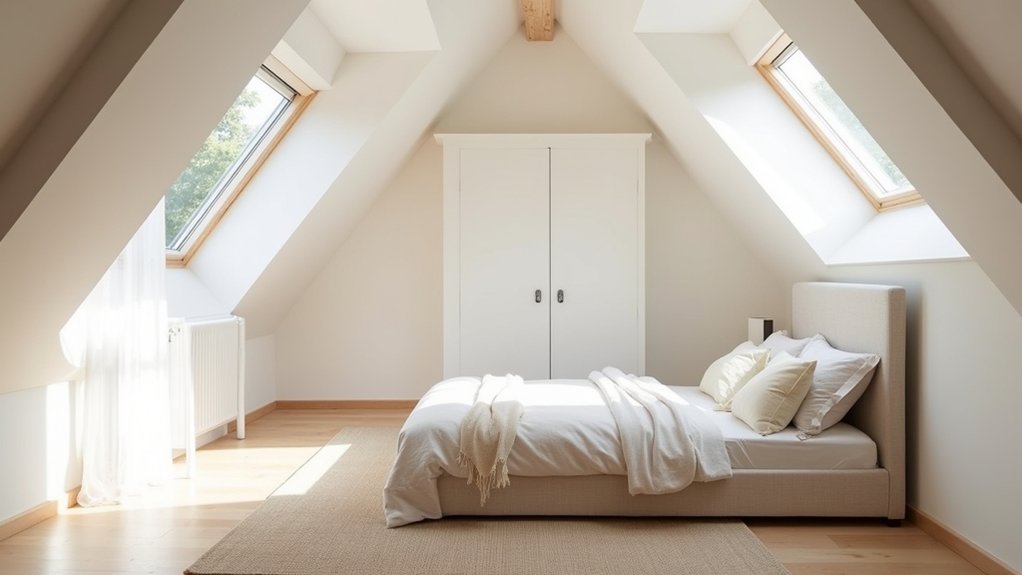
You’ve got a compact loft, yet you can make it feel expansive. You start by spotting what’s stealing light—low LRV colours, shadowy slopes, and the wrong sheen under UK daylight. Then you set a tight palette: high-LRV neutrals (75–85) for walls and ceilings, with soft clay or blush accents to warm the space without dulling it. But the real shift happens when you test samples across morning, noon, and evening…
Key Takeaways
- We removed light blockers like bulky reveals, dark beams, and poorly sized rooflights to maximise daylight penetration.
- We chose one high-LRV neutral (75–85) for walls, ceilings, and eaves to boost brightness and visual continuity.
- We kept undertones consistent and tested large swatches on slopes and knee walls to prevent colour shifts in raking light.
- We used flat/matte on steep pitches to reduce glare and hide defects, and eggshell in high-traffic zones for durability.
- We added small warm accents and a contrasting door colour to anchor the space without sacrificing an airy, contemporary feel.
Find What’s Stealing Light in Your Loft
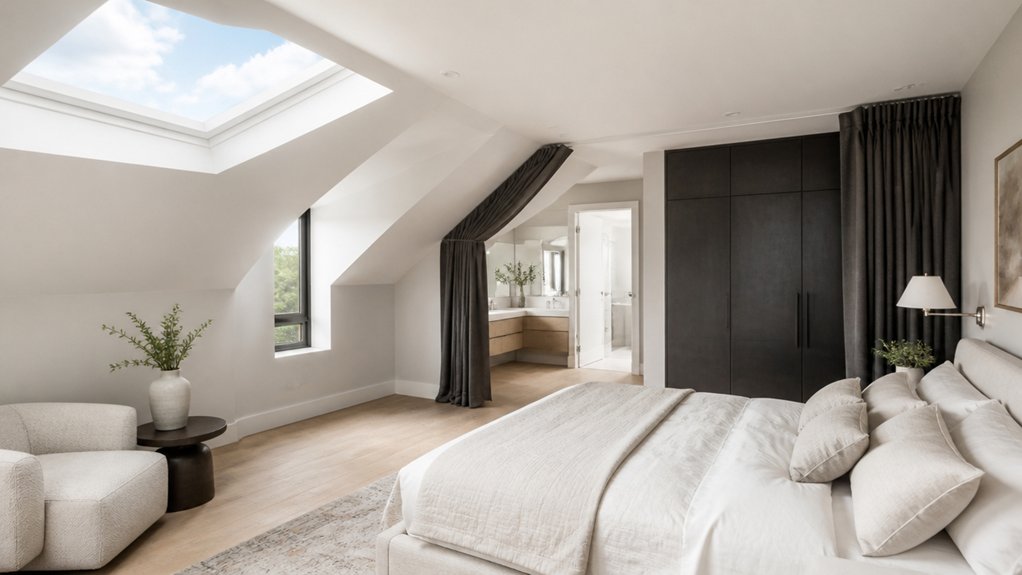
Before you pick a light, airy paint colour, pinpoint what’s actually dragging the daylight down in your loft: deep roof pitches that cast long shadows, undersized or poorly placed rooflights, and dark structural elements like steel beams or stained rafters.
Next, map lux levels at floor and eaves on an overcast UK day; you’ll quickly see where daylight fails and where glare hotspots sit.
Check window reveals, insulation build-ups, and thick plasterboard returns that choke the rooflight aperture.
Audit your lighting fixtures too: outdated downlights with narrow beams can “puddle” light and leave perimeter walls dull.
Finally, review ventilation options—trickle vents, MVHR terminals, and extractor positions can dictate where you can open up rooflights or add clerestories without condensation risk.
Start With a Simple Loft Paint Colour Palette
Start by locking in one base neutral across the loft—think a UK-favourite off-white or light greige with a high LRV to keep the envelope bright.
Then layer in soft warm accents (muted clay, blush, or warm oak tones) to add depth without dropping the perceived light levels.
Keep undertones consistent across paint, trim, and ceiling so you don’t trigger colour shift under changing skylight and LED temperatures.
Choose One Base Neutral
One reliable way to keep a loft conversion feeling bright and proportionate is to pick a single base neutral and run it through most surfaces—walls, ceiling, and even the eaves—so the angles read as one clean envelope.
In UK lofts with dormers and knee walls, this reduces visual breaks and helps daylight bounce deeper. Choose a neutral with a high LRV (about 75–85) and a low-chroma undertone; think modern off-white, pale greige, or soft stone rather than stark brilliant white.
Use the same tint in matt on ceilings and durable eggshell on walls for consistent value. Match lighting fixtures in clean metals, and plan furniture placement against the longest uninterrupted wall to preserve sightlines and headroom.
Add Soft Warm Accents
While a high-LRV base neutral keeps the envelope crisp, you’ll get a more liveable loft by layering in soft warm accents that don’t drag down light levels. Pick one or two low-chroma tones—think clay, muted terracotta, or warm putty—and apply them to small surface areas: a knee-wall, window reveal, or built-in joinery. You’ll boost perceived warmth without sacrificing bounce from dormer glazing.
Use a matte or soft eggshell to control specular glare on sloped ceilings, especially under rooflights. Then tune your cozy lighting: 2700–3000K LEDs with high CRI will keep skin tones flattering and timber looking natural.
Finish with decorative accents in brushed brass, oak, or boucle to echo the warmth. Keep accents consistent across zones.
Limit Undertone Variety
Soft warm accents work best when the rest of your scheme stays tightly controlled, so keep undertone variety to a minimum across the loft. In UK loft conversions, mixed light temperatures (north-facing dormers, skylights, warm LEDs) can exaggerate clashes between pink-beige, green-grey and blue-white.
Prioritise Undertone compatibility first, then adjust Color saturation only if the room still reads flat.
- Pick one base neutral family (warm white, balanced greige, or cool off-white).
- Use one trim white throughout; match undertone, not just LRV.
- Limit “feature” colours to a single undertone shift (e.g., clay to terracotta).
- Test swatches at roof slopes and knee walls; raking light reveals mismatch fastest.
You’ll get cleaner transitions and a brighter, calmer envelope.
Best Loft Wall Paint Colours (Warm vs Cool)
Because loft conversions often combine sloped ceilings, rooflights, and awkward shadow lines, your wall colour choice needs to manage both daylight and artificial light with minimal colour shift.
If your loft faces north or sits under cooler rooflight glazing, pick warm off-whites (soft stone, oatmeal, chalky beige) to prevent the space reading blue-grey.
South-facing lofts can take cooler whites and pale greys without looking sterile, especially with matte finishes that reduce glare.
Test paints under evening LEDs and lamps; your lighting techniques matter as much as LRV.
Aim for 70–85 LRV for brightness, but avoid icy undertones that amplify shadows.
Then anchor furniture color schemes: warm walls suit oak, brass, and rust textiles; cool walls pair with black steel, pale ash, and navy accents.
Choose Ceiling Paint for Slopes and Angles
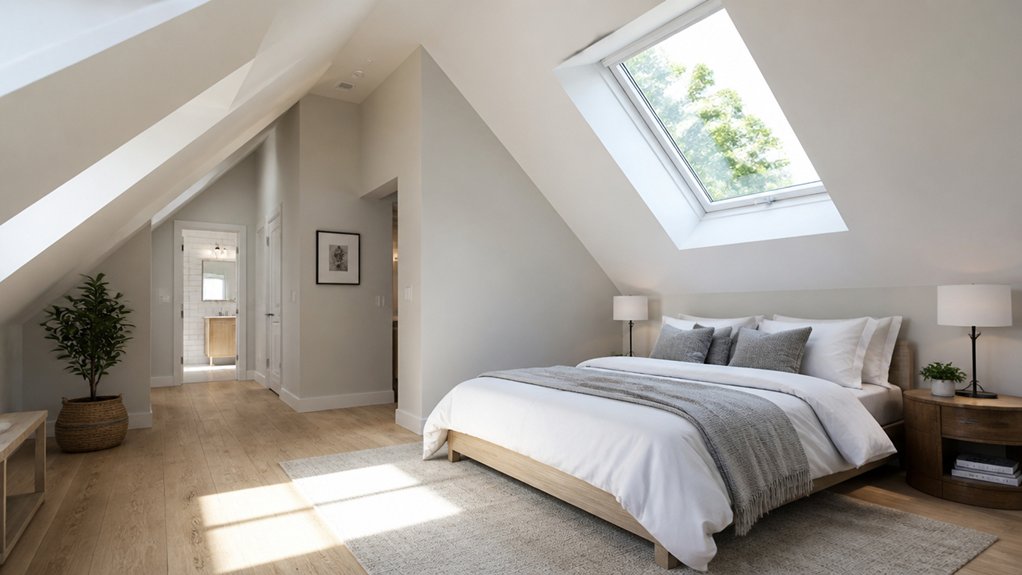
For sloped ceilings in a loft conversion, you’ll get the cleanest, brightest plane with a flat white that minimises glare and hides roller marks under UK daylight.
On sharper angles and junctions, you can tune the finish—use a soft matt for calm diffusion, or a low sheen like eggshell/satin to bounce light where you need lift.
You’ll want to match sheen levels to the pitch and sightlines so the geometry looks intentional, not patchy.
Flat White For Slopes
When you’re painting loft slopes and awkward angles, flat white ceiling paint keeps the plane visually calm and stops raking daylight from Velux windows exaggerating every ripple, joint, and skim mark. It also lifts perceived ceiling height by bouncing natural light deeper into the room, which matters in UK dormers where headroom pinches fast.
Use flat white as the ‘base layer’ of brightness, then let walls and trims carry the colour story.
For a pro finish, focus on prep and application:
- Fill and sand under a work light to spot ridges.
- Seal fresh plaster with a mist coat first.
- Cut in tight to rafters before rolling the field.
- Roll in one direction per plane to avoid lap lines.
Sheen Levels For Angles
Flat white gives you that clean, light-boosting base on loft slopes, but the sheen level you choose decides how forgiving those angles look under hard daylight.
In UK lofts with rooflights, raking sun exaggerates sheen reflections, so keep ceilings and steep pitches at matt (1–3% sheen) to hide jointing, skim marks, and lining-paper seams.
If you need wipeability near stairwells or in kids’ rooms, step up to durable matt or soft sheen (5–10%), not full silk; silk highlights every trowel line.
On shallow angles over dormers, consider a low-sheen “ceiling matt” for a modern, gallery finish that still reads airy. Match your wall sheen one step higher to separate planes subtly.
Prioritise paint durability with scrubbable acrylic and stain-blocking where condensation’s likely.
Pick the Right Finish (Matt vs Eggshell)
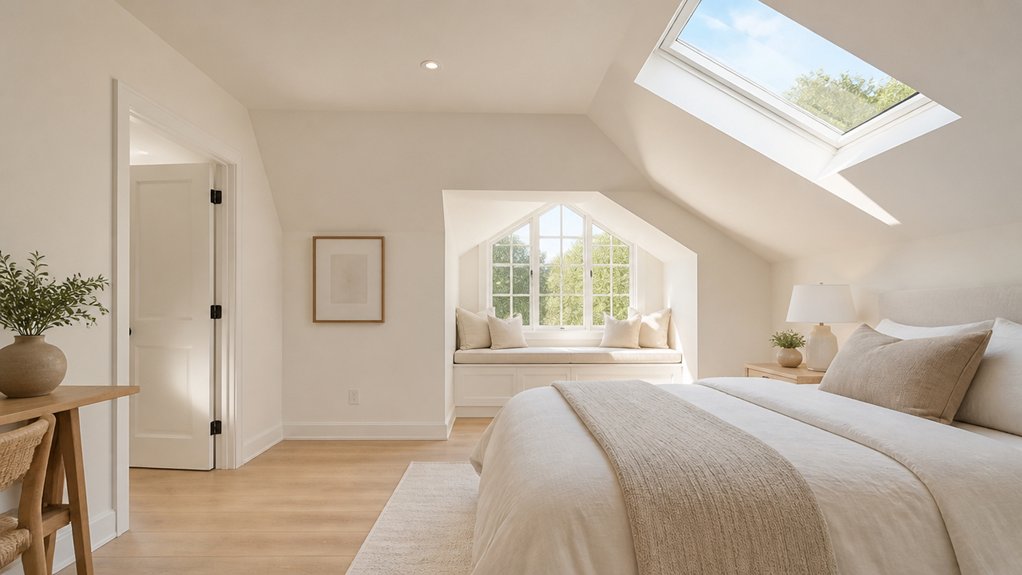
Although colour sets the mood in a loft conversion, the finish controls how that colour reads under strong rooflight glare and raking light.
In UK lofts, matt hides surface defects on plasterboard slopes, but it can mark if you’re brushing past eaves storage. Eggshell bounces more light, sharpens pigments, and cleans easier—ideal for stair returns and high-traffic landings.
Choose with these checks:
- Light angle: go matt on steep pitches to reduce flashing.
- Touch zones: use eggshell where hands and bags graze walls.
- Paint application techniques: roll then lay-off to level sheen and avoid lap marks.
- Paint durability considerations: pick modern washable matt (acrylic) if you want low glare without scuffs.
Use Trim and Door Paint to Add Contrast
Once you’ve set the sheen level, use trim and door paint to control contrast and make the loft’s geometry look sharper under rooflights. Keep skirting, architraves, and any decorative trim in a crisp, high-opacity white to define junctions against pale walls and sloped ceilings.
In UK lofts, this edge definition stops eaves and dormer cheeks from reading “soft” or unfinished, especially with plasterboard reveals.
For doors, specify contrasting door colors to anchor the space: deep inky blue, graphite, or a muted olive works well with warm off-whites and current heritage palettes.
Use a harder-wearing satin or water-based trim enamel for durability on handles and edges, and match ironmongery finishes to maintain a considered, contemporary joinery look throughout.
Test Loft Paint Samples All Day (and Avoid Mistakes)
Before you commit to litres of paint, test large sample areas in your loft from morning through late evening, because rooflights and dormer windows swing the colour temperature far more than a standard room.
Paint A3-ish swatches on two walls and the ceiling to see bounce light and shadow lines from rafters.
- Check the colour at 8am, noon, 4pm, and under warm LEDs—UK evenings can shift neutrals pink.
- View next to your flooring and wardrobes; your furniture colour can push a “clean” white grey.
- Compare matt vs durable matt; loft scuffs and condensation need tougher binders.
- Try a small decorative accent panel; it reveals undertones without committing.
If it reads right in glare and gloom, it’ll stay airy all year.
Conclusion
You might worry that high-LRV neutrals will read cold or “new-build” bland, but you’ll avoid that by layering soft clay or blush accents and a crisp, contrasting door colour. Keep ceilings and slopes in a dead-matt to cut glare, then use a tough enamel on trim for clean lines. As daylight shifts from grey morning to golden evening, you’ll see the loft stay bright, calm, and effortlessly contemporary.
About the Author