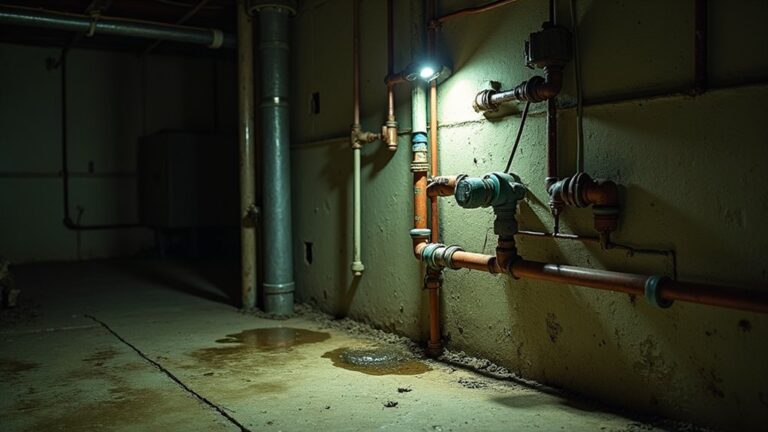
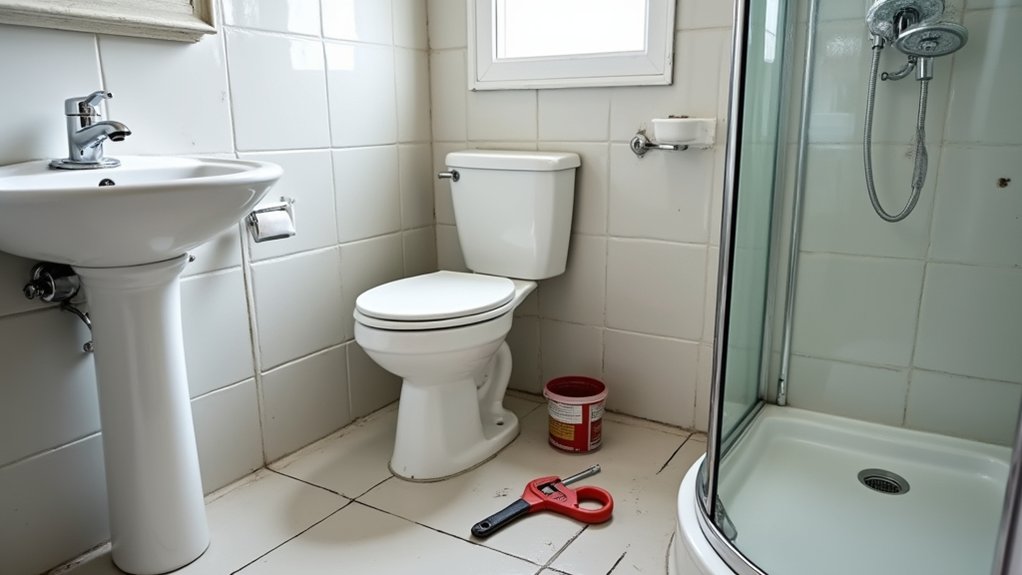
In the UK, around 1 in 5 households report a plumbing issue each year, and the bathroom’s often where it starts. You can usually spot a dripping tap by the steady stain in the basin, while a running loo shows up on your water bill. Check under the sink for damp pipe joints, and test slow drains for hair and soap buildup. Sort these early, or you’ll be dealing with bigger fixes next.
Key Takeaways
- Stop a dripping faucet by shutting off valves, dismantling the handle, and replacing the washer/O-ring or mixer cartridge.
- Find leaks under the sink by drying joints, running water, then tightening or replacing flexi tails, olives, or trap/waste seals.
- Fix a running toilet by turning off supply, cleaning or replacing the flapper, and adjusting the float or replacing the fill valve diaphragm.
- Clear a slow drain by removing hair, flushing with hot water, cleaning the trap, plunging with overflow covered, then using a bicarbonate-vinegar rinse.
- Restore low water pressure by cleaning the tap aerator, fully opening isolating valves, and checking for kinked hoses; call a plumber if unresolved.
Fix a Dripping Bathroom Faucet (Washer or Cartridge)
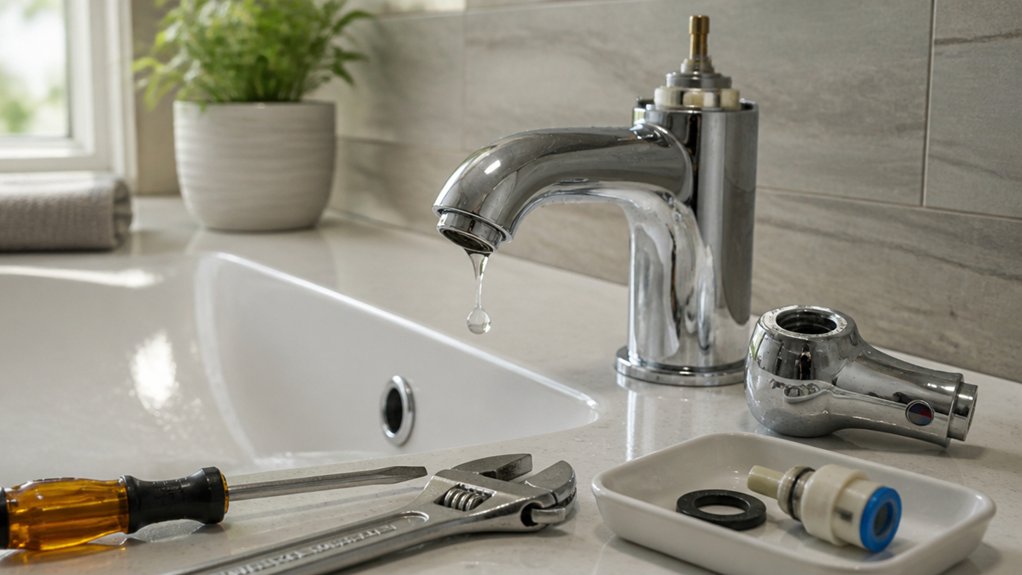
If your bathroom tap won’t stop dripping, you can usually fix it by replacing a worn washer in a compression tap or swapping the cartridge in a mixer.
First, shut off the isolating valves or the main stopcock, then open the tap to drain pressure. Plug the basin to catch screws.
Remove the handle cap, undo the retaining screw, and lift off the handle.
For a compression tap, loosen the headwork with an adjustable spanner, note the Faucet assembly order, and fit a like-for-like washer and O-ring.
For a mixer, pull the cartridge after removing the retaining nut or clip, then do a Cartridge replacement with the correct UK size.
Reassemble, turn water on, and check for drips.
Find and Fix Bathroom Leaks Under the Sink
Although a small puddle under the basin can look like a serious plumbing failure, you can usually track it down quickly by checking the usual leak points in order: the tap tails and isolating valves, the waste and trap joints, and the overflow.
Dry everything with kitchen roll, then run cold and hot to spot fresh drips.
If it’s at the valve or flexi tails, nip the compression nut up a quarter-turn with an adjustable spanner and recheck; replace olives if it still weeps.
At the waste, undo the trap by hand, clean threads, and refit squarely.
Replace the Sink gasket if it’s perished or flattened.
If you see green staining, pitting, or flaking, you’ve got Pipe corrosion—swap the section rather than patching.
Stop a Running Toilet (Flapper or Fill Valve)
When you hear the cistern topping up every few minutes or water hissing into the pan, you’re usually dealing with either a flapper that isn’t sealing or a fill valve that won’t shut off.
Turn off the isolation valve by the loo, flush, then lift the lid and inspect the toilet tank mechanism.
If the flapper’s warped, gritty, or its chain’s too tight, it won’t seat. Clean the seat, leave slight slack in the chain, or do a flapper replacement with a matching UK-size valve.
If water keeps rising into the overflow, adjust the float down or replace the fill valve washer/diaphragm.
Turn the water back on and check the waterline sits 25mm below the overflow.
Refit the lid and listen.
Clear a Slow Bathroom Drain (Hair and Soap)
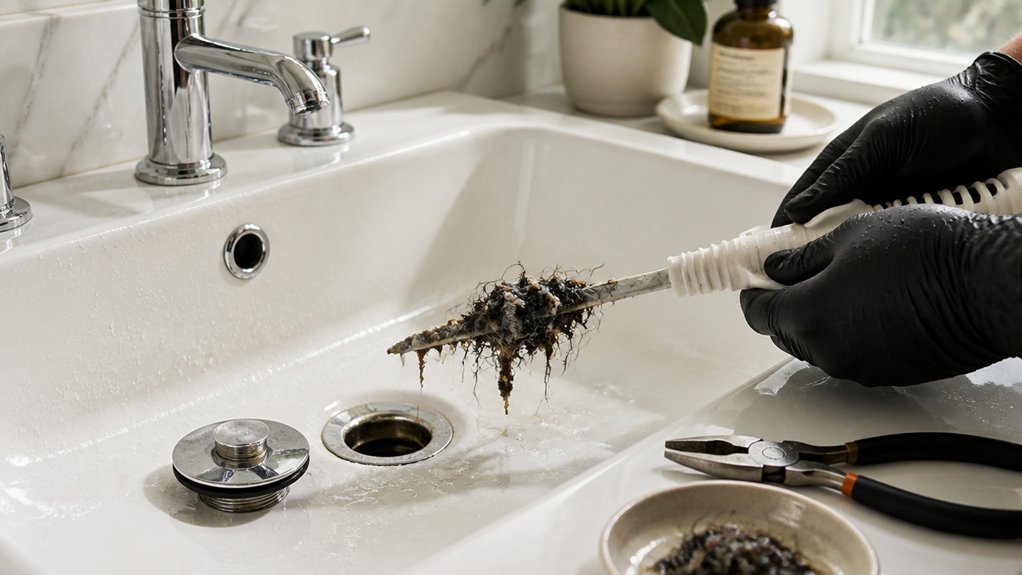
Because hair and soap scum cling to the inside of waste pipes, a basin, bath, or shower can drain sluggishly long before it fully blocks.
Start with Hair removal: lift the plug or grate, wear gloves, and pull out visible build-up with a drain snake or bent wire. Rinse the area with a kettle of hot (not boiling) water to soften residue on plastic pipework.
Next, do basic Drain cleaning. Remove the trap under a basin using a bowl and adjustable spanner, then flush and scrub it.
For a bath or shower, use a plunger with the overflow covered by a damp cloth to improve suction. Finish with a bicarbonate-and-vinegar flush, then hot water.
Fit a hair catcher to prevent repeats.
Fix Low Bathroom Water Pressure (Aerator/Valves)
If your bathroom tap or shower suddenly feels weak, start by checking the simple restriction points: the tap aerator and the isolation valves.
For Water pressure troubleshooting, test hot and cold separately; if one side’s worse, you’ve narrowed it down.
Unscrew the aerator (wrap with a cloth to protect chrome), split the parts, and rinse grit and limescale. Soak in white vinegar for 30 minutes, scrub with an old toothbrush, then refit—this quick Faucet aerator maintenance often restores flow.
Next, check the isolation valves under the basin or on the pipework feeding the shower. Use a flat-blade screwdriver to turn them fully anticlockwise.
If you’ve got old gate valves, open and close once to free them.
Still low? Look for a kinked flexi hose or call a plumber.
Conclusion
You don’t have to live with bathroom plumbing niggles: swap a worn washer or cartridge to stop drips, check under-sink traps and flexi hoses for leaks, and sort a running loo by changing the flapper or fill valve. Pull hair and soap from slow drains with a plunger or snake, then clean the tap aerator and check isolation valves for pressure issues. One eye-opener: a single dripping tap can waste around 5,500 litres a year.
About the Author