
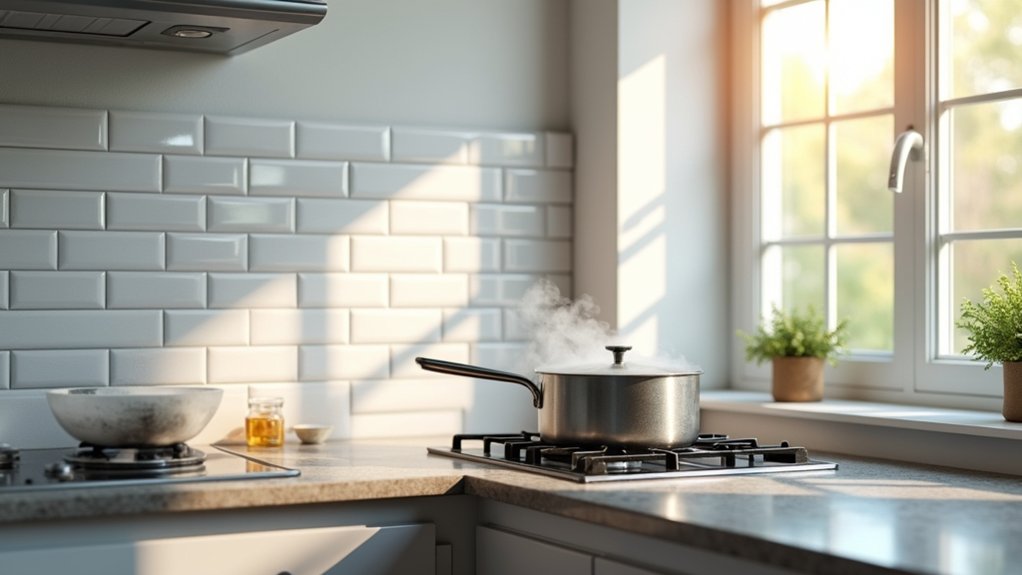
If your kitchen walls have seen better days, you’re not alone. In a steamy UK kitchen, you can’t just grab any matt emulsion and hope it holds up. You need a moisture- and mould-resistant acrylic in a satin or soft sheen finish, plus a primer that grips through grease. Get the prep wrong and you’ll be repainting before the year’s out—but the real difference comes from choosing the right paint for each zone…
Key Takeaways
- Choose satin or soft sheen for most walls; use semi-gloss in splash zones like behind the hob and around the sink.
- Pick kitchen/bathroom-rated, mould-resistant, low-VOC acrylic paint, and verify humidity or EN performance claims on the tin.
- Prep thoroughly: degrease with sugar soap, rinse, dry fully, then sand glossy areas to improve primer and paint adhesion.
- Prime correctly: spot-prime bare patches, seal stains, and avoid cheap PVA primers that can fail in humid conditions.
- Prioritise scrubbable, Class 1 wet-scrub paints and control moisture with good extraction to prevent mildew and peeling.
Best Kitchen Paint Sheen for Humidity
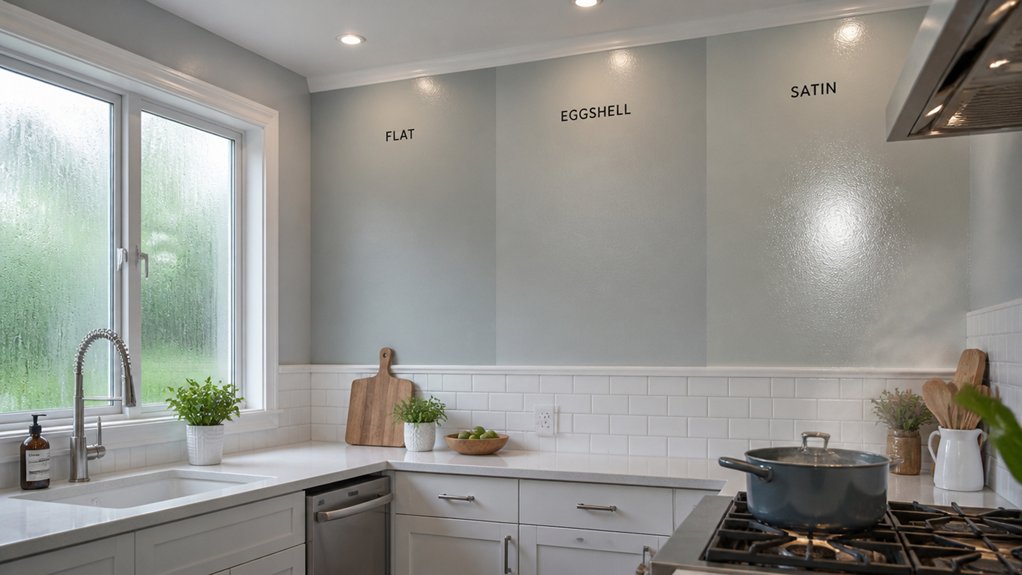
In a humid kitchen, what sheen should you choose to stop steam and splashes from turning into stubborn stains? Pick a mid-to-high sheen: satin or soft sheen works for most UK kitchens, while semi-gloss suits areas behind the hob or around the sink.
These finishes form a tighter film than matt, so you can wipe off condensation marks, cooking grease, and sauce splatters without burnishing.
Use matt only on low-splash ceilings, and pair it with good extraction.
For walls, choose a washable, moisture-resistant satin to balance glare and durability under LED downlights.
If you’re prioritising Eco friendly finishes, check for low-VOC and water-based formulas that still offer strong color retention after repeated cleaning.
Quick Picks: Best Paint for Steamy Kitchens
Because steam, grease and frequent wipe-downs punish ordinary emulsion, you’ll get the best results with a kitchen- and bathroom-rated, mould-resistant acrylic in a satin/soft sheen for most walls. Then step up to semi-gloss on the splash zones (behind the hob, around the sink, and near the kettle).
- Walls: Dulux Easycare Kitchen (satin) gives a balanced paint texture and wipes clean without burnishing.
- Ceilings: Zinsser Perma-White (matt) helps above cookers and in small galley kitchens where condensation lingers.
- Woodwork: Johnstone’s Trade Aqua Guard (satin or gloss) resists sticky fingerprints on doors and skirting.
- Feature areas: Farrow & Ball Modern Emulsion suits colour coordination, especially if you match cabinets to tile grout lines.
What to Look for in Moisture-Resistant Kitchen Paint
Although plenty of tins claim they’re “washable,” moisture-resistant kitchen paint earns its keep through a few specific specs: check for a mould-inhibiting additive (often labelled “anti-mould” or “biocide”) and a tight acrylic or vinyl-acrylic binder that limits moisture absorption.
Aim for a durable mid-sheen—eggshell or satin—because it forms a more continuous film than dead matt in steamy corners. Look for products rated for kitchens and bathrooms, not just “multi-surface,” and confirm suitability for plaster, previously painted walls, or bare woodwork.
In the UK, scan the tin for EN test references and humidity claims. Finally, pick a paint color that won’t highlight condensation marks; softer mid-tones hide patchiness better than very dark shades.
How to Choose Paint You Can Actually Scrub
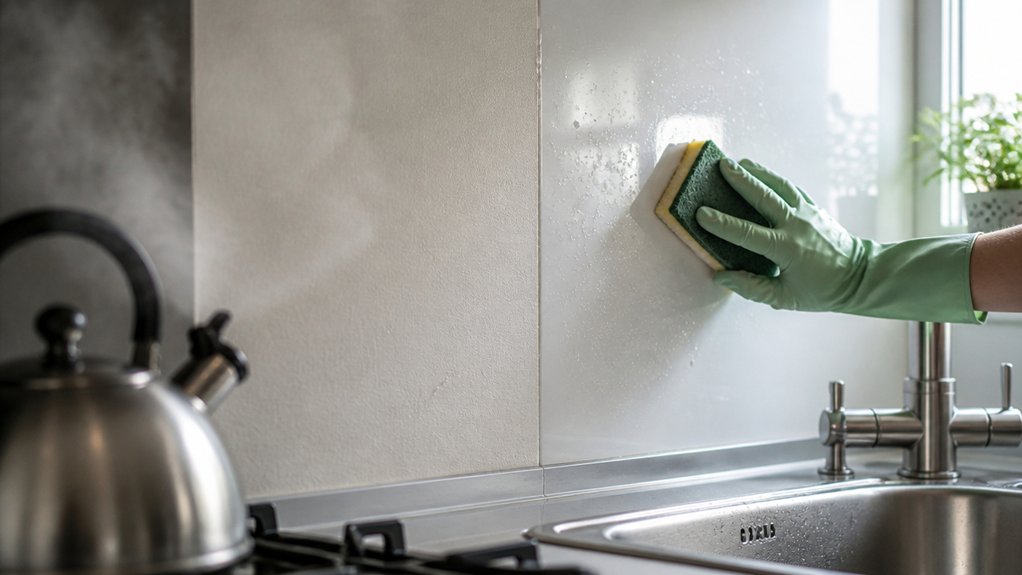
When you’re wiping down splashes of sauce and greasy fingerprints, you need paint that can take a proper scrub without going shiny, thinning out, or lifting off the wall. For UK kitchens, look for “scrubbable” or “wipeable” on the tin and check the wet scrub rating (Class 1 is best). A tougher film protects color durability, so your shade won’t dull around the hob or sink.
- Pick a durable sheen: satin or soft-sheen usually cleans better than flat matt.
- Check Paint texture: smoother finishes trap less grime and rinse cleaner.
- Read the scrub class and coverage; cheap paint can burnish and patch.
- Test a sample panel, then clean it with a damp cloth and mild detergent.
Mildew Resistance: Additives, Ratings, and Limits
If your kitchen regularly steams up from cooking or a tumble dryer, you’ll want paint that actively resists mildew rather than just tolerates a quick wipe-down. Look for tins that mention mould/mildew resistance and check the datasheet for biocide content and coverage in m² per litre.
Some trade ranges include built-in Mildew inhibitors; these are more reliable than “wipeable” claims alone.
If you’re tempted to tip in an anti-mould additive, confirm additive compatibility with the manufacturer first, or you can destabilise the formula and reduce sheen and durability.
Don’t expect paint to fix damp: keep extraction running, clear trickle vents, and seal persistent stains with a stain blocker before topcoating.
Even rated paints have limits in corners, behind fridges, and around leaky plumbing.
Latex vs. Oil Paint for Humid Kitchens
When you’re painting a humid UK kitchen, you’ll weigh how well water-based latex (emulsion) and oil-based paints block moisture around splash zones and above the hob.
You’ll also compare durability and washability, since cabinets, skirting, and walls need to handle frequent wiping without dulling or peeling.
Finally, you’ll factor in drying time and odour—latex dries faster with lower VOC options, while oil typically cures harder but lingers longer and keeps the room out of action.
Moisture Resistance Comparison
How do latex and oil paints actually cope once your kitchen’s dealing with daily steam from the hob, condensation on cold walls, and the odd splash around the sink? In UK homes, moisture control hinges on your Paint formulation and the moisture barrier it creates while still letting walls breathe.
- Latex (water-based): You’ll get quicker drying and better vapour permeability, so trapped moisture can escape on external walls.
- Oil (solvent-based): You’ll form a tighter film, giving a stronger moisture barrier, but it can trap damp in older plaster.
- Mould risk: You’ll usually need a mould-inhibiting additive or kitchen/bathroom-rated label for either type.
- Problem spots: You should prioritise window reveals, behind kettles, and near extractor hoods where condensation lingers most.
Durability And Washability
Although steam and grease might test any finish, durability in a humid UK kitchen really comes down to how well the paint film resists frequent wiping without dulling, softening, or staining.
Modern kitchen-grade latex (water-based) scrubbable matt or satin often holds up well on walls, especially where you’ll use mild detergent and a microfibre cloth. Choose a higher sheen if you cook daily; it sheds splashes faster and keeps your colour palettes looking crisp.
Oil-based paint still wins on abrasion for woodwork: skirting, architraves, and cupboard frames take knocks, and oil’s tougher film resists scuffs and tea stains.
Among finish options, pick satinwood or gloss for trim, and reserve matt for low-touch areas.
Drying Time And Odor
Because humidity slows curing and traps smells, drying time and odour become as important as colour choice in a busy UK kitchen. Latex (water-based) typically dries to touch in 1–2 hours, so you can recoat the same day and get the room back in use.
Oil-based paint levels nicely but can stay tacky in muggy weather and its solvent smell lingers, especially in flats with limited cross-ventilation.
- Choose low-VOC acrylic eggshell for quicker turnaround and less odour.
- Crack windows and run the extractor for 48 hours; a dehumidifier helps.
- Don’t chase Color trends if they force oil paint; match paint color schemes with durable latex instead.
- Allow full cure: 7–14 days latex, up to 30 days oil before heavy wiping.
Best Primer for Kitchen Walls (Grease + Moisture)
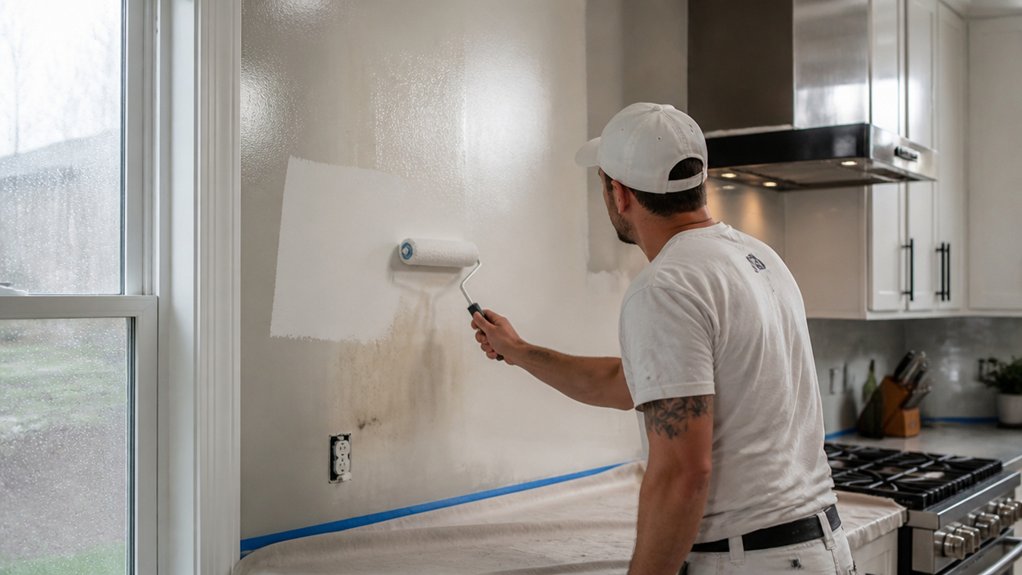
When your kitchen walls have to cope with steam from the hob and a fine film of cooking grease, the right primer makes the difference between paint that bonds properly and paint that peels or stains.
For most UK kitchens, choose a stain-blocking, moisture-resistant acrylic primer or a shellac-based primer for stubborn grease marks and nicotine. Shellac dries fast and seals odours, but it’s higher in VOCs, so ventilate well.
Acrylic options suit newer plaster and previously painted emulsions, and they’re easier to clean up.
Check primer compatibility with your chosen kitchen paint (often a scrubbable acrylic eggshell or durable matt).
Apply a thin, even coat using consistent paint application techniques, then let it fully cure before topcoats.
Avoid cheap PVA primers here.
Prep Steps That Stop Peeling in Kitchens
A great primer only sticks as well as the surface you put it on, so sort the prep before you open the tin of topcoat.
In steamy UK kitchens, peeling usually starts where grease, soap film, or damp gets trapped. Treat Surface preparation like the job, not the warm-up, and you’ll get proper adhesion and longer life.
- Degrease properly: Wash with sugar soap, rinse clean, then let it dry fully (overnight if needed).
- Deal with damp and mould: Use a fungicidal wash, follow dwell time, and improve airflow for mold prevention.
- Key and repair: Sand to a dull finish, feather loose edges, fill chips, then dust off with a vacuum and tack cloth.
- Stabilise: Spot-prime bare patches, seal stains, and caulk gaps before full priming.
Best Paint by Zone: Sink, Stove, Ceiling, Trim
Even if you stick to one brand, you shouldn’t use the same finish everywhere in a high‑moisture kitchen.
Each zone gets a different mix of steam, grease, heat, and scrubbing.
Conclusion
In a steamy UK kitchen, you can’t treat paint like wallpaper—you need it to behave like a good raincoat. I once repainted a Leeds galley kitchen with a bathroom-rated acrylic in satin; six months later, it still wiped clean after weekly frying, while the old matt finish had blistered within a fortnight. Pick moisture- and mould-resistant paint, prime properly, and prep like it matters. Ventilate well, and you’ll stop peeling before it starts.
About the Author