

Most commuters don’t realise your daily journey can add up to 200+ spare hours a year you can convert into skill-building downtime. You can do it for pennies using your local library’s eBooks, second-hand paperbacks from charity shops, or swaps on community shelves. It keeps your mind busy, cuts boredom, and gives you a clear return on time without extra spend. The trick is choosing the right format and pace for your route…
Key Takeaways
- Library apps and second-hand book sources provide free or cheap reading, making commutes entertaining without extra spending.
- Reading fits any journey length with short stories for quick rides and chapters or articles for longer, uninterrupted trips.
- Ebooks and audiobooks work hands-free and space-saving, ideal for crowded trains or buses and flexible enough for changing routines.
- Commuter reading turns dead time into progress on skills, learning, or relaxation, depending on your goal that day.
- Simple page or minute targets and quick logging build a consistent habit, making value easy to measure and sustain.
How to Start Reading on Your Commute Today
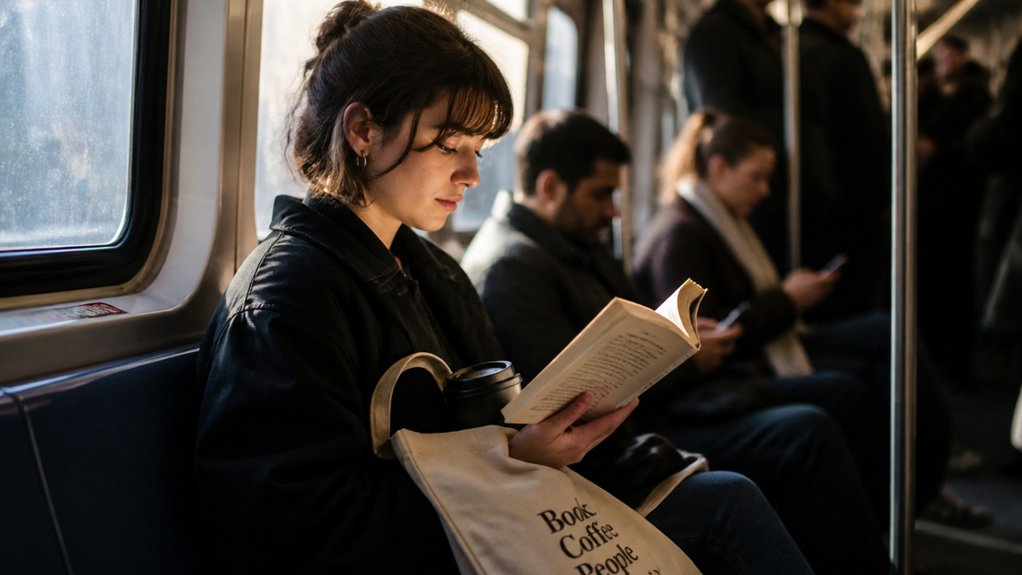
Whether you’re on a packed Tube, a delayed train, or a bus crawl through town, you can start reading on your commute today by picking the cheapest format that fits your routine—library eBooks via Libby or BorrowBox, a Kindle app on your phone, or a slim paperback you won’t mind getting scuffed.
Set up your card with your local council library, download a title before you leave home, and keep a short list so you’re never scrolling at the platform.
Match Book selection to your journey: short stories for stop-start routes, chapters for longer runs, and non-fiction you can dip into.
Plan for different Reading environments—standing, glare, noise—by choosing clear fonts, quick chapters, and stories that pull you in fast.
You’ll feel like you’ve joined the readers’ club.
Which Commute Reading Format Fits You Best?
You’ve got three solid commute-friendly formats, and the best value depends on how you travel and what you’re carrying.
If you’ve got a seat, a print book can be the cheapest option (especially second-hand or from the library), while ebooks give you flexibility on packed trains and buses without extra weight.
If you’re standing, driving, or walking, audiobooks keep it hands-free so you can still make the most of the time.
Print Books On Transit
A print book still makes solid sense on UK trains and buses if you want the lowest ongoing cost and zero battery worries. You can grab paperbacks for pennies at charity shops, station WHSmith clearance racks, or library sales, then pass them on to a mate on the platform.
Print books also work well with transit libraries and community book swaps, so you’re never stuck paying full price. Choose a smaller paperback to fit your bag and keep one “commute copy” you don’t mind scuffing.
If you’re standing on the Tube, pick short chapters so you can hop off without losing your place. A simple bookmark beats fiddling with settings, and you’ll look like you’re part of the carriage’s quiet reading crowd.
Ebooks For Flexibility
Because your commute length can change day to day, ebooks give you the most flexibility for the money: you can carry a whole library on your phone or a cheap Kindle, download new reads on station Wi‑Fi, and tweak font size for dim carriages.
You’ll also dodge dead weight in your bag and avoid damaged pages when the Tube gets packed.
To keep costs down, tap UK Digital libraries through your local council membership and borrow titles without late fees.
If you already pay for Prime, check the included reads before buying anything.
Use Reading apps to sync your place between phone and e‑reader, so you can pick up instantly when you’re squeezed into a corner.
It’s an easy way to feel part of the commuter crowd.
Audiobooks Hands-Free Listening
When your hands are full with a rail strap, a coffee, or a pram, audiobooks let you “read” through headphones without slowing down your commute. You can keep your place automatically, even when you swap from Tube to bus, and you won’t need a free seat or good lighting.
With voice control, you can pause at the barriers, skip back when announcements cut in, and carry on without fumbling for your phone.
To keep costs down in the UK, use your library app (BorrowBox or Libby) for free titles, or share a family plan where it’s allowed. Choose strong audiobook narration for noisy carriages, and you’ll feel part of the same story crowd on your line.
What to Read on Your Commute (By Goal)
Pick your commute reading by goal so you get the most value from every minute on the train, Tube, or bus. Choose quick non-fiction or course notes to learn faster, light fiction or mindfulness pages to unwind and de-stress, biographies or career books to get motivated, and short articles or puzzles to stay focused.
Match the length to your journey and use free library eBooks or cheap paperbacks to keep costs down.
Learn Faster, Commute Smarter
Even if your train’s delayed again, you can still turn that time into cheap, repeatable progress by choosing reading that matches your goal. Pick one skill to level up and bring the right text: for work, grab a used business classic or a free library ebook; for exams, print past papers; for career-switching, read entry-level guides and case studies.
Use Productivity tips that fit a commute: skim headings, highlight one idea, then write a two-line takeaway in Notes before you tap out at your stop.
Join reading challenges with friends or colleagues so you stay consistent and feel part of the same push.
Keep it UK-smart: borrow via Libby, swap in the office, and buy second-hand on World of Books.
Unwind And De-Stress
Although your commute can feel like dead time, you can use it to properly unwind without spending much by choosing low-effort reads that calm your brain fast. Pick short story collections, cosy crime, or gentle humour that you can dip into between stops and still feel part of the everyday reader crowd on the train.
Save money by borrowing eBooks and audiobooks from your local library via Libby, or grabbing 99p Kindle deals. For deeper calm, try slim books on mindfulness exercises, like guided breathing or body scans you can do discreetly in your seat.
If you’d rather not “do” anything, choose nature writing or illustrated non-fiction; it’s soothing without effort. Add simple stress relief techniques—highlight one calming line, then reread it when delays hit.
Get Motivated, Stay Focused
When you want your commute to sharpen your drive instead of draining it, choose reads that give you a quick win and a clear next step. Pick a slim productivity guide, a motivating biography, or a one-idea essay you can finish between stops, then note one action in your phone.
Keep it cheap: borrow eBooks and audiobooks free with your library card via Libby, or grab a 99p Kindle deal.
For focus, try titles built around mindfulness practices, like short breathing prompts you can use on the Tube.
For momentum, choose books that teach goal setting with weekly check-ins, so you stay accountable without expensive courses.
You’re not doing this alone—plenty of commuters are building better days, one chapter at a time.
Build a Commuter Reading Habit That Sticks

If your commute already claims your time and money, you might as well make it pay you back by turning it into a reliable reading slot. Set a small target: 10 pages or 15 minutes from door to platform, then repeat it daily so it becomes one of your Reading routines.
Keep your book where you can’t miss it: jacket pocket, tote, or phone.
Make book selection easy and cheap. Use your local library app, grab second-hand paperbacks from a charity shop, or download free classics.
Choose shorter chapters for stop-start journeys, and queue up your next title before you finish.
Share recommendations with colleagues or a commuter book group, so you feel part of the same reading crowd every week.
Read on Your Commute Without Motion Sickness
Because screen glare and constant head movement often trigger travel sickness, you’ll read more comfortably by making a few cheap, UK-friendly tweaks: sit facing forward on the train or bus, keep your book or phone higher so you’re not looking down, and pick short sections you can finish between stops.
If motion sickness still hits, switch to larger text, lower brightness, and use night mode to cut harsh contrast on TfL and Northern services alike. Brace your elbows on your bag to steady the page, and pause at junctions or when the carriage sways.
Take safety precautions: keep one ear free, watch platform edges, and don’t read while walking through stations like Birmingham New Street. You’ll feel part of the crowd that commutes smart.
Free and Cheap Commuter-Friendly Reading Sources
Comfortable, nausea-free reading on the bus or train won’t help much if your next book costs a tenner each time, so it pays to line up cheap sources before you tap in. Start with your local library: reserve online, grab eBooks and audiobooks through Libby or BorrowBox, and ask about library discounts for students, carers, or partner schemes.
Next, work your network. Set up a book exchange at work, in your building WhatsApp, or at the school gate—one shelf, a label, and a simple “take one, leave one” rule keeps it fair. Check charity shops near stations for paperbacks under £2, and browse Facebook Marketplace or Gumtree bundles. You’ll always have something queued, without breaking the bank.
Turn Commute Reading Into Measurable Progress

Whether you’ve got 12 minutes on the Tube or 40 on a regional train, you can turn that time into trackable progress by setting a simple target and logging it. Pick a weekly goal: pages, chapters, or minutes. Use your phone’s notes or a free app to tick off each ride, so you see what your travel’s really buying you.
Join reading challenges through your local library, Goodreads, or a workplace book group; you’ll feel part of a wider crowd doing the same. Keep costs down by mixing ebooks from Libby with paperbacks from charity shops, then record what you finish.
Review your log every Sunday: adjust targets, queue your next title, and celebrate small wins. With progress tracking, your commute becomes a budget-friendly streak you won’t want to break.
Conclusion
If you commute in the UK and you’re not reading, you’re practically donating hours to the timetable gods. Grab a library eBook, a 50p charity-shop paperback, or a free Kindle sample and turn every stop, delay, and packed carriage into progress. Pick a format that fits, read for a clear goal, and track pages like pennies. Even ten minutes a day stacks up absurdly fast—until your commute feels shorter.
About the Author