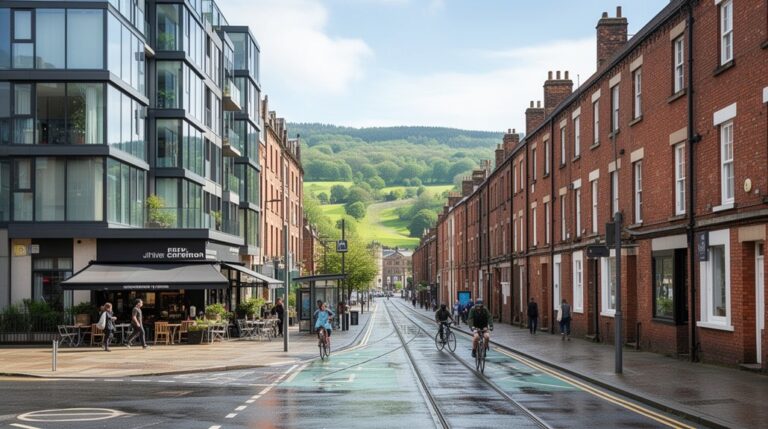

You might assume Woking can’t rival London for convenience, but you can reach Waterloo in roughly 24 minutes on the fastest trains, with frequent peak services. You get predictable commute windows, a growing supply of modern apartments around the station, and a town centre that’s trading empty frontage for mixed-use space, food, and events. If you’re weighing cost, catchment, and lifestyle fit, the numbers start to shift—especially when you map them by area.
Key Takeaways
- Fast, frequent trains reach London Waterloo in 25–35 minutes, making Woking a reliable base for central London jobs.
- Strong peak-time connectivity (07:00–09:00 inbound, 17:00–19:00 outbound) supports traditional commuting and flexible earlier or later travel.
- Cost options suit different work patterns, with season tickets best for 4–5 days and flexi tickets better for 2–3 days weekly.
- Station-adjacent neighbourhoods and new developments boost walkable living, modern amenities, and quick access to shops, gyms, and services.
- A denser, mixed-use town centre plus nearby green spaces creates a live-work-leisure balance that attracts professionals, hybrid workers, and families.
Woking to London Commute: Times, Trains and Peaks

If you’re weighing Woking against other commuter towns, the headline metric is simple: you can typically reach London Waterloo in about 25–35 minutes on South Western Railway’s faster services, with longer stopping trains often pushing closer to 40–55 minutes.
That range shapes your commuter priorities: you can choose speed via limited-stop runs or predictability via all-stations patterns.
Peak windows tighten capacity and raise crowding, especially toward London between roughly 07:00–09:00, then outbound around 17:00–19:00, so you’ll plan around platform density and seat probability.
If Remote working gives you flexibility, you can travel earlier, later, or midweek to smooth the ride and feel part of a calmer, more regular cohort.
Check live service updates and aim for consistent trains to build routine.
How Much It Costs to Commute From Woking
Your Woking commute cost hinges on how you buy rail travel—day returns, season tickets, and Railcard discounts can swing your monthly spend by hundreds.
You’ll also need to price in station parking or a feeder option like bus, taxi, cycling, or walking, because those add up fast on peak-day patterns.
Once you total tickets, passes, and first/last‑mile costs, you can benchmark the real £/day against your work schedule and flexibility.
Ticket Prices And Passes
Although Woking sits on one of the South Western Railway network’s fastest corridors into London, what you’ll pay depends on three variables you can control: peak vs off-peak travel, season vs pay-as-you-go, and whether you buy point-to-point or add zones/Travelcard coverage.
If you commute 4–5 days weekly, a Season typically beats daily tickets; if you go in 2–3 days, flexi products and off-peak returns can win. Add a Travelcard only if you’ll make multiple Tube/bus hops; otherwise, keep it point-to-point and pay contactless in London.
Hunt Fare discounts: Railcard eligibility, group save, advance singles, and split-ticketing apps can shave meaningful percentages. Choose travel passes that match your pattern, and you’ll feel like you’re commuting like a local.
Parking And Local Transport
Whether you drive to Woking station, hop a local bus, or cycle in, the “last mile” can easily add £3–£15+ per day to your commute before you’ve even tapped onto the train.
If you’re using Parking facilities, plan for town-centre rates that typically sit in the mid-to-high single digits for a full day, with season options often improving the per-day math if you commute 4–5 days weekly.
Arrive after peak and you’ll still compete for bays, so you’ll want a back-up car park in your routine.
Prefer public transport? Use local bus routes to cap costs: short hops are usually cheaper than parking, and you’ll skip traffic stress.
Add a bike and you’ll fit right in with regulars.
Who Woking Suits: Professionals, Families, Hybrid Workers
With London just ~25 minutes away by fast train and the M25 within easy reach, Woking works best for people who want big-city access without paying Zone 1–2 prices. You’ll fit in if you’re a professional who values predictable commutes and a town centre geared to weekday rhythms, from early trains to late gyms.
If you’re hybrid, you can split the week efficiently: commute when it counts, then reclaim time on home-working days, with strong rail links supporting ad‑hoc meetings.
Families benefit from practical amenities and a calmer pace, while still keeping London’s job market close. You’ll also find belonging through Community events that anchor weekends, plus Local dining that makes midweek evenings feel social, not rushed.
Best Areas to Live in Woking for Commuters
If you want to keep your door-to-platform time tight, you’ll get the best commuter value by targeting neighbourhoods that sit within roughly a 10–20 minute walk, cycle, or short bus hop of Woking station.
Central Woking suits you if you want late trains, walkable shops, gyms, and quick errands; you’ll likely trade space for convenience.
Horsell gives you a village feel with pubs, green space, and fast access via bike or bus, and it’s popular with professionals who still want quiet streets.
Goldsworth Park works if you’d rather balance budgets and space, with reliable bus links and strong Neighborhood amenities around the lake.
St John’s and Knaphill appeal when local schools matter; you’ll get a community vibe, but you’ll plan commuting around buses.
New Homes in Woking: Key Developments to Know
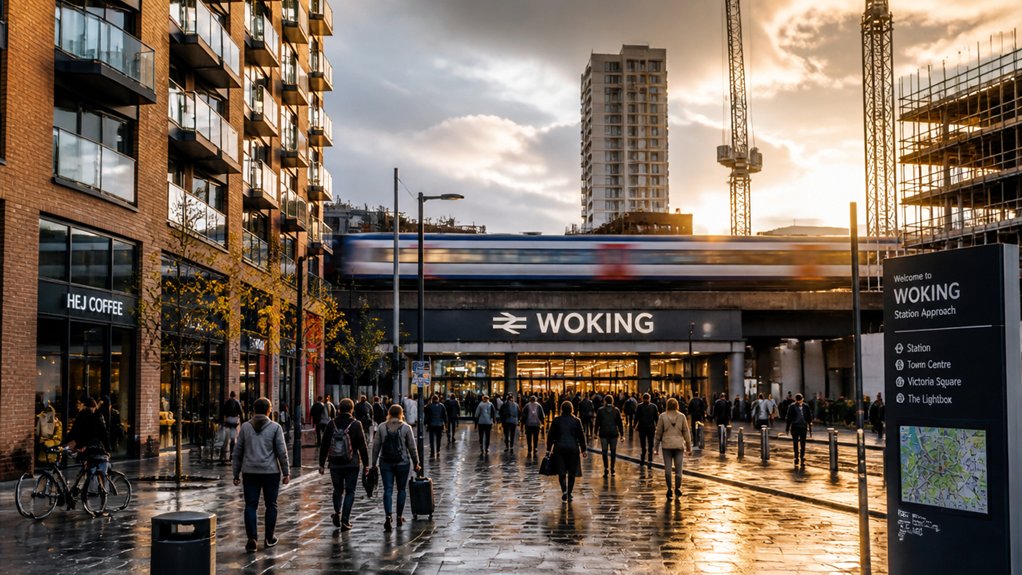
Once you’ve narrowed down which neighbourhood keeps your commute lean, the next question is what new-build stock is actually coming to market in Woking. Track schemes around key rail corridors and established residential pockets, where delivery tends to be steadier and resale demand stays liquid.
You’ll see a mix of apartments and family houses, often phased, so you can time reservations to incentives and mortgage-rate moves.
Prioritise developments that hardwire Modern amenities: secure cycle storage, EV charging, fibre broadband, and shared green space that helps you feel part of the community from day one. Check how much Affordable housing sits within each scheme, because higher inclusion can support local services and widen your future buyer pool.
Finally, compare service charges, warranty terms, and snagging processes—they’ll shape your true monthly cost.
What’s Changed in Woking Town Centre?
Although Woking’s rail links still anchor demand, the town centre has shifted from a purely retail-led core to a denser, mixed-use zone where new apartments, refreshed public spaces, and upgraded day-to-day amenities now drive footfall and pricing.
You’ll notice more residents living above ground-floor units, which stabilises weekday spend and supports longer opening hours. Retail has consolidated into clearer shopping districts, so you can judge value by frontage, visibility, and tenant mix, not nostalgia.
New food-led operators and flexible workspaces pull evening trade, helping rents hold even as national chains rationalise. For buyers and landlords, that means stronger yield resilience near the station and main squares.
Community events now programme the calendar, so you’ll feel part of a town centre that stays active after 6pm.
Parks and Easy Day Trips From Woking
Where do you go when you want green space without giving up station-first convenience? In Woking, you’re minutes from parks that fit a commuter schedule: a quick lunchtime loop, a post-work run, or a weekend picnic with neighbours.
You can tap into Nature reserves nearby for wildlife walks and low-cost downtime, then still make it back for dinner and Monday prep.
For easy day trips, you don’t need a car. You can ride out for riverside paths, market towns, and bigger countryside views, then return fast enough to keep Sunday calm.
Watch the calendar for Local events—fun runs, outdoor cinema, guided walks—because they’re a simple way to meet people and feel like you belong, not just commute.
Conclusion
Choose Woking and you’re getting a commuter core with credible numbers: fast, frequent trains to London, clearer peak patterns, and costs you can budget around. You’ll find practical pockets near stations, plus purposeful parks and painless day trips. New-build blocks and mixed-use moves are reshaping the centre, bringing better bars, buses, and basics. If you’re a professional, parent, or hybrid worker, Woking’s smart, swift setup supports work-life balance.
About the Author