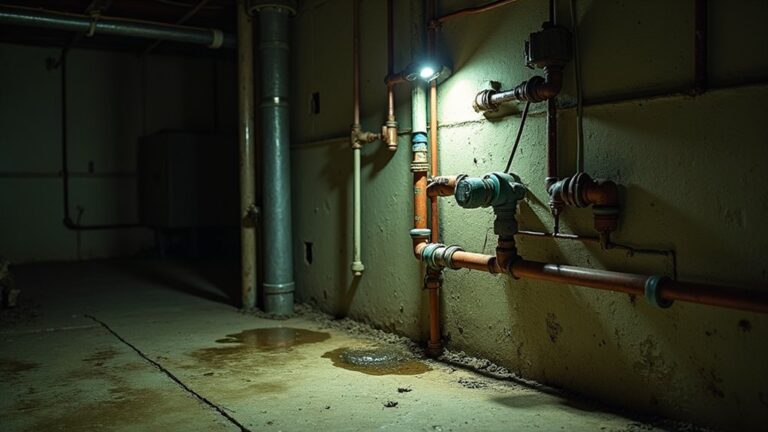
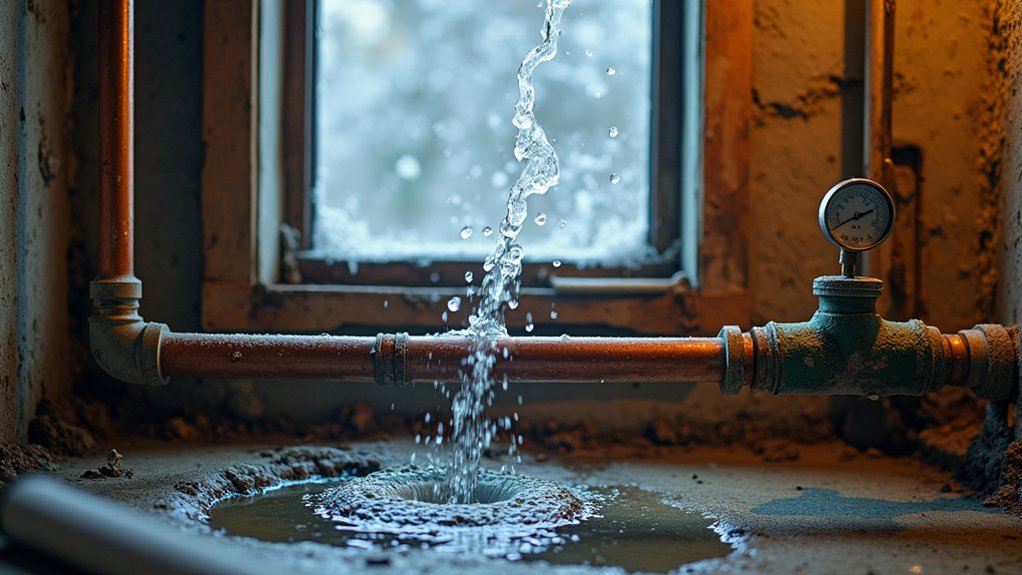
In the UK, escape of water accounts for around a third of domestic insurance claims each year, and burst pipes sit near the top of the list. You can’t always spot the problem at first, because pressure, corrosion, and poor joints often fail behind plasterboard or under floors. If you want a home that’s resilient as well as neatly detailed, you’ll need to know the early warning signs and the quick actions that stop a small crack becoming a full leak…
Key Takeaways
- Freezing temperatures expand trapped water and split pipes; insulate vulnerable runs, seal draughts, and keep low heating on in cold spells.
- High water pressure and water hammer stress joints; fit a pressure reducing valve and secure pipes with clips to reduce vibration.
- Corrosion and aging materials cause pinhole leaks and failures; replace deteriorating sections and use corrosion-resistant fittings with dielectric unions.
- Poor installation creates weak points like unsleeved penetrations or hidden push-fits; use correct pipe sizing, proper supports, and accessible joints.
- Hidden leaks or blockages raise pressure and damage finishes; watch for damp, odours, and meter movement, then shut the stopcock and call a plumber.
Early Warning Signs of a Burst Pipe
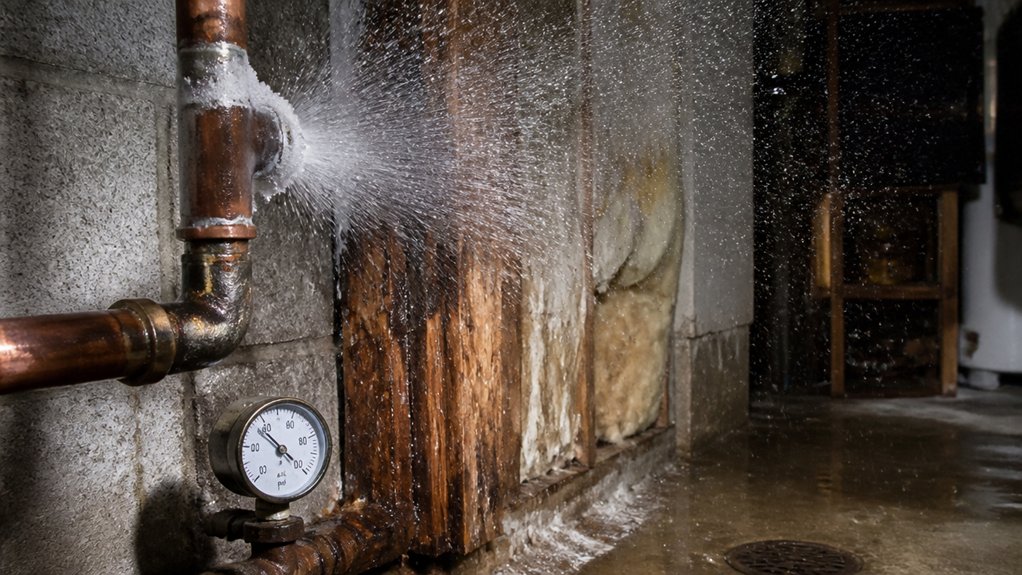
Although a burst pipe can happen without notice, you’ll often spot subtle changes in your home first—like a sudden drop in water pressure at the kitchen tap, damp patches appearing along skirting boards, or a musty smell near boxed-in pipework under stairs or in a utility cupboard.
You might notice ceilings staining in neat coffee-coloured rings, or paint bubbling where plasterboard meets fitted joinery. Listen for intermittent hissing behind bathroom wall tiles, especially after the boiler fires.
Check for unexplained meter movement when taps are off, and watch for limescale halos around compression fittings. In winter, uneven water temperature—hot then suddenly lukewarm—can hint at restricted flow or ice stress.
If pipe insulation looks split, missing, or damp to the touch, treat it as a visual red flag.
What to Do Fast When a Pipe May Burst
If you suspect a pipe’s about to let go, act like you’re limiting damage, not investigating: turn off the stopcock (usually under the kitchen sink), then switch off the boiler and close the nearest isolation valve if you can reach it. Open cold taps to depressurise the system and flush loosened water away from the weak point.
Next, protect finishes: move rugs, lift bathroom mats, and place a tray or bucket under the suspect joint. If water’s already seeping, wrap the area with a towel and apply a temporary pipe repair clamp or self-amalgamating tape.
Kill power at the consumer unit if water’s near sockets or downlights. Photograph the leak for your insurer, then call a local plumber for Emergency response. Once safe, refit pipe insulation you’ve disturbed to keep layouts tidy.
Prevent Burst Pipes From Freezing
When temperatures drop below freezing for a few hours, any water sitting in exposed pipework can expand and split copper, plastic, or push-fit joints, so your best defence is to keep the run warm and the water moving.
Start by locating vulnerable sections in lofts, garages, exterior walls, and under-sink voids, then apply insulation techniques that suit the space.
Use Pipe wrapping (closed-cell foam sleeves) on straight runs, and tape all seams so there aren’t cold gaps; cut neat mitres around elbows for a tidy, design-led finish.
Fit a jacket to the hot-water cylinder and insulate the cold-feed and vent too.
Leave kitchen and bathroom cupboard doors ajar overnight so indoor heat reaches pipework.
Prevent Bursts From Sudden Temperature Swings
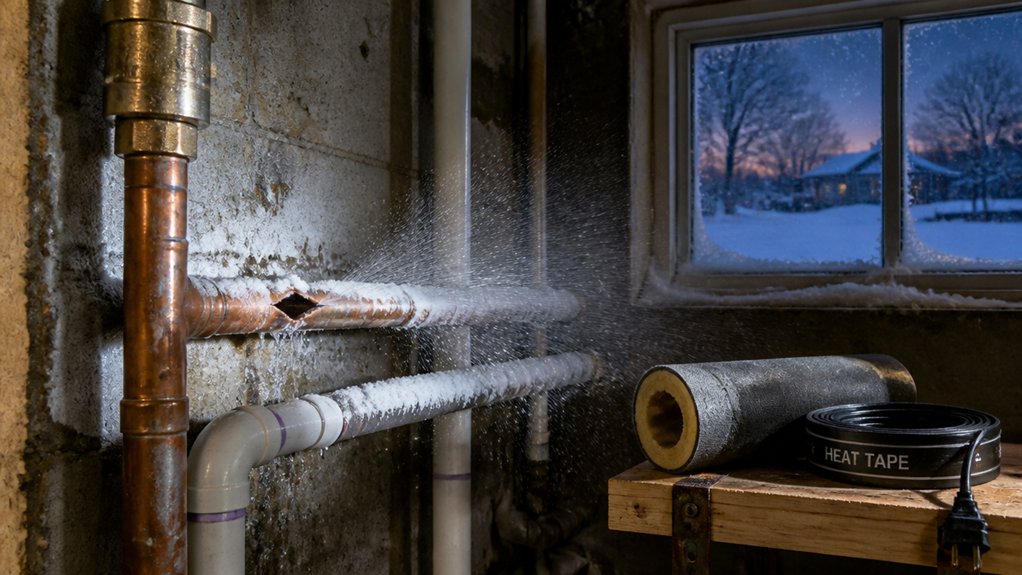
Freezing protection keeps pipe runs safe through long cold spells, but quick swings in temperature can be just as punishing on UK plumbing, especially in older terraces and extensions with patchy insulation.
When you blast the boiler after a chilly night, thermal expansion stresses joints, soldered elbows, and plastic push-fits; when it cools rapidly, they contract and can fatigue over time.
You’ll cut risk by smoothing temperature changes and upgrading finishes with smart, discreet insulation techniques.
- Box in exposed pipework under bay windows with removable, ventilated panels
- Add foam lagging behind kitchen plinths and in unheated loft eaves
- Fit thermostatic controls to prevent sharp hot-water surges after idle periods
- Seal draughty service voids around pipes with fire-rated, paintable mastic
Stop Burst Pipes From High Water Pressure
High mains pressure can quietly stress your pipework until a weak joint gives way, so you’ll want to spot the warning signs early—banging pipes, vibrating taps, and frequent dripping from the pressure relief valve.
If your flow feels unusually forceful or your boiler pressure keeps spiking, you’re likely dealing with overpressure that needs addressing.
You can stabilise the system by fitting a properly sized pressure reducing valve (PRV) and setting it to a sensible level for your home’s layout and fittings.
Warning Signs Of Overpressure
Three early warning signs usually show up before overpressure turns a sound plumbing system into a burst pipe: noisy pipework, erratic flow, and stressed fittings.
In many UK homes, pressure buildup arrives quietly, then announces itself through sharp bangs, persistent vibration, and taps that surge between a mist and a blast.
You’ll often spot pipe deformation where copper or plastic looks slightly bowed, especially near elbows, under-sink runs, or behind boxed-in panelling designed for a clean finish.
- Hammering after the washing machine valve shuts, echoing through joists
- A whistling tap or shower, even when barely opened
- Drips at compression joints, with limescale halos on chrome
- Radiator filling loops and flexible hoses that feel over-tight or bulged
Install Pressure Regulator
Where does that relentless force in your pipework come from, and how do you tame it before it finds the weakest joint? In many UK homes it’s the mains supply: pressure spikes after off-peak demand, booster pumps, or new streetworks can push beyond what older copper and plastic fittings like.
Install a pressure reducing valve (PRV) at the incoming stopcock, ideally with an integral gauge so you can set and monitor pressure regulation around 3 bar (or to your plumber’s spec). Choose a compact, WRAS-approved body that suits your pipe diameter and cupboard layout, and add a strainer to protect the seat.
A PRV also improves flow control, reducing water hammer, noisy taps, and stress on appliances. Get it fitted and tested by a competent plumber.
Prevent Corrosion That Weakens Pipes
To stop corrosion weakening your pipework, you’ll need to manage water chemistry as carefully as you manage pressure. Keep your water’s pH in a safe range, flush out sediment and rust from low points, and you’ll reduce the internal abrasion that accelerates failure.
Where you’re upgrading, specify corrosion-resistant materials—such as plastic or suitably rated copper fittings—to suit your UK water supply and your home’s layout.
Control Water pH Levels
Although temperature swings get most of the blame, off-balance water pH can quietly accelerate corrosion and thin your pipe walls until they fail under pressure. If you live in a UK hard-water area, don’t assume limescale is your only issue; acidic or highly alkaline supply can upset your system’s pH balance and undermine long-term water quality. Test at the kitchen tap, then act early with professional guidance and compliant fittings that suit your home’s design and finish.
- Blue-green staining around basins hints at copper being eaten away
- Metallic taste suggests dissolved pipe material in your drinking water
- Pin-hole leaks on hidden runs can mark aggressive, low-pH water
- Premature failure of valves and chrome tails signals ongoing corrosion
Aim for steady readings and protect vulnerable joints before winter demand rises.
Flush Sediment And Rust
When sediment and rust build up inside your pipework, they don’t just discolour water—they trap moisture against metal, roughen internal surfaces, and speed up corrosion until a weak spot splits under pressure. You can slow that damage by clearing Sediment buildup and rust accumulation before they harden into scale.
Start with a planned flush: run the cold taps fully for several minutes after any supply interruption, then repeat monthly in little-used rooms, like loft conversions or guest WCs.
If you’ve got a combi boiler, follow the manufacturer’s guidance and book a qualified engineer for system flushing at service time.
Fit and maintain a quality inline strainer on the incoming main, and clean tap aerators and shower heads so grit doesn’t recirculate. Keep records to spot changes fast.
Install Corrosion-Resistant Materials
Even if your water looks clear, dissolved oxygen, chlorides, and mixed-metal joints can quietly eat away at pipe walls until a pinhole leak turns into a burst. You’ll cut risk by specifying corrosion resistant materials and by designing out galvanic contact, especially in older UK homes with copper, steel, and brass mixed over decades.
Prioritise material durability, not just upfront cost, and match fittings to the pipework so you don’t create a weak link behind plasterboard.
- Choose WRAS-approved plastic or stainless where exposure is high
- Use dielectric unions when joining dissimilar metals
- Specify lined valves and corrosion-resistant fittings in plant cupboards
- Add accessible isolation points for future inspection and replacement
Replace Aging Plumbing Before It Fails
Long before a pipe actually bursts, aging plumbing often gives you subtle design and performance warnings—dull brown staining at taps, inconsistent pressure, persistent pinhole leaks, or joints that weep after temperature swings.
In UK homes, that’s often older galvanised steel, tired copper, or early plastic reaching end-of-life, especially in loft runs and external walls.
You’ll reduce burst risk by scheduling a condition survey, then replacing vulnerable sections in planned zones, not piecemeal.
Ask your plumber about upgrading stopcocks, fitting modern isolation valves, and matching pipe routes neatly so boxing-in stays slim and serviceable.
If you’re keeping Vintage fixtures, you can still renew hidden pipework and valves without spoiling the look.
Finish by improving pipe insulation where exposed, and you’ll stabilise winter performance.
Clear Clogs That Raise Pipe Pressure
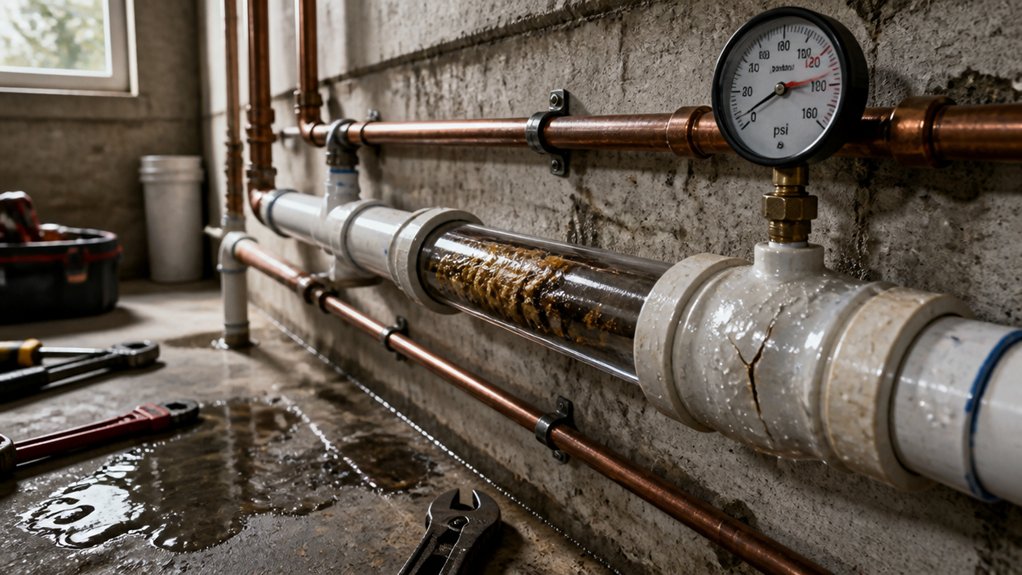
You can’t protect your pipework if hidden blockages in bends, traps, or shared stacks are quietly raising pressure behind the scenes.
You’ll spot early warning signs such as slow drainage, gurgling plugholes, and recurring odours, then trace the problem to the right run before it worsens.
You should clear clogs with UK-safe methods—plunger, drain snake, and enzyme cleaners—avoiding harsh caustic chemicals that can damage finishes and seals.
Identify Hidden Blockages
When water has nowhere to go, pressure builds fast, and a “minor” blockage can become the trigger for a burst pipe. Hidden blockages often sit beyond the trap, where you can’t see them, quietly shrinking the bore and forcing water back through joints.
In UK homes, older clay or cast-iron runs and tight kitchen cabinet layouts make pipe obstructions harder to spot, so you’ve got to read the signs early.
- Gurgling from the sink after you run the tap
- Slow drainage that worsens during washing machine discharge
- A damp patch under units or by the skirting, despite no spills
- Intermittent toilet bubbling when you use another fixture
Check accessible waste pipes, listen along the run, and note patterns by room to pinpoint the likely restriction.
Use Safe Drain Cleaning Techniques
Spotting the early signs of a hidden blockage is only half the job; the next step is clearing it without spiking pressure in the pipework or damaging older UK wastes.
Start with a Safe drain approach: remove the trap if accessible, catch water in a shallow bowl, and clear hair, grease, and scale by hand or with a small bottle brush.
Use a plunger with a wet cloth to seal overflow slots on basins, then apply short, controlled strokes rather than aggressive pumping.
Choose enzyme or biological cleaners for kitchens, and flush with hot (not boiling) water if you’ve got PVC.
Avoid caustics and high-pressure jetting on ageing joints.
If resistance persists, book a CCTV survey.
Avoid Burst Pipes From Poor Installation
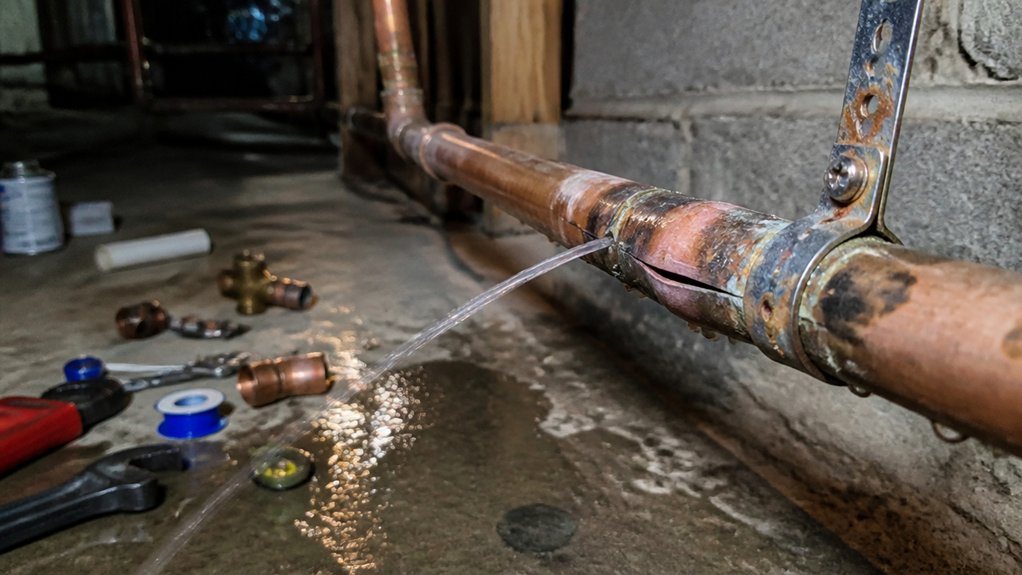
- Loose clips letting copper chatter under flow
- Push-fit joints buried without access panels
- Pipes not sleeved through brickwork, causing abrasion
- Inconsistent pipe sizes creating turbulence and hammering
Your Burst Pipe Prevention Checklist
Although burst pipes often feel like bad luck, you can prevent most of them by running a simple, UK-appropriate checklist that targets insulation, pressure control, and sensible access.
Start in the loft, garage, and any external walls: fit pipe insulation snugly, seal gaps around penetrations, and keep hatch doors draught-tight.
In winter, set your boiler’s frost protection, and leave the heating on low if you’re away.
Next, manage pressure: check your stopcock turns freely, confirm your pressure-reducing valve works, and look for noisy pipework or banging that suggests water hammer.
Add clips where runs vibrate, and keep pipes clear of sharp edges.
Finally, install water leak detection under sinks, near the cylinder, and by the washing machine, and test alarms monthly.
Conclusion
Ignore burst-pipe prevention, and your home could turn into an indoor water feature overnight—so don’t. You’ve spotted the warning signs, acted fast, and tackled the big culprits: freezing snaps, wild temperature swings, sky-high pressure, ageing pipework, stubborn clogs, and dodgy installs. Insulate, keep the heating ticking over, regulate pressure, and upgrade tired plumbing before it gives up. Treat your checklist like a tidy spec sheet, and you’ll protect finishes, floors, and sanity.
About the Author