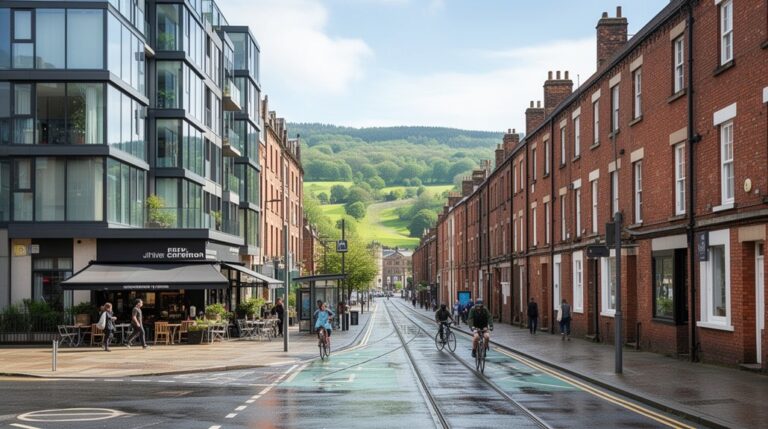
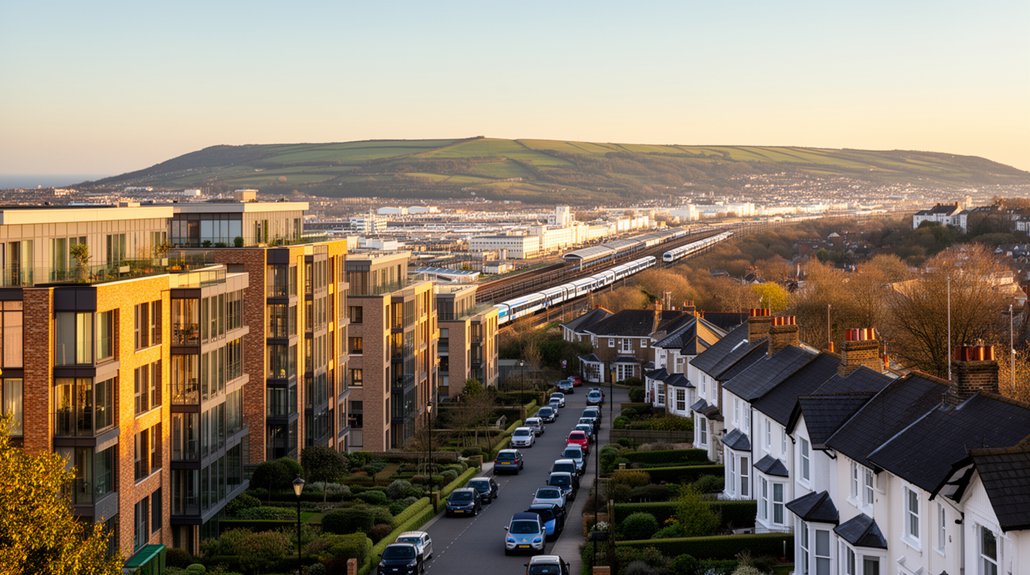
You can still find South‑East value in 2026, but only if you pick towns where infrastructure’s outrunning prices—and Burgess Hill is doing exactly that. You’re seeing demand tighten as faster links to London, Brighton, and Gatwick widen the commuter pool, while new schemes add amenities and keep streets walkable. Buyers are already bidding hard on station‑adjacent homes with parking and gardens, and that pressure is spreading—so where’s the next uplift likely to land?
Key Takeaways
- Burgess Hill remains a relative affordability pocket in the South‑East, offering a workable entry point as neighbouring towns price out buyers.
- Fast, reliable rail links to London, Brighton, and Gatwick broaden the buyer pool, especially within walkable station catchments.
- Ongoing new‑build and infill development refreshes housing stock, supporting liquidity without significantly suppressing prices.
- Family upsizers drive steady demand for larger homes, gardens, and strong schools at better value than closer commuter hubs.
- Bidding activity is strongest for modern 3–4 beds and character terraces near amenities, parking, and energy‑efficient upgrades.
Is Burgess Hill a Good Place to Buy in 2026?
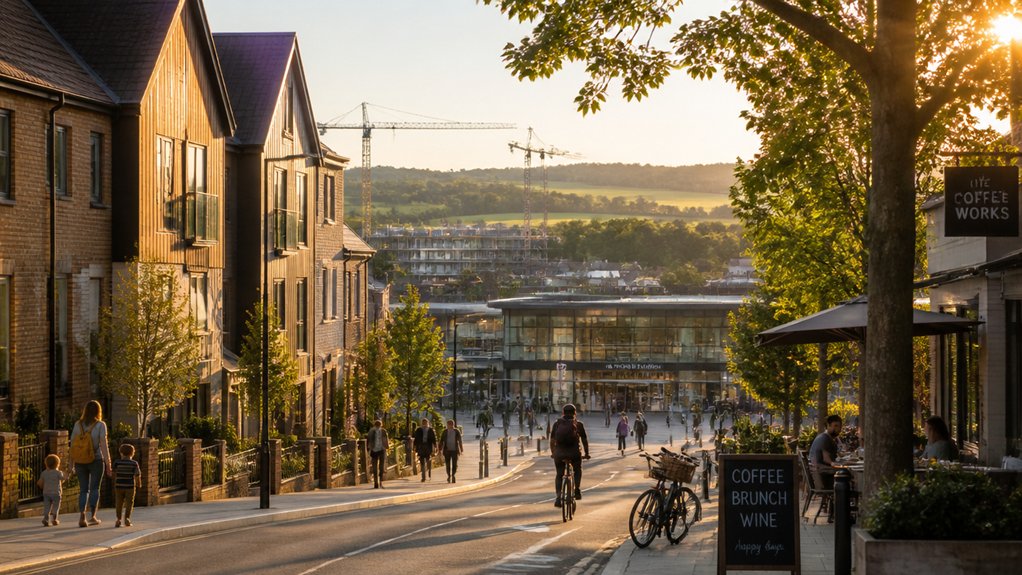
While some South-East towns have already priced out most buyers, Burgess Hill still gives you a workable entry point in 2026 thanks to its London-and-Brighton commuter pull, ongoing new-build supply, and steady demand from upsizers.
If you buy here, you’re backing a market where liquidity stays healthy: family houses and modern flats keep attracting viewings, so exit options don’t rely on one buyer type.
You can target value by prioritising walkable Community amenities, predictable parking, and train access, then upgrading kitchens, insulation, and outdoor space to meet current buyer checklists.
Local schools matter to resale, so you’ll want catchment clarity before you bid.
Choose a street with consistent sale history, and you’ll feel part of a stable, upward-tilting neighbourhood.
What’s Driving Burgess Hill Demand in 2026
Because buyers can’t ignore commute maths in 2026, Burgess Hill demand keeps rising on three measurable drivers: fast rail access that widens your job catchment to both London and Brighton, sustained new-build and infill delivery that refreshes stock without crushing prices, and family-led upsizer churn fuelled by schools, larger floorplans, and gardens at a discount to pricier neighbours.
You also benefit from local amenities that reduce weekly spend and time: supermarkets, leisure, parks, and healthcare cluster close to housing, lifting liveability scores.
Developers and the council keep targeting walkable hubs and safer routes, so you feel the place improving, not just expanding. As more owners trade up locally, listings recycle faster and chains shorten.
That churn reinforces community growth, helping you plug into clubs, schools, and neighbourhood networks quickly.
How Transport Links Are Lifting Burgess Hill Prices
As rail and road connectivity tightens around Burgess Hill, you’re seeing a direct price lift driven by expanded commuter reach and lower “time-to-work” friction. Faster peak services and better interchange reliability make the town feel closer to London, Brighton, and Gatwick, widening your buyer pool beyond purely local movers.
When Public transport runs predictably, buyers discount fewer “delay risks,” and lenders view affordability as more stable.
You also benefit from Burgess Hill’s position between key commuter hubs: choice lets households optimise for hybrid schedules without sacrificing community ties.
As access improves, demand concentrates within walkable station catchments, pushing competition for well-located homes.
If you’re investing in belonging, transport upgrades help you buy into a neighbourhood that stays connected, liquid, and resilient through cycle shifts.
Burgess Hill House Prices in 2026: Ranges by Type
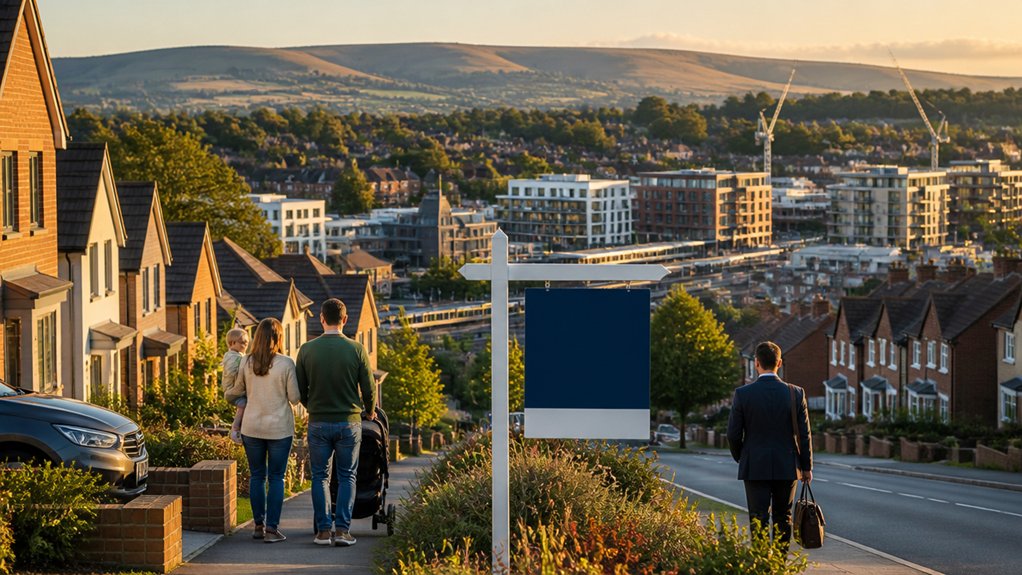
Even if you’re not timing the exact peak, you’ll want clear 2026 price bands by property type in Burgess Hill, since buyers and lenders now price risk and upgrade costs far more tightly than they did a few years ago.
Expect one‑bed flats at £210k–£270k, with luxury apartments typically £320k–£450k depending on spec and parking.
Two‑ to three‑bed terraces and semis often sit at £340k–£480k, while modern four‑bed detached homes cluster around £550k–£750k.
Period cottages with extendable footprints can run £450k–£650k, especially if EPC upgrades are already done.
If you’re aiming for countryside estates, budget £900k–£1.6m+, where land, outbuildings, and renovation headroom drive value.
These bands help you plan, and feel at home fast.
The Burgess Hill Areas and Home Types Seeing Bidding Wars
While overall supply has loosened slightly since 2024, you’ll still see bidding wars in Burgess Hill where the numbers stack up: walkable-to-station pockets (especially around Burgess Hill and Wivelsfield stations), family streets near high-performing primaries, and turnkey homes with strong EPC ratings or already-costed upgrade paths.
You’ll notice the fiercest competition on modern semis and well-extended 3–4 beds under the local “family ceiling,” where monthly payments stay within lender stress tests. You’ll also see offers pile up on character terraces close to local amenities, because renters-turned-buyers want a village feel without sacrificing commute times.
If you’re targeting community developments, prioritise plots with parking, south-facing gardens, and insulation upgrades; they survey well and appraise cleanly, keeping chains moving fast.
Conclusion
If you’re buying in 2026, Burgess Hill gives you connectivity and value you can quantify: faster rail options, broader commuter reach to London, Brighton, and Gatwick, and steady buyer competition. You’ll see the sharpest premiums near stations, especially for homes with parking and gardens, where bidding stays active. New developments and walkable amenities keep demand resilient. With supply still tight, why wait if the numbers already support your move?
About the Author