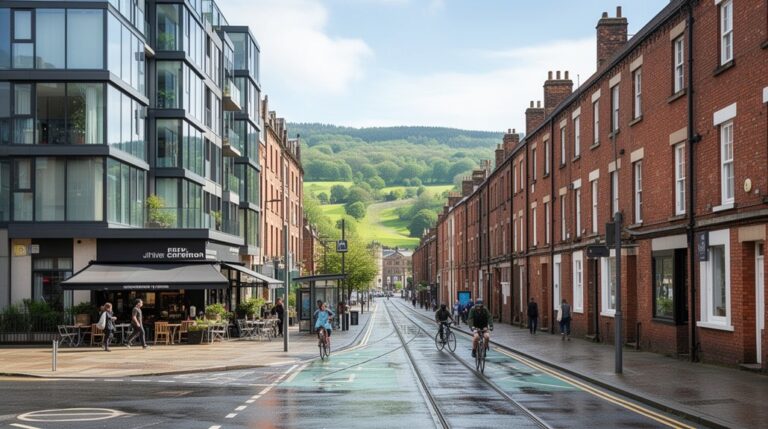

If you blink, Carlisle’s market can feel like it’s doubled overnight. You’re weighing city-centre flats, school-run suburbs, and rural-edge cottages, and the margin for error is thin. Local agents keep you ahead by tracking prices street-by-street, flagging valuation traps, and lining up viewings before the best stock goes quiet. But the real advantage is how they steer your offer and chain risk in this fast-moving hub…
Key Takeaways
- Agents explain Carlisle’s value-for-money appeal, matching buyers to homes with strong layouts, running costs, and resilient resale value.
- They pinpoint best-fit areas—city centre, family suburbs, and rural fringe—based on commute links, schools, amenities, and lifestyle priorities.
- Agents price with street-level sold data, tracking demand shifts, fall-throughs, and time-to-offer to keep guide prices realistic.
- They pre-empt deal-breakers by flagging flood risk, damp, roof wear, electrics, conservation limits, parking, and insurability before offers progress.
- Agents reduce chain risk by verifying funds, aligning timelines, booking surveys and searches early, and pushing for clean exchange-completion plans.
Why Buyers Are Choosing Carlisle Right Now

While some buyers still chase bigger city postcodes, Carlisle is pulling attention for the things that actually move the needle: stronger value for money, a wider choice of well-proportioned homes, and day-to-day liveability. You can still secure period terraces and solid semis without trading space for the address, and you’ll see historical architecture that adds character without forcing a compromise on practicality.
You also buy into a city that works Monday to Sunday. Commute links are straightforward, schools and healthcare are within reach, and local amenities cover the basics and the extras, from independent cafés to parks and leisure.
When you’re weighing monthly costs, upkeep, and resale resilience, Carlisle lets you feel rooted quickly—and you won’t feel priced out of your own plan.
Best Carlisle Areas for Buyers (and Why)
If you want walkability, strong rental demand, and quick access to rail and retail, the City Centre puts you closest to the action.
If you’re prioritising schools, parks, and quieter streets, family-friendly suburbs give you space without losing commute efficiency.
If your budget needs more stretch, the rural fringe often delivers larger plots and better price-per-square-foot while staying within practical reach of Carlisle.
City Centre Convenience
Why do so many buyers gravitate toward Carlisle’s city centre? You get walk-to-everything living that makes settling in fast: cafés, independent shops, leisure, and the station for easy regional links. If you’re balancing work and social life, that convenience cuts travel costs and frees up your evenings.
You’ll also find a smart mix of Luxury apartments and conversions framed by Historic architecture, so your home feels rooted, not anonymous. Agents will steer you toward buildings with strong management, realistic service charges, and solid rental demand if you’re buying as a future-proof move.
Check parking options, bike storage, and noise levels street by street, then choose a pocket where you’ll recognise faces and feel part of the city’s rhythm.
Family-Friendly Suburbs
Because space and day-to-day practicality matter more once you’re thinking long term, Carlisle’s family-friendly suburbs keep topping buyers’ shortlists with larger plots, quieter streets, and schools you can actually plan around.
You’ll spot steady demand in areas like Stanwix, Belle Vue, and Botcherby, where buyers pay for routine: walkable primaries, safer crossings, and parks close enough for after-school resets.
Estate agents will steer you to streets with consistent resale performance, not just the “nicest” postcode, and they’ll flag traffic patterns, catchment boundaries, and planned upgrades that affect value.
You’re also buying community: local clubs, neighbourly cul-de-sacs, and suburban amenities such as supermarkets, GP access, and reliable bus links that keep work and family life in balance.
Rural Fringe Value
While the city-centre market moves fast, Carlisle’s rural fringe often gives you the best value per square foot without sacrificing commute practicality. Look to villages and edge neighbourhoods like Dalston, Scotby, and Wetheral for larger plots, quieter streets, and a steady resale profile when demand tightens.
You’ll still stay close to the M6, rail links, and key employers, so weekdays don’t feel like a trade-off.
You’ll also plug into rural amenities—farm shops, pubs, footpaths, and community halls—so you can build routines and feel known, not anonymous. Ask your agent about planning constraints tied to farmland preservation; they protect views and limit oversupply, which helps long-term pricing.
Prioritise flood checks, broadband speed, and school catchments before you bid.
How Carlisle Agents Track Price Changes Street-by-Street
Even if Carlisle’s headlines suggest a single “market trend,” agents track price movement street-by-street to spot micro-shifts that actually affect your sale or purchase. They map completed sales, fall-throughs, and time-to-offer by postcode, then sanity-check it with viewing feedback so you don’t chase yesterday’s numbers.
You’ll see them compare like-for-like homes within a few doors, flagging where a new school catchment line, roadworks, or parking changes have nudged demand. That’s how they keep Property pricing realistic when Market fluctuations hit: they adjust your guide price, negotiate from fresh evidence, and time your launch around buyer activity.
You’re not guessing in isolation—you’re working with locals who know which streets are quietly rising and which need sharper positioning.
Where Carlisle Agents Find Value by Property Type

Although the headlines lump Carlisle into one “average” market, agents find the real value by drilling into property type—Victorian terraces, 1930s semis, modern estates, city-centre flats, and rural-edge cottages all price and sell differently.
If you’re weighing Property investment, start with terraces: buyers pay for walkability and character, but you’ll budget for roofs, damp, and parking.
With 1930s semis, you’re buying family pull—driveways, gardens, and extension potential—so agents benchmark by plot width and school catchments.
Modern estates trade on EPC ratings and low maintenance; premiums tighten when similar stock hits at once, so agents track micro-supply.
City-centre flats hinge on lease terms and service charges.
Rural-edge cottages command lifestyle value, but access, flood risk, and broadband steer Market trends.
How to Get Viewings Fast in Carlisle
If you want viewings quickly in Carlisle, you need to line up three things from day one: a price that matches the nearest comparable sold data (not wishful listing figures), photography that sells light and layout, and an online launch timed for maximum buyer traffic.
Then remove friction: keep diaries flexible for the first 10 days, offer short-notice slots, and make access easy with keys held locally.
Tighten property maintenance so buyers don’t sense “jobs pending”: tidy gardens, fix dripping taps, refresh tired paint, and ensure heating and electrics present well.
Prepare legal considerations early—ID, title documents, warranties, planning sign-offs—so your agent can answer questions fast and reassure proceedable buyers.
Finally, lean into community: highlight walkable amenities, schools, and commuter links so viewers feel they belong.
What to Check at Viewings (Agent-Led Checklist)
Because the best offers come from confident buyers, treat every Carlisle viewing as a structured inspection rather than a casual walk-through: check kerb appeal and immediate maintenance, ask about heating type and running costs, test water pressure and ventilation, scan ceilings and external walls for damp or cracking, and note window/door condition for heat loss and security.
Then follow your agent’s room-by-room checklist: open cupboards, look behind furniture, and photograph meter readings and the boiler badge. Don’t get distracted by Property staging—ask what’s included, what’s excluded, and whether recent redecorating hides repairs.
Step outside: check gutters, rooflines, and boundary responsibility, plus parking and bin storage. Finally, tune into the street feel at different times, so you can picture yourself as part of the neighbourhood, not just the house.
Treat it like a Home inspection.
How to Make a Strong First Offer in Carlisle

You’ve done the viewing like an inspection, so now you can price your offer with facts rather than gut feel. Pull three nearby sold prices, adjust for square footage, parking, and condition, then set a clear ceiling.
If the seller’s used home staging well, don’t overpay for dressing; value layout, light, and long-term running costs. Ask the agent what’s driving interest—first-time buyers, landlords, or families—and tailor terms to fit.
Lead with certainty: confirm your deposit, decision timeline, and which mortgage options you’ve already lined up. Put your offer in writing the same day, include your solicitor’s details, and state what you’re prepared to do next.
You’ll come across as serious and Carlisle-ready without sounding pushy.
Surveys, Chains, and Local Deal-Breakers Carlisle Agents Spot
Once your offer’s accepted, you’ll need to treat the survey as a negotiation tool—focus on findings that affect safety, structure, damp, roofing, and drainage costs.
You’ll also want to stress-test the chain early, set clear deadlines, and line up options like a chain-free buyer, bridging, or temporary renting if timelines slip.
Finally, you should watch for Carlisle-specific deal-breakers agents flag fast, from flood-risk pockets and conservation constraints to parking, access, and hard-to-insure construction types.
Survey Findings That Matter
Although a survey can feel like a box-ticking step, it’s often where Carlisle purchases either stay on track or start to unravel. Your agent will push for clear answers on damp readings in sandstone terraces, roof spread on older semis, and insulation gaps in post-war builds.
You’ll also want drainage checks near riverside pockets and subsidence flags where clay soils bite.
When findings land, your agent helps you rank what’s urgent, what’s negotiable, and what you should walk away from—fast. They’ll translate technical notes into costs, timelines, and leverage, keeping you aligned with Market trends and protecting real investment opportunities.
You’ll feel part of the Carlisle buyer community when decisions are grounded in local patterns, not guesswork, and you move forward with confidence.
Chain Risks And Solutions
Where do Carlisle purchases most often stall—despite an accepted offer and a clean-looking survey? In the chain: one buyer’s mortgage offer expires, a sale below wobbles, or a slow solicitor drags everyone’s dates.
Your agent keeps you in the loop with weekly chain checks, shared timelines, and “ready-to-exchange” milestones so you feel part of a coordinated team, not a solo bidder.
You reduce risk by locking in your finance early, booking searches fast, and agreeing a realistic completion window. Ask for proof of funds and mortgage status up and down the chain, and push for simultaneous exchange/complete if links look fragile.
Budget for property tax and any lender-required retention. Confirm zoning regulations won’t trigger extra enquiries that pause searches.
Carlisle Deal-Breakers Spotted
Before you book removals, you’ll want a clear view of the deal-breakers Carlisle agents see most—issues that slip past an accepted offer and even a “fine” survey, then derail matters at enquiries or mortgage approval. Watch for damp around older sandstone, roof wear, and outdated electrics that trigger lender conditions. Ask early about flood history, drainage, and any mining or ground-stability searches.
Chains still break when buyers can’t evidence funds, or when timelines clash with school terms and commuter starts. You’ll stay in the local rhythm by setting firm deadlines, booking surveys fast, and agreeing a realistic completion window.
Don’t let Property staging hide functional problems; verify heating, insulation, and Energy efficiency ratings, because EPC-driven renegotiations are increasingly common in Carlisle.
Negotiation, Fees, and Picking the Right Carlisle Agent
Once you’ve shortlisted a few Carlisle estate agents, you’ll want to pressure-test them on three things that directly affect your outcome: how they negotiate, what their fee structure really costs you, and whether their local track record fits your property and your timeline.
Ask for recent, comparable sales on your street, not generic averages, and get a clear plan for handling offers, counteroffers, and fall-through risk.
Pin down fees in writing: commission, tie-in period, marketing add-ons, and whether Property staging is bundled or billed separately, alongside expected legal fees.
Then check fit: do they routinely sell your type of home—terrace, new-build, rural edge—and can they speak to buyers relocating north? You’ll feel it when their network matches your pace.
Conclusion
As Carlisle’s momentum builds, you’ll move fastest when your agent’s intel is sharper than the listings. You’ve narrowed the right area, booked viewings early, checked the deal-breakers, and priced your offer to the street—not the postcode. But here’s the pivot: the winning buyers aren’t just bidding well; they’re controlling risk—survey outcomes, chain weak links, and renegotiation triggers. Get that right, and the “perfect” home doesn’t slip away.
About the Author