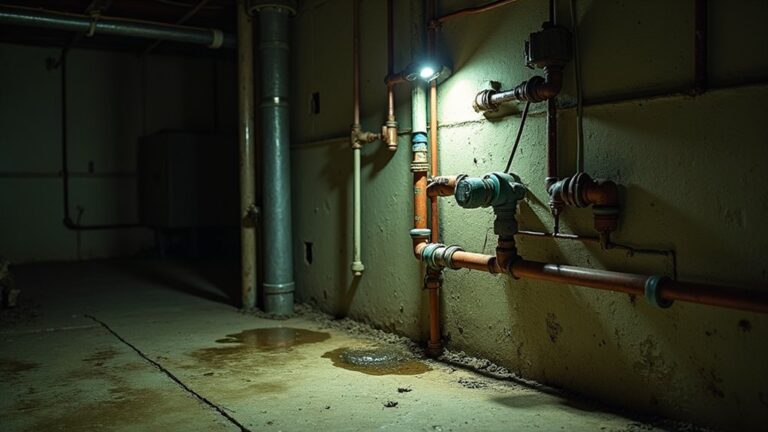
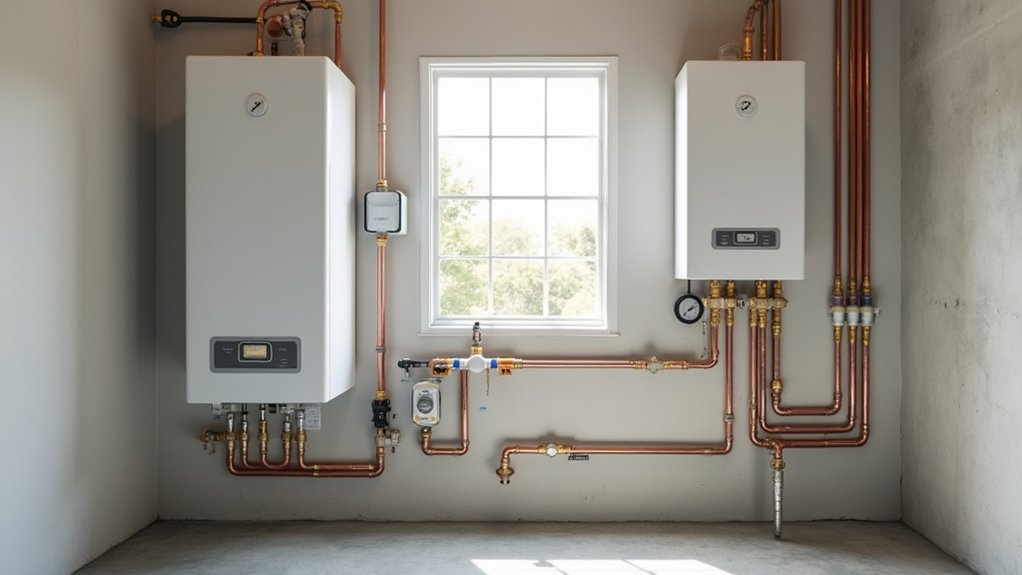
If your water pressure dips, pipes rattle, or you’re forever chasing small leaks, you can usually modernise your plumbing without turning the house into a building site. Start by mapping stopcocks, isolator valves, pipe materials, and any recurring trouble spots, then prioritise upgrades by payback and disruption. A pressure regulator, low-flow taps, insulated hot-water runs, and smart leak sensors can feel quietly premium—until you spot what’s really limiting efficiency.
Key Takeaways
- Audit your plumbing for pressure swings, rusty water, damp patches, and banging pipes, then map pipe materials, sizes, and isolator valves.
- Start with quick efficiency wins: fix tap cartridges, fit low-flow WRAS showerheads, insulate hot-water pipes, and add leak sensors.
- Replace ageing lead or galvanised pipes with modern copper or plastic during renovations to improve water quality, reliability, and flow.
- Install a mains pressure regulator with gauge and isolator, set around 2.5–3 bar, to stabilise showers and reduce leaks.
- Upgrade hot-water systems and controls, then add automatic shutoff valves linked to leak detectors to cut waste and prevent damage.
Signs Your Home Plumbing Needs Modernising
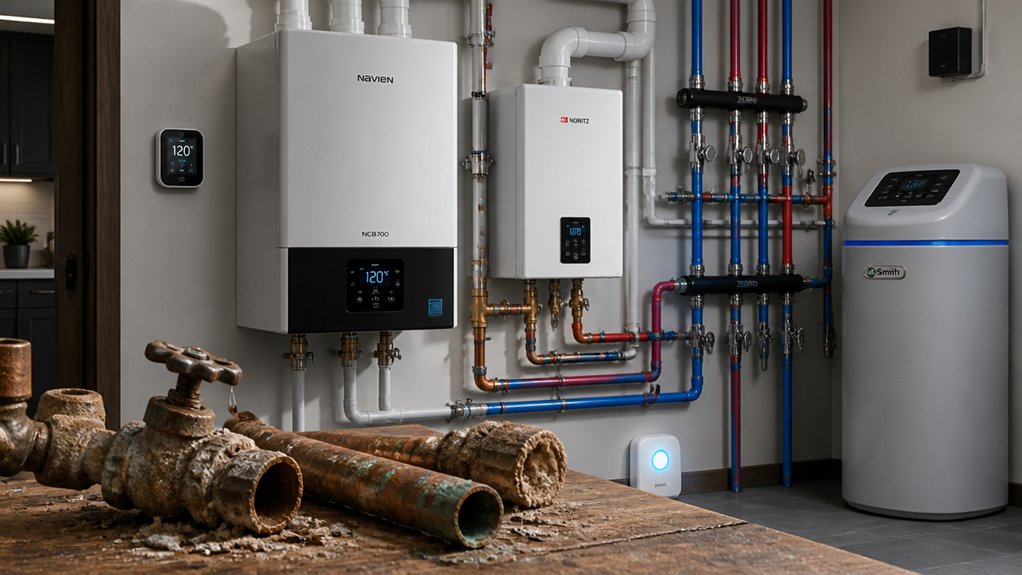
Although your plumbing might still “work,” subtle day-to-day issues can signal it’s overdue for modernising. If your hot water takes ages, showers swing from scalding to tepid, or taps sputter with air, you’re feeling pressure and flow instability.
Rusty-tinged water, metallic taste, or frequent limescale crust around spouts often points to tired pipework and hard-water strain, common across the South East. You’ll also notice persistent damp patches, musty cupboards, or unexplained drops in boiler pressure—small leaks that waste heat and water.
In homes with Historical plumbing, you may hear banging pipes or see dated fittings that don’t match a renovated kitchen. Modernising delivers quiet reliability plus aesthetic upgrades: slimline mixers, discreet traps, and premium finishes that still perform.
Map Your Plumbing: Valves, Pipe Type, Problem Areas
Once you’ve spotted the tell-tale issues—slow hot water, pressure swings, damp patches—the next step is to map what you’ve actually got behind the walls and under the floors.
Start at the stopcock (often under the kitchen sink) and trace the route to your boiler, cylinder, and key outlets.
Do a calm Valve inspection: label isolators, check they turn fully, and note any weeping compression joints.
Identify Pipe material as you go—copper, plastic push-fit, old galvanised, or lead—and record sizes where visible.
Mark risk zones: boxed-in runs, external walls, and ceilings below bathrooms.
Use a simple sketch or phone notes to capture:
- Main shut-offs and isolating valves
- Pipe material changes and hidden junctions
- Recurrent damp spots and noise hotspots
Pick Upgrades by Cost, Savings, and Disruption
With your plumbing map in hand, you can choose upgrades the same way you’d plan any sensible home improvement: by weighing upfront cost against real-world savings and how much upheaval you’ll tolerate. Start with a Cost analysis: parts, labour, making-good, and any certification your installer must provide.
In many UK homes, quick wins include swapping tired tap cartridges, adding high-efficiency showerheads, insulating exposed hot-water pipework, and fitting smart leak sensors near the stopcock and appliances. These keep payback tangible through lower hot-water demand and fewer call-outs.
For bigger gains, schedule pipe replacements or cylinder upgrades when you’re already refurbishing kitchens or bathrooms.
Push Disruption minimization by batching tasks, using accessible runs, and agreeing dust control, isolation times, and reinstatement standards in writing.
Modernise Water Pressure With a Home Regulator
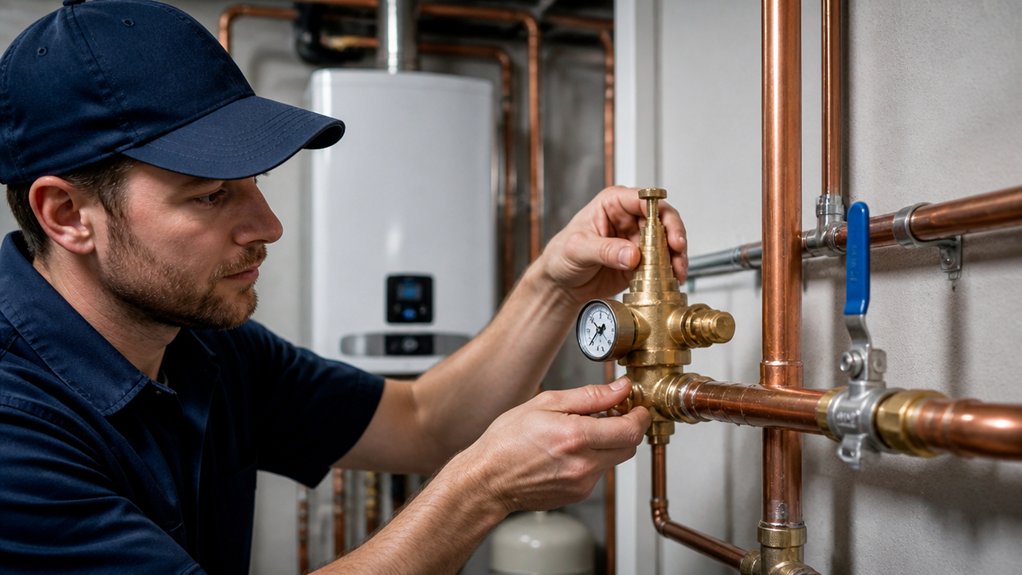
If your mains pressure swings from weak to harsh, you can fit a home pressure regulator to steady flow, protect tapware and appliances, and cut leakage and water-hammer noise.
You’ll choose one rated for UK incoming pressure, sized to your supply pipe (often 15–22mm), and adjustable to a comfortable set point for showers and combi boilers.
Install it on the incoming main with an isolating valve and gauge, then check and clean the strainer and re-test the set pressure periodically to keep everything running quietly and reliably.
Benefits Of Pressure Regulators
Although your mains pressure might look fine on paper, it can swing enough to stress pipework, rattle fittings and make showers feel unpredictable—so a home pressure regulator is a smart upgrade when you’re modernising your plumbing.
With steady pressure management, you protect copper, plastic and push-fit joints from water-hammer and gradual fatigue, especially in UK homes where street pressure varies by time of day.
You’ll also notice quieter pipework, less splashing at taps, and more consistent hot-and-cold blending at mixers.
Proper flow regulation helps appliances work as intended and can trim waste without making your bathroom feel “low flow”.
Expect tangible benefits:
- Smoother showers and calmer, hotel-like tap performance
- Longer life for valves, taps, washing machines and boilers
- Fewer leaks, call-outs and annoying vibration noises
Choosing The Right Regulator
Where do you start when every “universal” pressure regulator claims to fit any home? Begin with your incoming mains pressure and your property type. In the UK, many homes see 3–6 bar; you’ll typically want steady pressure regulation around 2.5–3 bar to protect taps, combi boilers, and appliances while keeping showers luxurious.
Choose a WRAS-approved regulator with a gauge port and fine adjustability, so you can match performance to your pipework and flow needs. Prioritise brass or DZR bodies for hard-water areas, plus a built-in strainer to reduce grit wear.
Check maximum flow rate against simultaneous use—bath fill, kitchen tap, and rainfall head. Finally, pick a model with accessible seals and filter parts, simplifying Regulator maintenance over time.
Installation And Maintenance Tips
Once you’ve chosen a WRAS-approved regulator with the right flow rate and materials, get the installation right so it delivers steady, spa-like pressure without stressing your boiler or fittings. Fit it on the incoming main after the stopcock, before any branches, and add an isolation valve each side for tidy servicing. Set the outlet pressure with a gauge, then run taps and showers to confirm balanced flow.
- Flush the line first to prevent grit scoring the seat and causing noisy surging.
- Check strainers every six months, especially in hard-water areas, and descale gently.
- Pair it with Eco friendly fixtures to maximise comfort while supporting Water conservation.
If you’ve got a combi, keep settings within manufacturer limits and recheck after seasonal mains-pressure changes.
Upgrade Fixtures to Cut Water Waste
How much water are you sending straight down the plughole every day without noticing? Start by swapping tired taps and showerheads for WRAS-approved, low-flow models that feel indulgent, not mean. Aerated mixers keep the stream silky while cutting litres; thermostatic showers hold a steady temperature so you don’t waste water tweaking controls.
Dual-flush WCs and drop-in cistern displacement devices trim every flush without compromising performance.
Prioritise fixture aesthetics as well as efficiency: brushed brass, matte black, or polished chrome can modernise a bathroom instantly, especially when you match spouts, handles, and wastes.
Look for water-saving technologies such as flow regulators, pressure-compensating cartridges, and smart leak-detecting shut-offs at the stopcock. You’ll reduce bills, protect your pipework, and still enjoy a hotel-level finish.
Modernise Hot Water With a High-Efficiency Heater
Upgraded fixtures cut the litres at the tap, but your biggest gains often sit behind the cupboard door: the hot-water heater. If your cylinder’s ageing, you’re paying to keep water hot all day. Swap to a modern condensing boiler cylinder, heat-pump cylinder, or consider Tankless heaters for on-demand performance in smaller UK homes and high-end flats.
- Check your incoming gas/electric supply and sizing; undersizing ruins comfort, oversizing wastes money.
- Choose smart controls and a programmer with holiday mode to trim standby losses and maximise Energy savings.
- Specify anti-limescale protection in hard-water areas (London, Kent) to keep efficiency and flow steady.
You’ll get faster recovery for baths, steadier shower temperature, and a quieter plant room feel—without compromising the luxury of plentiful hot water.
Insulate Hot-Water Pipes to Reduce Wait Times
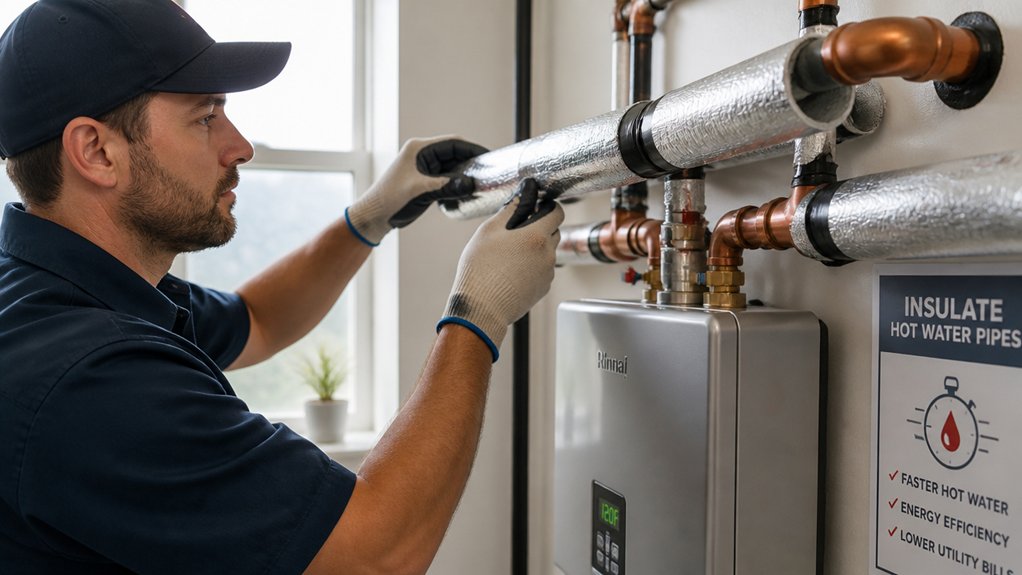
Because hot water loses heat the moment it leaves the cylinder, uninsulated pipe runs make you wait longer at the tap while you pour money down the drain.
Upgrade with Pipe insulation and you’ll get hotter water sooner, especially in larger UK homes where the kitchen and en-suites sit far from the airing cupboard.
Wrap accessible hot-water pipes with closed-cell foam sleeves sized to 15mm or 22mm, then tape joints and bends so gaps don’t vent warmth into lofts, garages, or underfloor voids.
Insulate the first metre from the cylinder and any long horizontal runs; keep clear of flues and follow manufacturer temperature ratings.
You’ll cut heat loss, reduce wasted litres, and lift Hot water efficiency without altering your premium brassware or shower performance.
Add Smart Leak Detection to Prevent Damage
To protect your home from costly water damage, you’ll want smart leak sensors placed under sinks, by the boiler, and near the washing machine.
Choose models that suit your setup—Wi‑Fi for simple installs or a hub-based system for steadier coverage in larger UK properties with thick walls.
Look for reliable app alerts and long-life batteries to ensure continuous protection.
For a truly premium safeguard, integrate an automatic shutoff valve on the incoming mains so it’ll cut the water the moment a leak’s detected.
Choosing Smart Leak Sensors
Where do most plumbing disasters begin—quietly, behind a vanity unit, under the kitchen sink, or beside the boiler cupboard—long before you notice a patch on the ceiling?
Choosing the right smart sensor means you’ll get fast leak detection without constant false alarms. Place sensors where UK homes most often weep: washing machine valves, combi boiler PRV discharge points, and around hot-water cylinders in airing cupboards.
Look for models with loud local sirens, app alerts, and long-life batteries that cope with chilly understairs cupboards. Prioritise:
- IP-rated housings and a low-profile puck that fits under kickboards
- Wi‑Fi or Zigbee to match your hub, plus reliable 2.4GHz support
- Probe extensions for tight voids, and clear historical event logs
You’ll protect finishes, cabinetry, and insurance claims.
Integrating Automatic Shutoff Valves
How quickly can a pinhole leak turn into a soaked floor once you’re out for the day? Pair your smart sensors with an Automatic shutoff valve at the incoming mains, ideally just after the stopcock.
When moisture, flow anomalies, or temperature drops trigger an alert, valve automation closes the supply in seconds, limiting damage to skirting boards, oak floors, and newly tiled bathrooms.
Choose WRAS-approved brass bodies, a manual override, and battery backup so protection continues during a cut.
Ask your plumber to fit isolation valves for kitchens and en-suites, then programme zones in the app for a tailored response.
You’ll also spot wasteful running loos and dripping taps, improving efficiency without compromising comfort.
Repipe When Corrosion, Lead, or Recurring Leaks Show Up
Although patch repairs can buy you time, you should plan a full repipe once corrosion, lead pipework, or recurring leaks start appearing, because the underlying system’s integrity has already been compromised.
In many UK homes, ageing galvanised steel or old lead runs can taint water, restrict flow, and raise maintenance costs. A planned repipe lets you upgrade pipe materials to copper, PEX, or multilayer, sized correctly for combi boilers, unvented cylinders, and high-pressure showers.
- Ask your plumber for a water test and a survey for hidden pinhole leaks.
- Specify WRAS-approved fittings, isolation valves, and access panels for future servicing.
- Build in corrosion prevention with inhibitors, dielectric unions, and correct earthing/bonding.
You’ll gain quieter pipes, steadier pressure, and a clean, premium finish behind the walls.
Conclusion
Modernising your plumbing pays off when you tackle pressure, leaks, and hot water efficiency in one plan. Map your valves, upgrade to low-flow brassware, insulate hot pipes, and add smart leak detection for peace of mind. For example, in a 1930s Surrey semi, you fit a pressure regulator, swap tired galvanised runs for plastic barrier pipe, and install a heat-pump cylinder—showers stay steady, bills drop, and you stop chasing drips.
About the Author