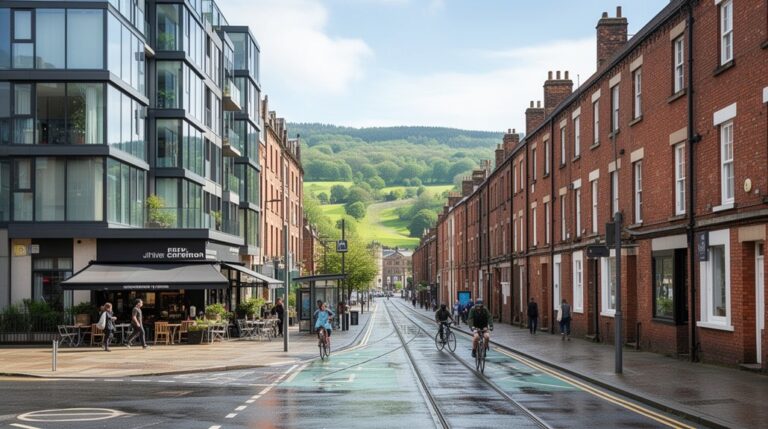
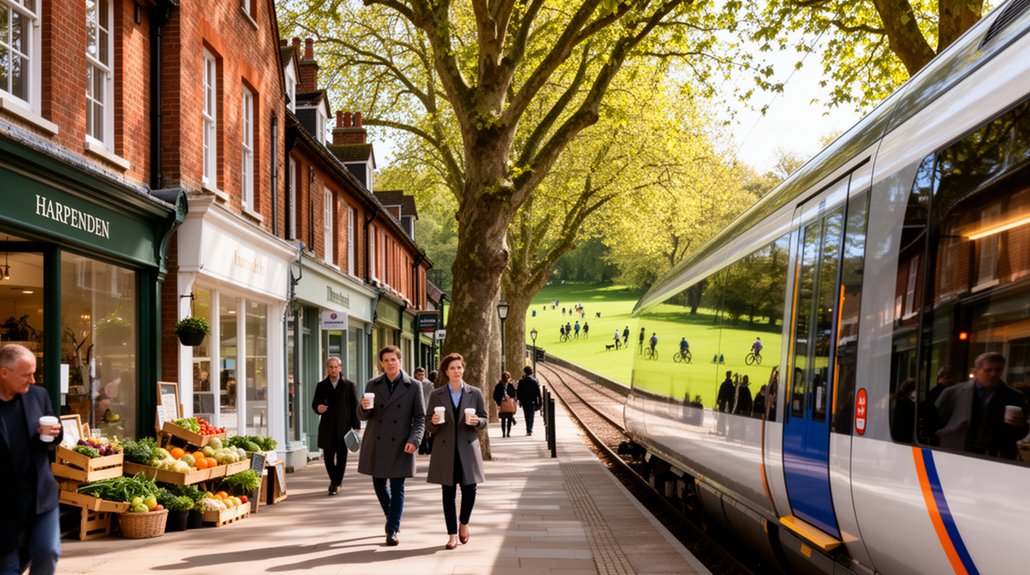
If London’s pace is starting to feel a bit relentless, you’re not alone. You can keep a serious career on track while swapping late-night noise for Harpenden’s greener streets and village routine. You’ve got Thameslink into St Pancras in roughly 25–35 minutes, plus schools, childcare options, and everyday essentials close by. The question isn’t whether it works—it’s what your budget buys and what you’ll trade off…
Key Takeaways
- Fast, frequent trains reach London St Pancras in 25–35 minutes, supporting hybrid schedules with manageable door-to-door commuting.
- A compact high street with cafes, delis, supermarkets, and services makes daily life convenient without feeling overly urban.
- Leafy commons, footpaths, and cycling routes provide quick outdoor escapes, improving work-life balance close to home.
- Varied housing options, from flats to detached family homes, let buyers trade station proximity for space, privacy, or value.
- Strong schools, community events, and reliable childcare options attract professionals planning longer-term moves and family stability.
Is Harpenden Right for London Professionals?
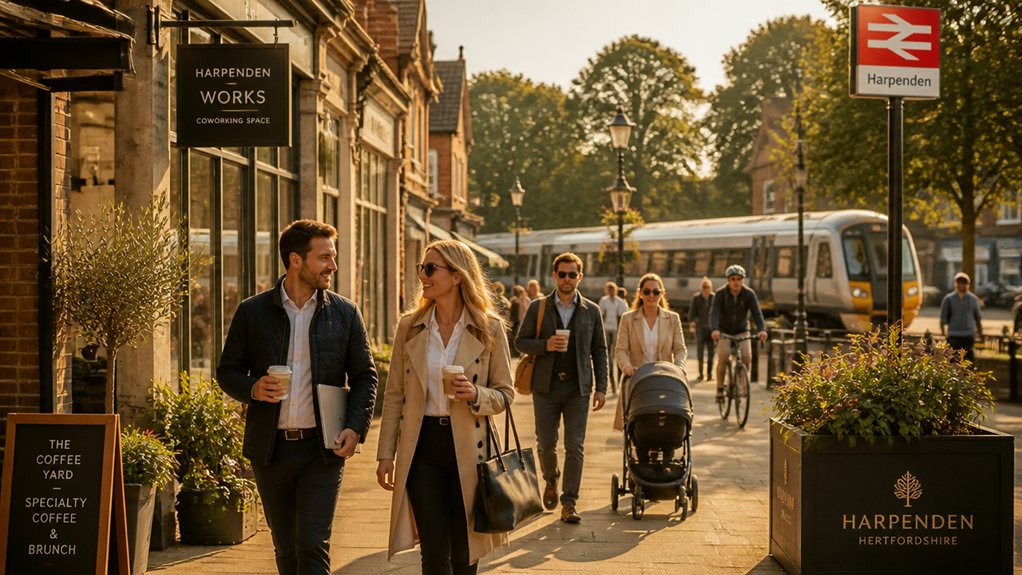
If you’re weighing up a move that keeps you close to London without staying in it, Harpenden can be a strong fit: you get a fast, commuter-friendly rail link into the capital, a walkable town centre with day-to-day amenities, and a housing market that typically suits established professionals prioritising space, schools, and long-term value over Zone living.
You’ll want to budget for a premium over nearby towns, but you’re buying into a stable, family-leaning market with strong resale demand.
Focus your search on streets within easy reach of schools, parks, and the High Street to make daily life genuinely car-light.
For belonging, you’ll find Local dining that’s polished but friendly, plus cultural festivals that help you meet neighbours quickly.
Check lease terms, catchments, and planned works before you commit.
Harpenden to London: Trains, Times, Season Tickets
Commute time often decides whether Harpenden really works for London life, so get specific about the rail service before you make an offer. From Harpenden station you’ll typically reach London St Pancras in around 25–35 minutes on fast Thameslink services, with frequent departures at peak. Check the first and last trains for your routine, plus weekend engineering works that can stretch journeys.
For costs, compare Anytime, Off-Peak, and carnet-style options, but most daily commuters price up an annual or monthly season ticket; it can also bundle Travelcard zones if you need onward Tube access.
Factor in parking permits, cycle storage, and bus links so Public transportation feels seamless. If you expect seasonal travel to change your pattern, model a mixed ticket strategy before committing.
Hybrid Working in Harpenden: Routines, Space, Co-Working
Because hybrid schedules now shape where you can comfortably live, Harpenden works best when you plan for two distinct rhythms: London days and home days. Block commute mornings for calls that need presence, then reserve home days for deep work and remote collaboration. You’ll stay visible without living on trains.
At home, treat space like an asset: choose a spare room or quiet corner, add a door where possible, and invest in ergonomic setups (chair, monitor height, lighting) so you finish strong, not stiff.
When you need a reset, use local cafés for short admin sprints, then switch to a co-working desk for focused sessions and client-ready video calls. You’ll recognize familiar faces, build a steady routine, and feel part of the weekday village.
Harpenden vs St Albans vs Hitchin: Quick Comparison
If you’re weighing Harpenden, St Albans, and Hitchin, start by comparing real door-to-door commute times to your London office and how often you’ll actually travel.
Then match each town’s day-to-day offer—schools, high street mix, restaurants, green space, and weekend feel—to the lifestyle you want.
You’ll quickly see whether you’re optimising for fastest rail links, the broadest amenities, or the best value-for-money balance.
Commute Times Compared
While you’re weighing Harpenden against St Albans and Hitchin, the fastest way to cut through the noise is to compare real-world London commute times—typical peak-train durations, how often services run, and how much “door-to-desk” time you’ll actually lose once you factor in getting to the station and a last-mile hop at the London end.
From Harpenden, you’re typically 25–32 minutes to St Pancras on fast services, with frequent peak departures; add 10–20 minutes to reach the station and you can keep an under-hour routine.
St Albans City runs similarly (18–25 minutes), but parking and station access can stretch totals.
Hitchin often lands 33–45 minutes to King’s Cross, with fewer fast slots.
If you do Remote work, these differences still shape when you can meet colleagues after Local dining.
Lifestyle And Amenities
Commute speed gets you into London, but lifestyle and amenities decide whether you’ll still enjoy coming home on a Tuesday night.
In Harpenden, you’ll get a village-centre feel with strong schools, leafy commons, and a tight high street where you can become a regular fast—coffee, deli, and local cuisine without trekking to a city centre.
St Albans gives you more choice: bigger shopping, more bars, and a busier restaurant scene, plus frequent cultural festivals around the cathedral. You’ll trade some calm for energy and later-night options.
Hitchin suits you if you want independent shops, a lively market, and good pubs; it’s slightly less polished, but welcoming.
Pick Harpenden for easy routine, St Albans for breadth, Hitchin for character and value.
Harpenden Property Prices: What Your Budget Buys
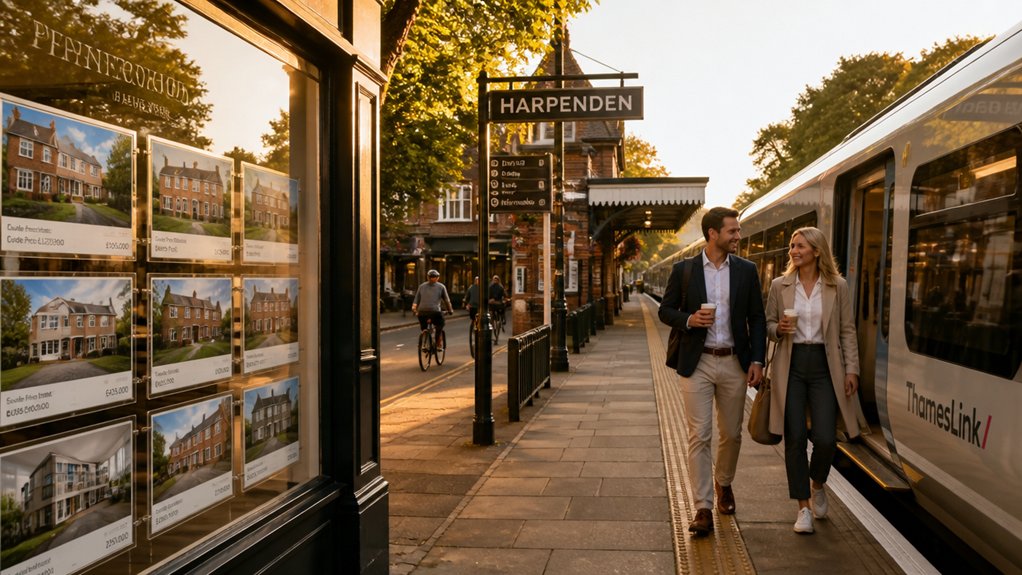
In Harpenden, you’ll typically see price bands split between flats and maisonettes at the entry level, family semis and terraces in the mid-market, and detached period homes at the top end.
Match your budget to the home type you actually need—parking, garden size, and walk-to-station time can shift pricing more than square footage alone.
Compare value street by street, because pockets near the station and top schools often command a premium while slightly wider postcodes can buy you more space for the same money.
Current Price Bands
How far your budget stretches in Harpenden depends on the postcode, the street, and whether you’re buying turnkey or taking on a project.
As a guide, entry-level pricing often starts in the mid-£300ks to £400ks, where you’ll compete hard and need an agreement in principle ready.
Move into the £500k–£800k band and you’ll see broader choice, but you’ll still pay premiums for school catchments and walkability to the station.
From £900k to £1.5m+, pricing reflects plot size, finish, and privacy, with the sharpest bids for “done” homes.
If you’re chasing Affordable housing or eyeing luxury apartments, track sold prices weekly and set a walk-away limit.
You’ll feel settled faster.
Home Types By Budget
Although Harpenden prices move street by street, your budget still maps to fairly consistent home types: around £350k–£450k typically buys a compact flat or small terrace (often with trade-offs on parking, finish, or station walk time).
Step up to £500k–£700k and you’ll usually access two-to-three-bed period terraces or modern semis with usable gardens—ideal if you want space for a home office and weekend hosting.
At £750k–£1m, expect larger family semis and detached options, often with driveways and scope to extend, so you can grow without moving.
Above £1m, you’re looking at prime detached houses with generous plots and higher-spec refurb potential.
Whatever tier you target, factor service charges, schools, and how close you’ll feel to local art and community events.
Value Across Neighborhoods
Your budget sets the rough home type, but postcode and street choice can change the value you actually get in Harpenden. If you need walk-to-station convenience, expect a premium near the town centre and West Common; you’ll trade garden size for commute ease and strong resale.
Stretch value by comparing Southdown and the outskirts toward Wheathampstead or Batford: you often gain extra bedrooms, parking, or wider plots for similar money, while still staying close to schools and green space. Check conservation restrictions and lease terms, as they affect costs and renovations.
To feel settled, track where you’ll actually spend time: weekend community events, cafés, and local dining clusters. Visit at drop-off and evening; you’ll spot noise, parking pressure, and neighbour vibe fast.
Best Harpenden Areas to Live (Station, Schools, Quiet)
When you’re choosing where to live in Harpenden, start by matching the area to your weekday priorities—fast station access for London commutes, catchments for top schools, or streets that stay genuinely quiet after dark.
If you’ll commute most days, look near the station and along the direct walking routes; you’ll widen your commuting options and trim door-to-door time.
If you want a family feel without the daily rush, target the town-centre fringe: you’re close to shops, green space, and local community events, yet far enough from late-evening footfall.
For peace and privacy, prioritise the leafier lanes toward the edges of town where traffic thins and parking’s simpler. Always check evening noise, cut-through roads, and the walk home after dark.
Harpenden Schools and Childcare: What to Know
If you’re moving to Harpenden with kids, you’ll want to map school catchment areas early because they can make or break your shortlist.
You can compare top-rated primary and secondary options, then line up nursery and wraparound care that fits London commute hours.
You’ll also need to check term dates, admissions timelines, and waitlists so you don’t get caught out after you’ve made an offer.
Top-Rated Local Schools
Why do so many London professionals keep Harpenden on their shortlist? You’ll find top-rated schools that help you secure both academic outcomes and a grounded community feel.
Start by checking Ofsted reports, recent attainment data, and admissions criteria, then map catchment areas against the homes you’re viewing.
Many buyers also prioritise schools with strong pastoral care, broad extracurriculars, and clear communication with parents—details that make day-to-day life smoother.
Visit during open mornings to gauge culture: you should see confident pupils, calm corridors, and leadership that’s visible.
Outside the classroom, Local sports and community events pull families together quickly, so you’ll settle in faster.
If you’re commuting, confirm start times and transport links to keep mornings predictable.
Nursery And Childcare Options
Although primary schools often dominate the conversation, you’ll likely secure your day-to-day routine faster by nailing down Harpenden’s nursery and childcare options early. Start by mapping your commute days and ideal drop-off windows, then tour settings near station routes and key bus links.
Ask about Nursery availability by age band, waiting lists, and funded-hours acceptance, so you’re not caught out at *phase* transitions. Compare session lengths, wraparound care, and holiday cover, because London-style working patterns need consistency.
For Childcare affordability, request full fee schedules, meal extras, late-pickup penalties, and sibling discounts in writing. You’ll settle in quicker if you join parent WhatsApp groups, attend stay-and-play sessions, and swap recommendations on trusted childminders.
Harpenden High Street: Cafés, Gyms, Essentials
Step onto Harpenden High Street and you’ll quickly see how it supports a London-paced routine without the London friction. You can grab a flat white before the train, lean into the town’s café culture for client calls, or meet friends where staff remember your order.
For wellbeing, you’ve got modern fitness centers offering early classes, PT sessions, and flexible memberships that fit hybrid weeks.
Day-to-day essentials sit within an easy loop: supermarkets, pharmacies, opticians, banks, dry cleaning, and reliable takeaway for late returns. You’ll also find independents for gifts, repairs, and last-minute dinner supplies, so you’re not driving to a retail park.
If you want to settle fast, pick two regular stops and become a familiar face.
Green Space in Harpenden: Common, Walks, Countryside
If you need a quick reset between commutes and deadlines, Harpenden’s green space gives you an easy, repeatable routine without planning a full countryside day. Start on Harpenden Common for a lunchtime loop: open grass, shaded edges, and paths that feel safe and social, so you’ll quickly recognise familiar faces.
For a longer walk, follow signed footpaths toward the Lea Valley, where fields and hedgerows soften the pace and make after-work Nature retreats feel effortless. If you prefer wheels, you can link local cycling routes through quieter lanes toward Wheathampstead or Redbourn, then roll back into town without navigating busy main roads.
Keep a lightweight jacket by the door, pick one route, and you’ll build a regular outdoors habit that helps you feel local.
Harpenden Costs: Childcare, Transport, Bills, Lifestyle
Because day-to-day value matters as much as the commute, you’ll want a clear view of Harpenden’s running costs—especially childcare availability and fees, season-ticket and parking choices, typical council tax and energy bills, and the lifestyle “extras” (gyms, clubs, coffees, and dinners) that quietly set your monthly baseline.
Start with childcare: register early, ask about wraparound care, and price nursery days versus childminders for a true Cost comparison.
For transport, model peak-season tickets against hybrid working, then add station parking or drop-off costs.
Bills vary by property age; budget more for larger period homes, less for efficient flats.
Lifestyle adjustments make the difference: swap central-London nights for local pubs, tennis, and community clubs, and you’ll feel part of town.
Conclusion
You’re not just buying a shorter commute—you’re buying optionality. The theory is that Harpenden wins because it’s “villagey,” but the numbers suggest the real driver is resilience: fast trains (25–35 minutes), reliable schools, and day-to-day convenience that holds up when hybrid patterns change. If you’ll use the High Street, the Common, and a home office, the premium can pencil out. If you’ll still live in London, it won’t.
About the Author