

In many UK markets, you’ll see family buyers pay 5–15% more to sit inside a top school catchment, and Harpenden often follows that pattern. You can’t treat “near a good school” as a vague benefit here; Ofsted grades, headline results, and extracurricular breadth all map directly onto demand. When you factor in shifting boundaries, admissions rules, and year-to-year capacity, the price picture changes fast—so the next step matters.
Key Takeaways
- Strong, consistent school performance data increases buyer demand and supports higher property values in Harpenden’s sought-after catchments.
- Ofsted ratings act as demand signals, influencing transaction speed and catchment competition when leadership, safeguarding, and teaching quality are strong.
- Catchment boundaries and “furthest offered” distances tighten demand by postcode, creating premiums for homes within reliably allocated walking ranges.
- Admissions and capacity changes, including priority bands and Published Admission Numbers, can quickly shift demand hotspots and local pricing.
- School-run accessibility and extracurricular strength boost neighbourhood appeal, especially with walkable routes, station access, and active community participation.
Why Harpenden Schools Shape Buyer Demand
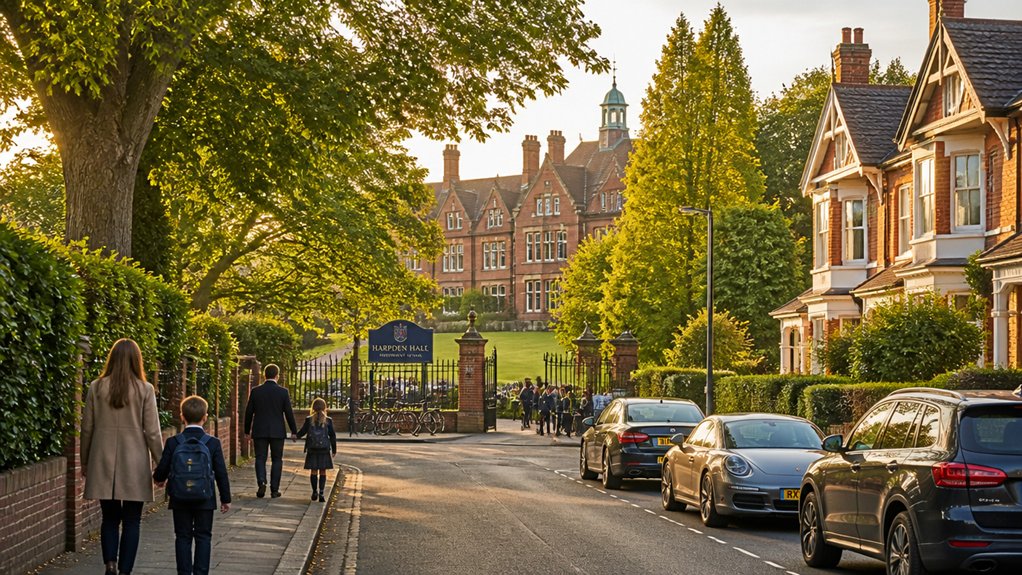
Three factors keep Harpenden’s schools at the top of most buyers’ checklists: consistently strong performance data, limited catchment-driven supply, and long-term resale confidence. When you target a specific catchment, you’re competing in a smaller pool of homes, so well-priced listings can tighten quickly and days-on-market often compress versus nearby areas.
You also track School funding because it influences staffing stability, class sizes, and facility upgrades—practical drivers of day-to-day quality that buyers notice at viewings. Add extracurricular activities and you’re not just buying square footage; you’re buying routine, friendships, and a shared local calendar that helps you settle faster.
That sense of belonging supports demand, cushions downside risk, and keeps Harpenden values resilient across cycles.
What Ofsted Ratings Mean in Harpenden
While you’ll hear “Outstanding” and “Good” used as shorthand on viewings, Ofsted ratings in Harpenden work best as a risk-and-demand signal: they influence how tightly a catchment is contested, how quickly similar homes transact, and how confident buyers feel paying a premium.
Look beyond the headline grade and check the report date, safeguarding notes, and whether leadership and teaching are consistent across key stages; older reports can lag real performance. You’ll also want to scan comments on School funding resilience, SEND capacity, and staff retention, because pressure points can temper price growth even in popular streets.
Finally, note how inspectors assess breadth—clubs, music, sport, and other extracurricular programs—since that’s often what helps you feel part of the community.
How Harpenden Catchment Areas Work in Practice
Ofsted grades can shape demand, but catchment mechanics decide whether your preferred Harpenden school is a realistic option from a given address. You’ll typically see allocations tighten as distance to the gates increases, so you should map your exact postcode and compare it with recent “furthest offered” distances published by schools and the council.
In practice, you’ll track three things: walking routes used for distance calculations, year-to-year movement in that cut-off, and local housing turnover that resets competition.
Viewings should include a check on School facilities and the day-to-day feel at drop-off, because buyers often pay more when the school run looks manageable. You’ll also want to match extracurricular activities to your child’s interests, helping your family feel part of the community.
Admissions Rules That Can Affect Harpenden Prices
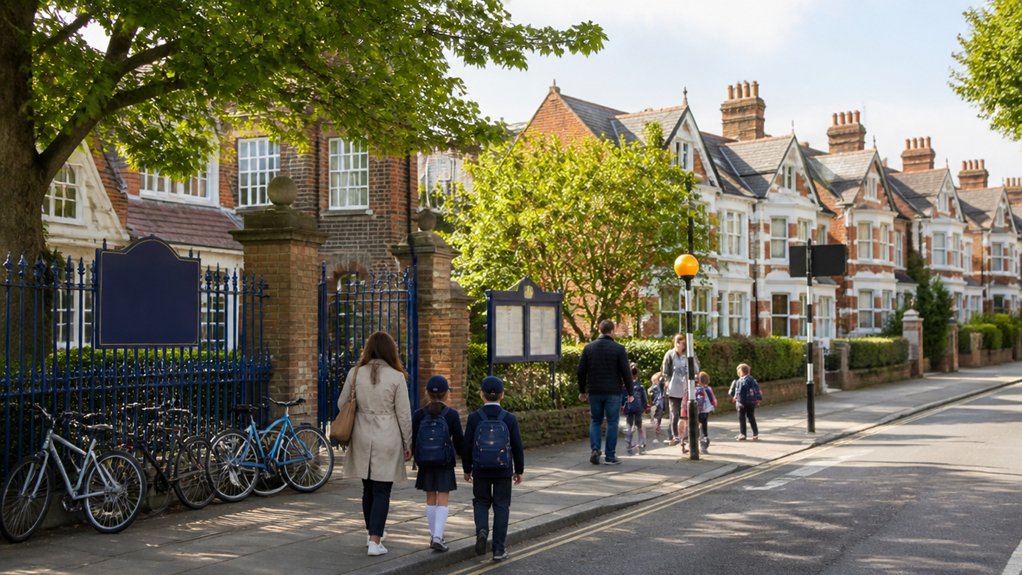
Because admissions criteria decide who gets in before distance even comes into play, small rule changes can move Harpenden demand—and prices—more than a new kitchen ever will. You’ll want to track priority bands like looked-after children, sibling links, faith-based practice, and staff places, because they reshape who competes for each address.
If a school tightens sibling priority or adds a defined feeder link, you can see buyer search areas shift within weeks, with listings near “safe” routes getting more viewings and stronger offers.
Watch Published Admission Numbers and consultation notices; when capacity rises, price pressure can soften locally.
School funding changes also matter: stronger budgets often sustain extracurricular programs, which boosts perceived value and helps you feel part of the right community.
Harpenden Primary Schools Families Target Most
How do you spot the Harpenden primary schools families chase hardest—before the next listing hits the portals? Track three signals: oversubscription patterns, walking-distance appeal, and how often homes inside the catchment trade at a premium versus the next street out. You’ll also see demand spike where commutes stay simple and the school run feels sociable, not stressful.
Prioritise primaries with strong Ofsted outcomes and consistent cohort size, then validate on the ground. Are School facilities visibly maintained, with modern classrooms and safe outdoor space? Do Extracurricular programs run weekly, not “sometimes,” and include clubs that help new families plug in fast?
When those boxes are ticked, listings move quicker, best offers land early, and you’re bidding alongside neighbours you’ll actually know.
Harpenden Secondary Schools Families Shortlist
When you shortlist Harpenden secondary schools, you’ll typically start with the top-ranked options and compare recent Ofsted outcomes, GCSE/A-level performance, and sixth-form pathways.
Next, you’ll map catchment boundaries and admission priorities against your postcode, because small distance differences can change your odds.
Finally, you’ll factor in the daily commute—rail and bus links, traffic pinch points, and realistic door-to-gate times—so your choice works on paper and in practice.
Top-Ranked Secondary Options
If you’re narrowing a secondary shortlist in Harpenden, you’ll want to start with the schools that consistently combine strong exam outcomes, stable Ofsted judgements, and oversubscription demand—because these indicators usually signal both day-to-day standards and long-term resale appeal.
Prioritise secondaries that publish clear Progress 8 and Attainment 8 trends, sustained GCSE strength, and low staff turnover. Then test “fit” fast: visit at drop-off, scan behaviour policies, and ask how pupil support is measured and reported.
Extracurricular activities matter for belonging; look for breadth (sport, music, STEM, Duke of Edinburgh) and consistent participation rates. School facilities also translate into experience and value—modern labs, libraries, and sports provision typically correlate with stronger take-up and community pride.
Use open evenings to compare ethos, workload expectations, and post-16 pathways.
Catchment Areas And Priority
Strong results and a good Ofsted story only get you so far in Harpenden—your offer often comes down to catchment and priority rules, so map them early and treat them like constraints in your shortlist. Start by checking each school’s admissions policy: distance cut-offs shift year to year, and sibling, looked-after, and faith criteria can reorder the queue.
Use last year’s allocation distances as a proxy, then stress-test your address against multiple scenarios. If you’re on the margin, your property choice becomes a pricing lever: homes inside tighter catchments typically command a premium because certainty sells.
Also compare School funding signals—PTA strength, enrichment budgets, staffing stability—since they shape day-to-day experience. Finally, weigh extracurricular activities, because belonging often forms after the bell, not just in class.
Commuting And Transport Links
Because the school run quickly turns into a daily cost in time and reliability, you should rank Harpenden secondary options by real-world travel minutes—not just postcode distance—and test each route at peak hours.
Check rail links from Harpenden station to St Albans and Luton, then map bus frequencies, typical delays, and safe walking/cycling corridors for independent travel. You’ll feel more settled when your child can get there without constant lifts, and you’ll protect work routines too.
Compare parking pressure, drop-off restrictions, and crossing points near each gate. Track time savings across a five-day week; 10 minutes each way equals 100 minutes reclaimed.
Strong transport access can widen peer networks and boost take-up of extracurricular activities after school. Also note how School funding can influence late-bus provision and supervision.
Walking to Harpenden Schools vs Driving

While school-run traffic can feel unavoidable, the numbers show you’ve got a real choice in Harpenden: walking trims peak-time congestion, reduces parking pressure around school gates, and builds daily activity into your child’s routine without adding extra cost.
If you’re within a mile, a 15–20 minute walk often beats the stop-start crawl and the search for a safe drop-off. You’ll also cut idling time, a common driver of local air-quality complaints.
Driving can still make sense when you’re juggling multiple pick-ups, heavy kit for School sports, or late-finish extracurricular activities. But even then, you can park once and walk the last few minutes, joining other families and keeping the streets calmer.
Homes near schools benefit.
Best Transport Routes to Harpenden Schools
The quickest school-run in Harpenden usually comes down to choosing the right spine road and then finishing on foot. If you’re coming from Southdown or Kinsbourne Green, use the A1081 (Luton Road) to skirt the centre, then cut in via Rothamsted Avenue or Ambrose Lane to avoid High Street pinch points at 8:15–9:00.
From West Common, the B653 (Leyton Road) gives a clean run, with short, walkable last legs that ease drop-off pressure near school facilities.
Commuters can blend rail and walking: arrive at Harpenden station, then a 10–20 minute walk covers most primaries and secondary sites. You’ll also save time for extracurricular activities, and you’ll feel part of the same daily rhythm families rely on.
How to Research Harpenden Schools Before Buying
Fast routes make the school run easier, but your purchase decision should start with evidence on school fit and catchment. Check each school’s published catchment maps, then compare your target postcode against last year’s allocation distances so you don’t overpay on hope.
Read Ofsted reports alongside Progress 8, Attainment 8, and attendance to spot trends, not one-off headlines.
You’ll also want to track School funding: review per-pupil figures and planned capital works, because resourcing shapes class sizes and specialist support.
Visit at pickup time to sense community tone, then confirm extracurricular activities through clubs lists, fixtures, and arts programs.
Finally, speak with local agents about recent sale premiums near top-performing schools, so you buy into the right neighbourhood—confidently.
Conclusion
In Harpenden, school choice isn’t just a checkbox—it’s the compass that steers demand. When Ofsted grades, results, and places line up, prices can lift like a tide, especially inside tight catchment lines. You’ll want to map boundaries, read admissions rules, and track capacity changes before you bid. Walkability and fast rail links add another premium. Do your homework early, and you’ll buy with clarity, not crossed fingers.
About the Author