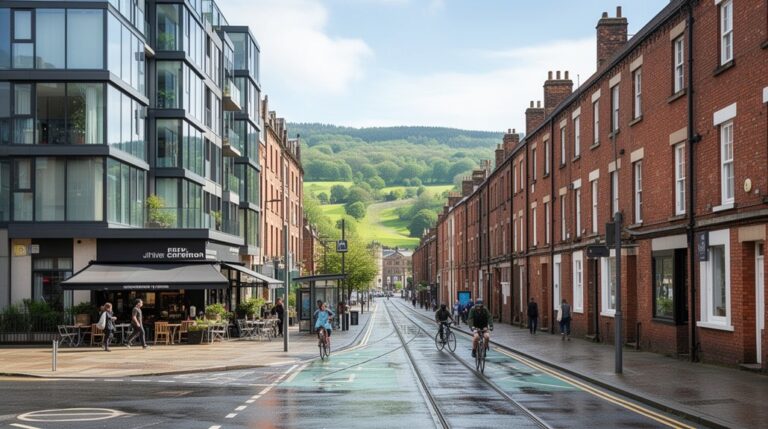
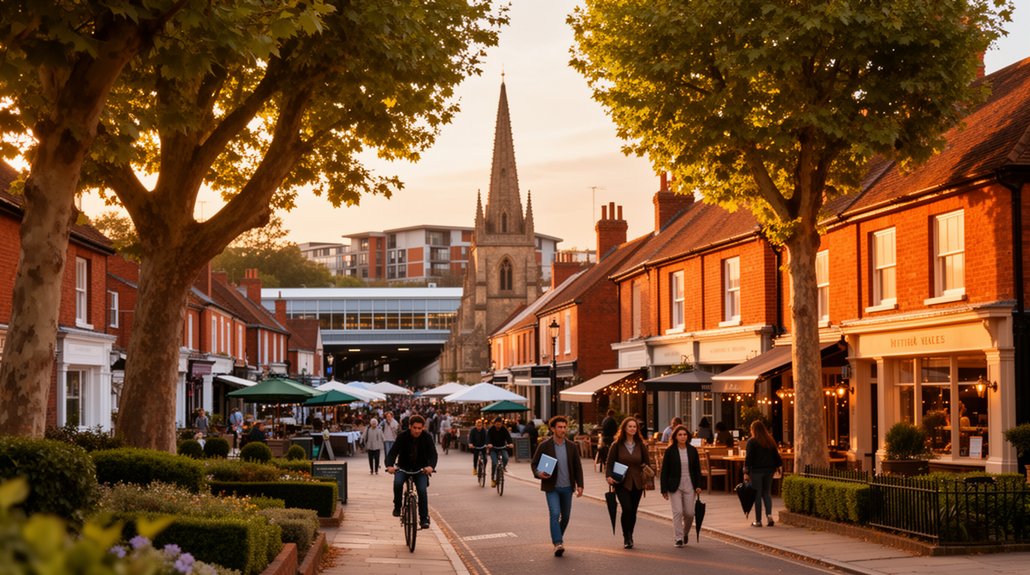
If you’re weighing commuter towns on hard metrics, Hitchin usually ranks near the top. You get 30–40 minute trains to King’s Cross or St Pancras, with frequent peak services that reduce schedule risk. You can walk from many neighbourhoods to the station, then switch gears in a town centre packed with independents, cafés, and a strong weekend market. But the real value case shows up when you compare schools, green space, and price-by-area.
Key Takeaways
- Fast, frequent direct trains reach London King’s Cross or St Pancras in 30–40 minutes, with peak services every 10–20 minutes.
- Ticket options suit different commuting patterns, with season tickets, off-peak fares, and railcards helping manage costs.
- A lively town centre mixes independents, essentials, markets, cafés, pubs, and low vacancy, making daily life easy and social.
- Walkable neighbourhoods near the station offer character homes and strong resale demand, with pricing closely tied to station proximity.
- Highly rated schools, green spaces, and weekend activities create a family-friendly lifestyle beyond commuting.
Hitchin to London Commute Times, Costs, and Trains
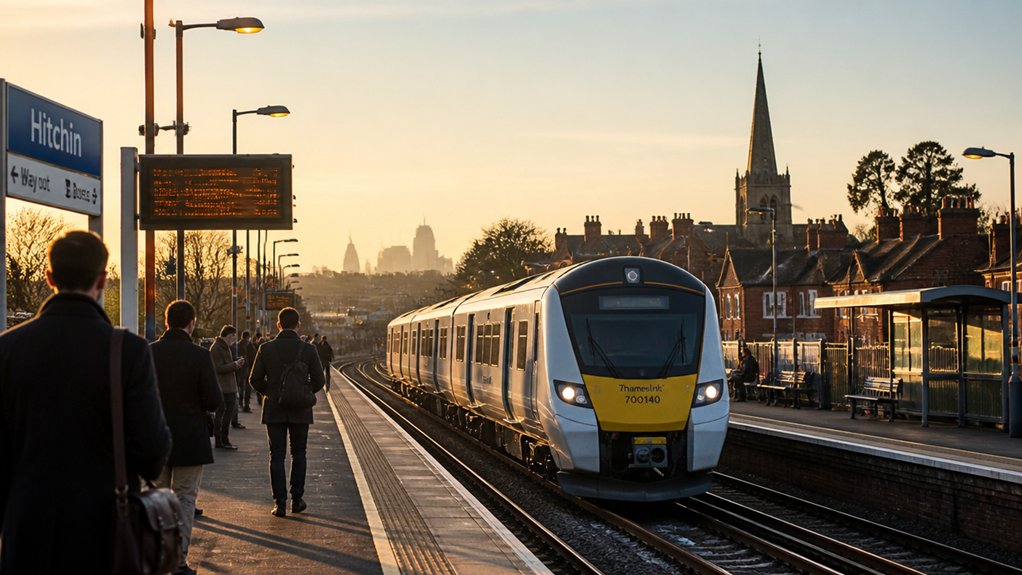
How long does it really take to commute from Hitchin to London—and what’ll it cost you? Direct trains typically reach London King’s Cross or St Pancras in about 30–40 minutes, with peak‑time services every 10–20 minutes.
You’ll pay more for flexibility: walk‑up peak returns can run high, while off‑peak tickets cut the hit; season tickets usually deliver the best per‑trip value if you travel 4–5 days a week.
For commuter efficiency, you’ll want a railcard if you qualify, and you’ll time your departures around peak pricing.
Hitchin’s transport infrastructure adds confidence: fast mainline links, reliable platforms, and straightforward onward connections once you arrive.
Living in Hitchin: Town Centre Shops, Cafés, and Pubs
Fast trains get you into King’s Cross in under an hour, but Hitchin’s day‑to‑day appeal shows up when you’re off the platform and in the town centre. You’ll find a high‑street mix that balances independents with essentials, so you can do weekly errands without car dependence.
The street market and regular pop‑ups signal local market trends: strong footfall, low vacancy, and steady demand for food‑led units.
You can start with coffee on Bancroft, browse boutiques around Market Place, then book a table without trekking across town. Pubs and wine bars stay busy midweek, which tells you the spending base isn’t just Saturday visitors.
When you walk home past brick Victorian terraces and character conversions, residential architecture reinforces that “rooted” feel—and you’ll quickly feel like a local.
Best Hitchin Neighbourhoods for Station Access
Although Hitchin feels walkable end to end, station access still drives pricing and demand, so it pays to focus your search by postcode and walking time. If you want a sub‑15‑minute walk, target the Triangle and Walsworth: they keep you close to the platforms, mainline services, and everyday local transportation links without feeling cut off from town life.
For a calmer residential vibe with solid Neighborhood safety perception, look at West Hitchin around Bancroft and the grid streets; you’ll often trade a few extra minutes’ walk for quieter evenings and strong resale interest.
South of the station, you’ll find mixed stock and sharper pricing—check footfall at peak times. Wherever you land, track sold prices per sq ft within a 0.5‑mile radius.
Hitchin Schools, Catchments, and Family Fit
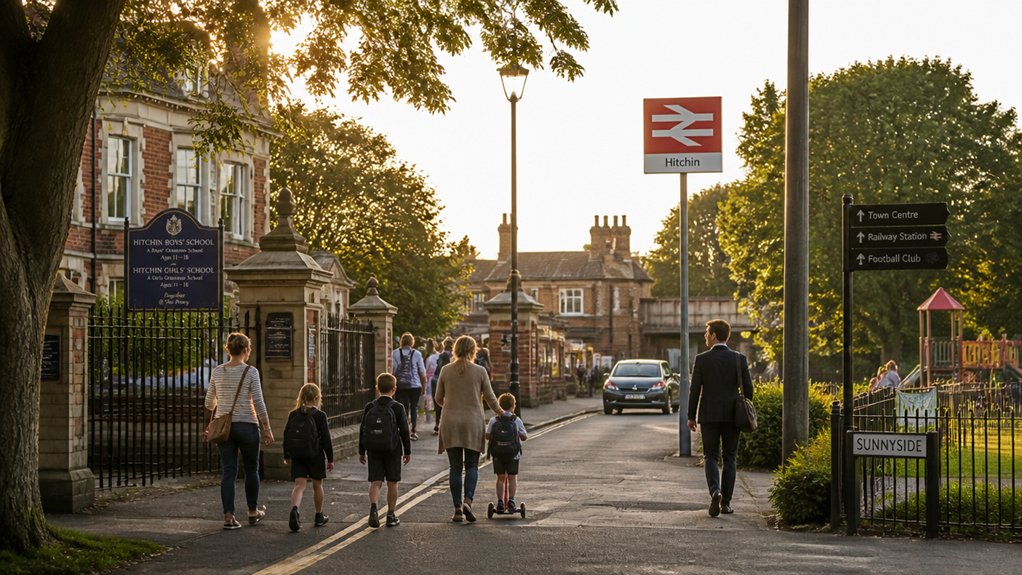
If you’re buying in Hitchin with schools in mind, you’ll want to benchmark top-rated primaries and secondaries against recent results and inspection grades, because those metrics often track with demand and pricing.
Catchment lines can shift year to year, so you’ll need to map your target streets to admissions criteria and past cutoff distances before you offer.
Then pressure-test the day-to-day family fit—walkability to school, childcare options, parks, and clubs—so the postcode works for both your commute and your routine.
Top-Rated Local Schools
Why do so many families target Hitchin when they’re house-hunting? You’re buying into a school landscape that consistently performs. Look at School rankings and you’ll see strong Ofsted outcomes across several primaries, plus respected secondary options that attract steady demand. That reliability matters when you’re weighing value, resale, and day-to-day confidence.
Beyond results, you’ll find extracurricular programs that help your child plug in fast: sport clubs, music, drama, and STEM activities that build routine and friendships.
You can also lean on active PTA groups, community fundraising, and well-run events that make it easier to feel known, not just new. If you want a practical benchmark, track attendance, progress measures, and enrichment breadth—you’ll spot why families stay.
Catchment Areas Explained
Because catchment lines can shift year to year, you’ll want to treat Hitchin school catchments as a risk-and-value variable, not a nice-to-have detail: a street that sits “in” today can sit “out” after the next admissions cycle, and that change can move demand, pricing, and your day-to-day logistics.
Start by mapping recent intake distances and oversubscription criteria, then cross-check the council’s published catchment boundaries against the address you’re viewing. Ask agents for historic allocations, but verify with admissions data, not anecdotes.
Watch for new-build pipelines and zoning regulations that can reshape cohorts and travel patterns. If you’re buying to stay, model a buffer: prioritize homes that sit comfortably inside priority areas, not on the edge. That way, you join a community with fewer surprises and steadier resale appeal.
Family Lifestyle Considerations
While Hitchin’s school performance and catchment rules drive the headline demand, your day-to-day family fit comes down to the practical pattern of the week: which campuses you can reach on foot, how stable your preferred catchment has been over recent intakes, and whether wraparound care, clubs, and commute times actually work with your working hours.
Track admission data and feeder patterns, then match them to your home search radius; a 10‑minute walk can cut car reliance and widen after‑school options.
You’ll also want the softer infrastructure: Child friendly parks that make weeknights easy, and family oriented events that help you plug in fast.
When you can do the run, the shop, and the train without friction, you’ll feel settled.
Hitchin Green Spaces and Weekend Things to Do
If you’re weighing Hitchin against other commuter towns, its green space and weekend mix stands out as a real quality-of-life differentiator: you can walk from the centre to Bancroft Recreation Ground and the riverside paths in minutes, tap into the Priory Park and Oughtonhead Common for longer loops, and still keep cafés, pubs, and the market within easy reach.
That proximity matters day to day: you’ll get quick pre-work laps, stroller-friendly routes, and easy meet-ups without planning a drive. Hitchin parks also anchor the social calendar, with sports pitches, play areas, and summer events that help you plug into local routines fast.
At the weekend, you can use weekend markets to shop seasonal produce, support independents, and turn errands into a shared ritual. Add galleries, live music, and pub quizzes, and you’ve got low-friction plans year-round.
Hitchin House Prices by Property Type and Area
A clear way to size up Hitchin is to break prices down by property type and micro‑area, because the town doesn’t trade as one uniform market. You’ll usually see terraces and smaller semis near the centre and station command a commuter premium, while edge‑of‑town estates price in more space and parking for the money.
If you’re scanning market trends, compare like‑for‑like: flats track interest‑rate sensitivity and service charges, terraces reflect school catchments and walkability, and detached homes move on scarcity.
In areas like West Hitchin, you often pay more for period streets and quick rail access; in south and east pockets, you can find better value per square foot.
For Property investment, target streets with stable turnover and consistent buyer demand.
Conclusion
If you want a commuter base that balances speed, lifestyle, and long‑term value, Hitchin ticks the boxes. You’re looking at 30–40 minute trains to King’s Cross/St Pancras with frequent peak services, plus a walkable centre packed with independents, cafés, and pubs. Add strong school options, green space on your doorstep, and neighbourhoods with easy station access, and you’re onto a winner. Track prices by property type and area, then move decisively.
About the Author