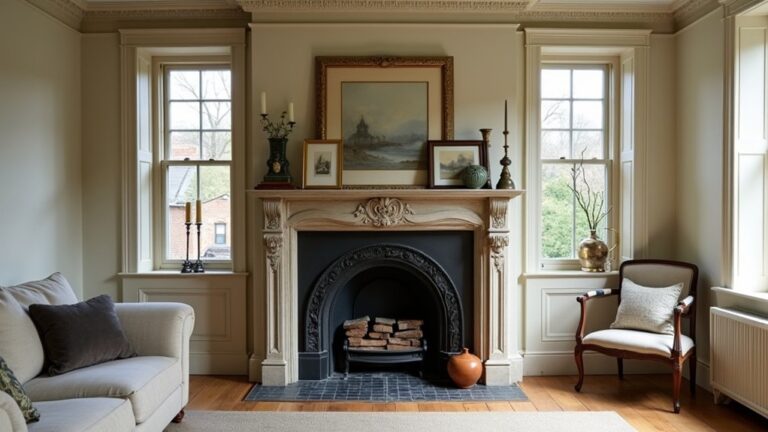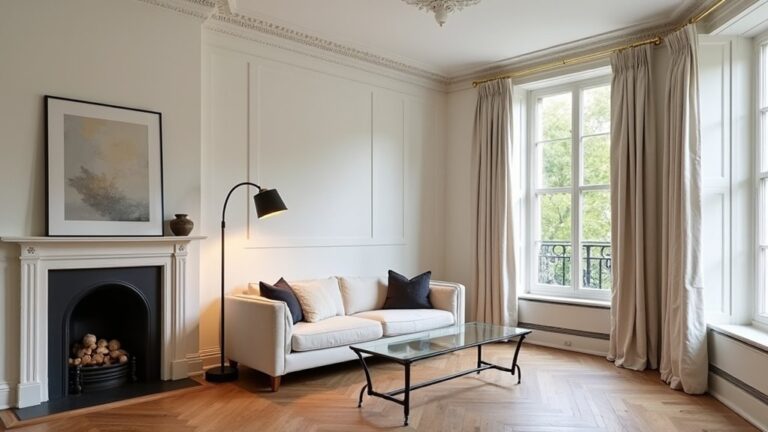
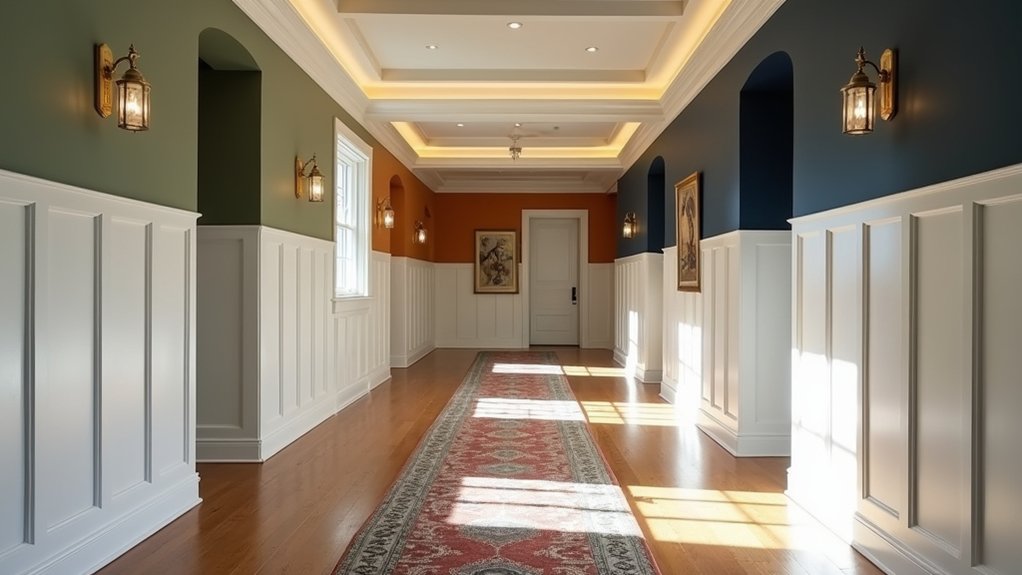
By coincidence, you’ll notice the hallway looks darkest right when you’re deciding on colour. You start by checking natural light and choosing warm or cool heritage shades that suit it, then you lean on high‑LRV tones—parchment, pale sage—to bounce light back. Next, you decide what goes on walls versus trim and ceiling, and you pair it with warm‑white, dimmable LEDs to avoid glare. The key choice comes next…
Key Takeaways
- Evaluate hallway daylight direction and choose high-LRV heritage hues with warm or cool undertones to keep the space bright.
- Test paint swatches morning, afternoon, and evening, noting undertone shifts under both daylight and your chosen bulbs.
- Assign colours strategically: lighter walls for narrow halls, contrasting trim for definition, and ceilings one shade lighter to lift low heights.
- Install warm-white, high-CRI (90+) dimmable LEDs, targeting 100–150 lumens/m² and using diffusers or frosted glass to reduce glare.
- Layer lighting with ceiling fixtures, sconces at 66″ high spaced 6–8′ apart, and optional LED tape, then finish with coordinated runners and art.
Choose Heritage Colours for Your Hallway’s Light
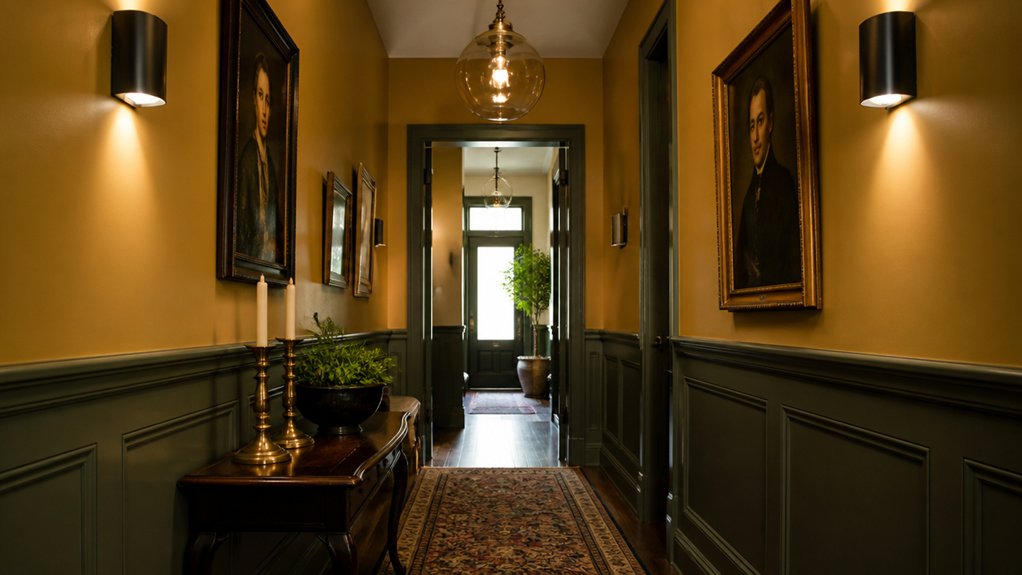
If your hallway feels dim or narrow, choosing the right heritage colour can make it look brighter before you even change a bulb. Start by assessing your natural light: north-facing halls need warmer undertones, while south-facing can handle cooler, chalkier shades.
Use Heritage colour palettes with higher LRV (light reflectance value) to bounce light—think stone, parchment, buff, or pale sage instead of deep oxblood or bottle green. Check swatches under morning, afternoon, and evening light, because heritage pigments can shift.
Lean on Historical colour symbolism to guide mood: soft creams read welcoming, muted greens feel calm, and dusty blues suggest order.
Track current trends by pairing these classics with clean, modern bulbs for crisp clarity.
Place Heritage Colour on Walls, Trim, or Ceiling
Although you might default to painting every surface the same shade, you’ll get a more intentional (and brighter) hallway by deciding exactly where your heritage colour should land—walls, trim, or ceiling—based on proportions and light.
If your corridor is narrow, keep walls lighter and put the deeper tone on trim or doors to frame the passage without closing it in.
If the hallway is wide or broken by arches, commit the heritage shade to the walls and choose a cleaner, lighter trim for crisp edges.
For low ceilings, paint the ceiling a step lighter than the walls; for tall ones, consider a heritage ceiling to pull height down and feel cosy.
Use Heritage palettes to repeat undertones, and highlight historic accents like picture rails or panel moulding.
Pick Modern Hallway Lighting: Warmth, Lumens, Glare
Once you’ve decided where the heritage colour sits, modern lighting becomes the tool that makes it read true rather than muddy or harsh. Choose warm-white LED illumination (2700–3000K) to flatter period tones like oxblood, sage, or stone, while keeping whites crisp.
Aim for about 100–150 lumens per square metre; narrow halls need more output, especially if there’s little daylight. Watch CRI: pick 90+ so paint undertones stay accurate.
Control glare by selecting diffused lenses, frosted globes, or recessed light sources, and avoid bare bulbs at eye level. If you’re using wall mounted fixtures, check the beam angle and mounting height so light lands on surfaces, not directly in your line of sight.
Dimmer compatibility matters too.
Layer Hallway Lighting With Sconces, Pendants, LEDs
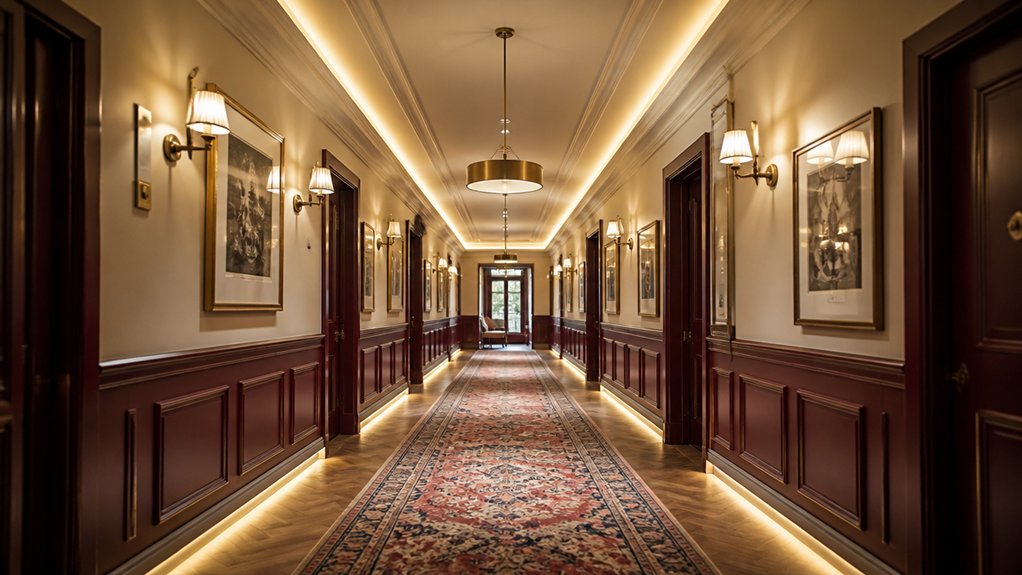
Because a hallway shifts from daylight to shadow in a few steps, you’ll get the cleanest, most heritage-friendly result by layering light. Start with ceiling light for overall fill, then add wall and low-level sources to erase harsh contrast and guide movement.
- Install slim sconces at about 66″ high, spaced 6–8′ apart, for even face-lighting.
- Hang a small pendant in longer runs; keep it high enough for clear sightlines.
- Tuck dimmable LED tape under a ledge or along baseboards for night navigation.
- Mix Vintage fixtures with modern LED lamps, and echo Color accents in shades, glass, or metal finishes.
Put each layer on separate dimmers, and aim beams toward walls to soften glare.
Tie the Hallway Together With Trim, Runners, Art
When you treat trim, a runner, and a tight art layout as one system, your hallway reads intentional instead of piecemeal. Paint trim a shade lighter or darker than your heritage wall colour to sharpen edges without fighting Heritage architecture. Keep sheen consistent: satin on trim, matte on walls, so modern lighting looks crisp, not patchy.
Choose a runner that repeats one pigment from your palette and one neutral; go low-pile for doors and vacuuming. Size it to leave 3–5 inches of floor showing per side, then use a pad to stop curl.
Hang art in a single grid or salon stripe, centering at 57 inches, and match frames to trim. Pick motifs with Cultural symbolism for depth.
Conclusion
When you match heritage paint to your hallway’s light and boost it with layered, warm-white LEDs, you’ll make a narrow pass-through feel intentional. Choose a higher-LRV parchment or pale sage, keep the ceiling lighter, and use trim to sharpen edges. Then add dimmable sconces plus a slim pendant to cut glare and lift shadows. One telling stat: lighting can account for about 15% of a home’s electricity use—so smart, efficient layers pay back daily.
About the Author