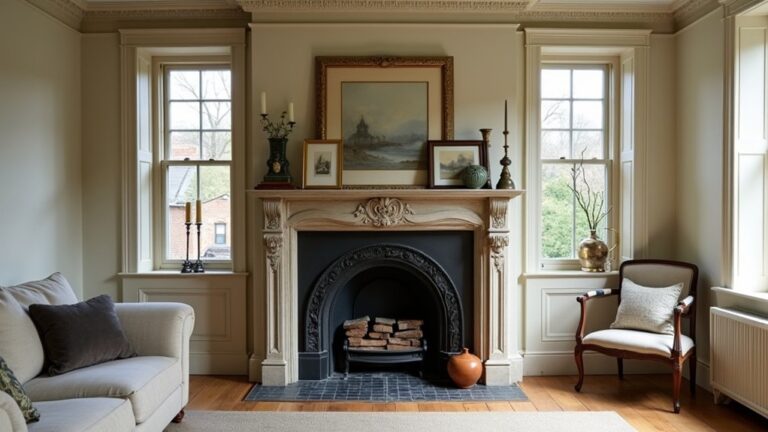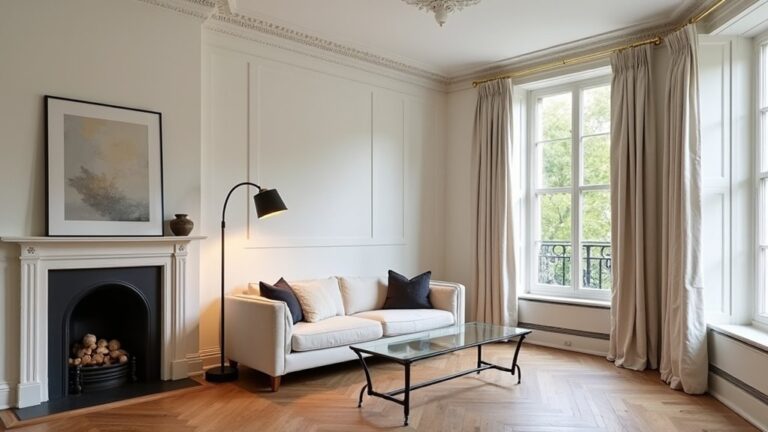
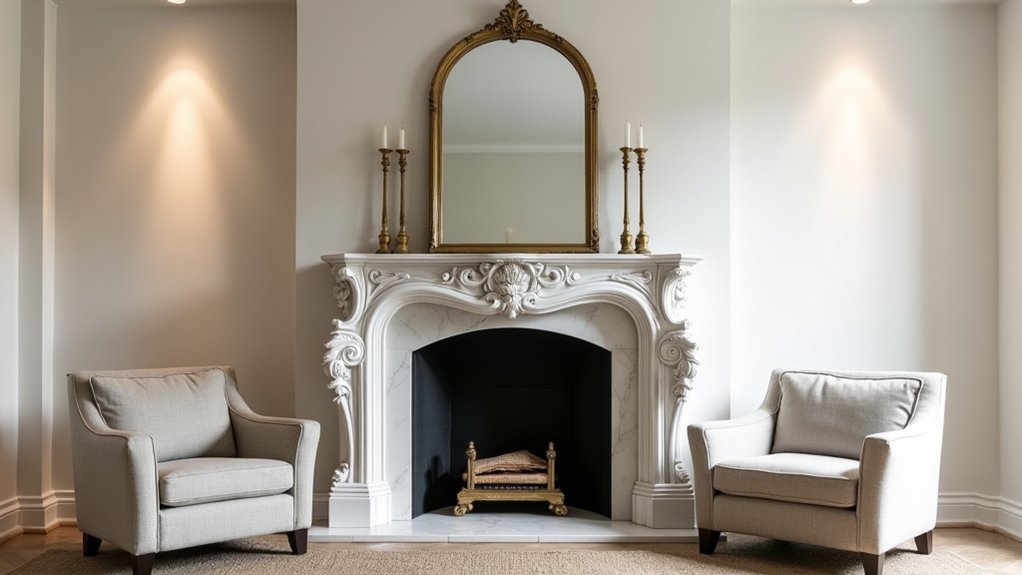
You probably don’t know that the quickest way to make an antique fireplace vanish is to “improve” it with modern sealants and harsh cleaners. Start by deciding which original detail you’ll feature—tile, cast iron, carved surround—then check the lintel, hearth, flue, and chimney breast for movement or damage before you touch a brush. Once you’ve secured the basics, your colour, lighting, and furniture choices will either frame it—or quietly undermine it…
Key Takeaways
- Choose one hero feature (insert, mantel, tiles, or patina) and keep surrounding walls and furniture neutral to reduce visual competition.
- Inspect hearth, surround, firebox, and flue for damage; hire a HETAS-registered professional to confirm draw, ventilation, and UK compliance.
- Clean gently with material-appropriate products, testing hidden areas first; avoid harsh chemicals, wire wool, and aggressive solvents.
- Frame the chimney breast with a slightly darker matt wall color and add warm, directional, dimmable lighting to emphasize texture and relief.
- Arrange seating and rugs to face and frame the firebox, then style the mantel sparsely with period-appropriate pieces for balanced authenticity.
Identify the Antique Fireplace Feature to Showcase
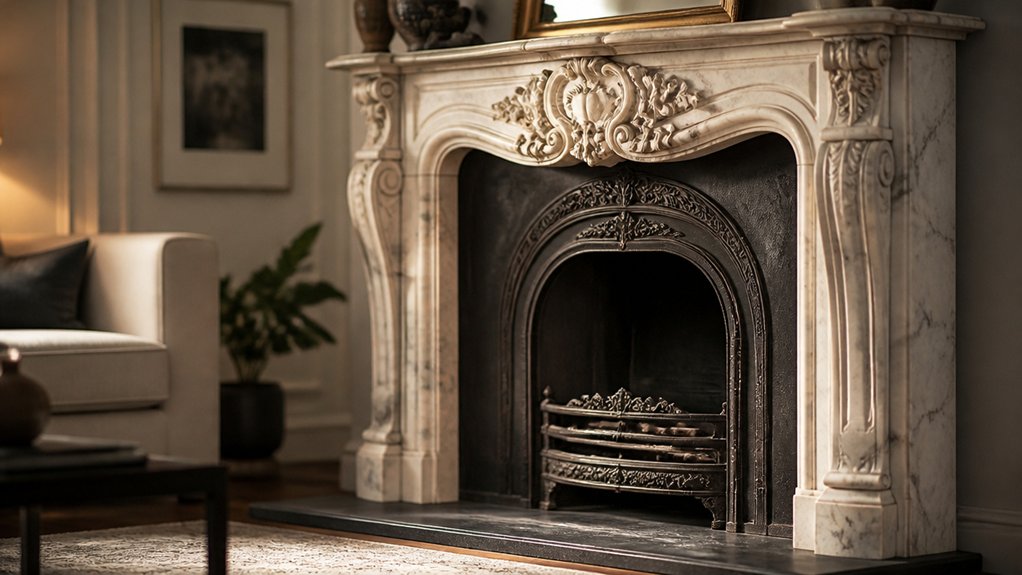
Although an antique fireplace can feel like one feature, you’ll get a stronger focal point by deciding exactly what you’re showcasing—an original cast-iron insert, a carved stone or timber mantel, decorative tiles, an Art Deco surround, or even the aged patina and tool marks that prove its history.
Start by reading the room: in a Victorian terrace, an insert’s fretwork suits tighter proportions; in a Georgian home, a restrained mantel profile often leads. Pick one hero detail, then quieten competing lines with neutral walls and simpler nearby furniture.
Use lighting to direct attention: a picture light over the mantel, or angled spots to graze tile relief. Reference antique fireplace history to guide choices, and echo vintage design elements in accessories, not clutter.
Check the Antique Fireplace for Safety and Damage
Before you dress it up as a centrepiece, check your antique fireplace is sound, compliant, and safe to use. Start with a close damage assessment: look for cracked or loose hearth slabs, spalling brickwork, failed mortar joints, and any movement in the surround or mantel.
Inspect the firebox for gaps, missing firebricks, and heat damage. Check the flue: signs of tar, soot fall, damp staining, or a persistent smoky smell can indicate blockage or liner failure.
For fireplace safety, confirm ventilation is adequate and carbon monoxide alarm provision meets current UK guidance. If it’s a working fireplace, book a HETAS-registered installer or competent chimney sweep to test draw, integrity, and compliance before you light anything.
Clean the Antique Fireplace Gently (No Over-Refinishing)
Once you’ve confirmed it’s structurally sound, clean the antique fireplace with a light touch so you preserve its patina and original tool marks rather than stripping it back to “new”. Start dry: vacuum soot with a brush attachment, then use a soft natural-bristle brush on crevices.
Choose cleaning supplies suited to the material—cast iron, marble, slate, or timber—and test a hidden spot first. Avoid harsh alkaline cleaners, wire wool, and aggressive solvents that can etch or lift historic finishes.
- Use pH‑neutral soap and distilled water on stone; wring cloths nearly dry.
- For iron, apply microcrystalline wax sparingly; buff with gentle polishing techniques.
- For tiles, use a non-abrasive paste and a nylon pad, not metal scouring.
Choose Wall Colors That Frame the Fireplace
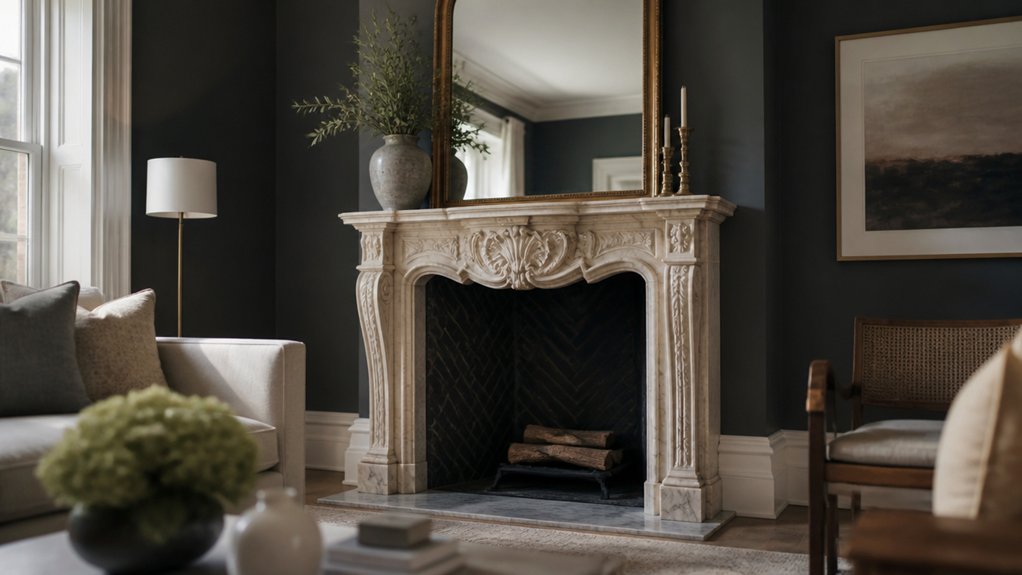
Choose wall colours that frame your antique fireplace by using a contrasting paint tone, so the surround reads as a clear focal point in typical UK light.
Match the paint’s undertones to the fireplace’s stone, tile, or timber so the palette feels intentional rather than accidental.
Control sheen and daylight—matt on broad walls and a considered finish near the breast—so reflections don’t flatten the detail you’re trying to highlight.
Use Contrasting Paint Tones
- Paint the chimney breast 1–2 shades darker than the remaining walls for a clear visual boundary.
- Use a flat or matt finish on walls to let carved stone, marble, or tilework catch the eye.
- Carry the darker tone onto skirtings or alcoves to anchor the hearth and prevent floatiness.
Select Complementary Undertones
Because antique surrounds often carry distinct undertones—warm honeyed oak, pink-leaning marble, or blue-grey slate—you’ll get the sharpest focal point by matching your wall colour’s base notes to them rather than relying on “neutral” alone.
Start by identifying the dominant undertone in daylight: oak reads yellow-orange, many marbles sit in red-pink, and slate often falls blue-green.
Use the color wheel to choose a partner: echo adjacent hues for a calm frame, or pick the near-complement for controlled contrast without clashing.
Apply Color psychology deliberately: warm walls make the hearth feel welcoming; cooler bases emphasise crisp heritage lines.
In UK homes with varied brick and plaster, test swatches against the surround and adjacent trim to confirm the undertone stays consistent.
Control Sheen And Light
When you control sheen and light levels, the fireplace surround reads as the intentional focal point rather than getting lost in glare or shadow. Prioritise Sheen control on adjacent walls so mouldings and patina stay crisp, not reflective.
In most UK period rooms, a low-sheen matt or durable matt frames stone, tile, or cast iron without competing, while a subtle eggshell can work if daylight is weak.
For effective Light management, balance natural and artificial sources so the surround’s relief is modelled, not flattened.
- Use matt walls and reserve higher sheen for trim only
- Aim directional picture lights or wall washers at the breast, not the hearth
- Fit warm 2700–3000K lamps and dimmers to prevent harsh hotspots
Check finishes under morning and evening light before committing to full coverage.
Update the Surround and Hearth, Period-Style
To update the surround and hearth in period style, you’ll need to match materials to the fireplace’s era—think cast iron, marble, slate, or encaustic tile common in UK homes.
You should restore original tiles where possible, but replace missing or damaged sections with faithful reproductions that match size, glaze, and pattern.
If the hearth’s been altered or is beyond repair, rebuild it in appropriate stone with correct thickness and projection to suit the room and current UK regs.
Select Period-Appropriate Materials
Although you might be tempted to modernise the fireplace with whatever’s on trend, you’ll get a far more convincing result by matching the surround and hearth to the period of the house. Start by identifying your property’s era and regional cues, then choose materials that would’ve been specified locally—both for authenticity and performance.
Balance heritage detail with Modern maintenance, and avoid unconventional materials that jar with the room’s proportions or patina.
- Georgian/Regency: honed Portland stone or simple marble, fine mouldings, restrained profiles.
- Victorian/Edwardian: richer marbles, slate hearths, deeper shelves, sharper arrises.
- Arts and Crafts: hand-finished limestone or oak surrounds, robust hearthstones, honest joinery.
Check thickness and projection against UK Building Regulations and allow suitable clearances for your appliance type.
Restore Or Replace Tiles
Because original tiles often carry as much period character as the mantel itself, you should decide early whether they’re worth conserving or better replicated to suit the room’s age and proportions.
Start by checking for crazing, chips, loose bedding, and failed grout; photograph the layout so you can reinstate it accurately.
For tile restoration, lift only what’s unsound, clean with a pH-neutral non-acidic cleaner, and re-bed using a lime-based adhesive where appropriate, then re-grout in a muted, period-correct tone rather than bright white.
If tiles are missing or beyond repair, choose tile replacement that matches the era: Victorian transfer prints, Arts and Crafts reliefs, or Edwardian geometric patterns.
Source from UK salvage yards or specialist repro makers, and keep joint widths consistent.
Rebuild Hearth With Stone
When you rebuild a hearth in stone, you anchor the whole fireplace and make the original surround read as intentional rather than tired. Measure the existing opening, check the subfloor for deflection, and comply with UK Building Regulations (Approved Document J) for projection and thickness.
Choose hearth materials that suit the period: honed slate for late‑Victorian restraint, Yorkstone for Georgian weight, or granite where you need durability. Specify proper stone craftsmanship: tight joints, consistent arrises, and a subtle chamfer that echoes the mantel.
- Set a non-combustible base and allow for ventilation gaps where required.
- Bed stones on a lime-appropriate mortar, not modern adhesive, in older rooms.
- Finish with a breathable sealant and a clean perimeter shadow line.
Style the Mantel Without Stealing Focus
To keep an antique fireplace as the hero of the room, style the mantel with restraint and intention. Limit yourself to a few Decorative accessories that echo the fire surround’s period: a pair of brass candlesticks, a small clock, or a single framed print in muted tones. Keep finishes consistent—aged brass, dark timber, or stone—so nothing looks newly shouty against patina.
Use Mantel symmetry to calm the composition: match heights on either side, then place one quieter item centrally. Leave visible breathing space along the shelf edge, and avoid clustering. If you add greenery, choose a modest stem in a simple vessel, not a sprawling arrangement.
Check sightlines at standing height and seated height; if any piece dominates, scale it down.
Place Furniture to Aim at the Fireplace
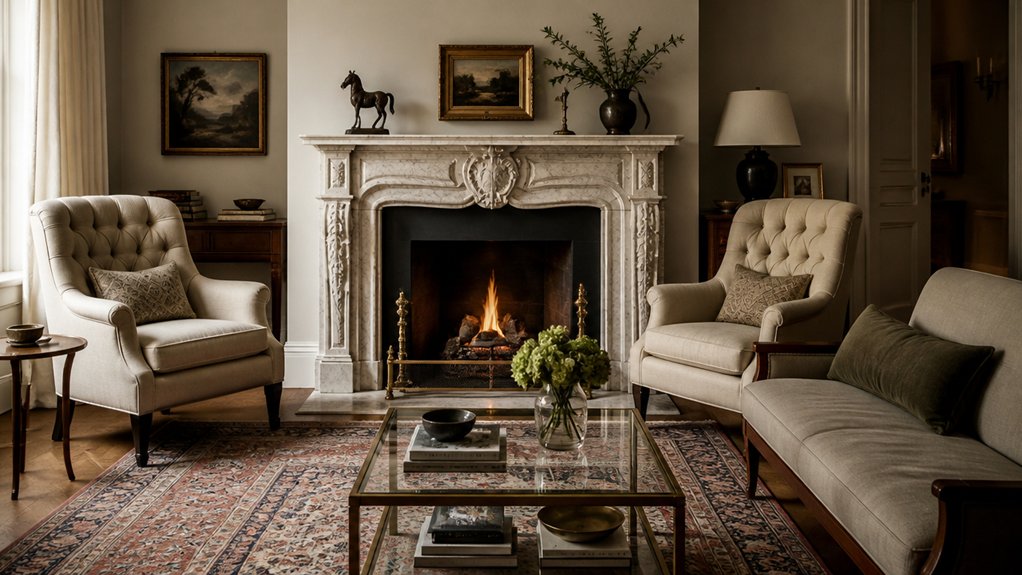
A restrained mantel only works if the rest of the room still points back to the fireplace, so set your furniture out as if the hearth is the room’s anchor.
Start by establishing a clear sightline from the main seating position to the firebox; then build the room layout around that axis.
Keep circulation practical for UK living rooms by allowing an easy route past the hearth to doors and bay windows.
- Angle your sofa and armchairs slightly inward to frame the opening, rather than squaring everything to the telly.
- Centre the rug on the fireplace line, using its edges to position legs and define the seating zone.
- Place side tables and occasional chairs to balance the surround’s weight, leaving the hearth clear for safety and cleaning.
This furniture placement makes the antique feature feel intentional, not incidental.
Add Lighting to Make the Fireplace Glow
Even if you keep the mantel deliberately sparse, you can make an antique fireplace read as the room’s centrepiece by layering light around it rather than blasting it with one overhead fitting. Start with Ambient lighting: place a pair of dimmable table lamps on nearby side tables, or add a slim floor lamp set just off the hearth line to wash the surround evenly.
Then add Accent fixtures to pick out period details. Use a discreet picture light above a framed mirror, or install tiny wall lights either side of the chimney breast to graze original tilework and carved stone.
If you’ve got a working fire, choose warm LEDs (around 2700K) so the glow looks natural. Keep switches accessible and put everything on a dimmer so you can tune the mood through the evening.
Avoid Mistakes That Make Fireplaces Disappear
While an antique fireplace should anchor the room, a few common styling and decorating choices can make it fade into the background. You’ll lose impact if you paint over original stone, crowd the hearth, or let soot dull the surround. Keep fireplace maintenance routine: sweep ash, check the flue, and clean tiles with appropriate, non-abrasive products.
- Don’t hang artwork too high; align it with the mantel’s centreline so the eye lands on the fire opening.
- Don’t match the surround to the wall colour; use a gentle contrast or limewash that respects period materials.
- Don’t overdo decorative accessories; choose fewer, larger pieces and keep the hearth clear.
Finally, position seating to face the fireplace, not the telly, and you’ll restore it as the room’s focal point.
Conclusion
When you treat your antique fireplace like the room’s main stage—yes, even before you “hit save”—it rewards you. You’ve checked for cracks, swept soot with restraint, and kept original tiles, cast iron, or stonework intact. You’ve framed it with considered paint, period-correct surround choices, and warm, layered lighting. Keep the mantel edited, then angle seating towards the hearth. Maintain it routinely, and it’ll hold the room with quiet authority.
About the Author