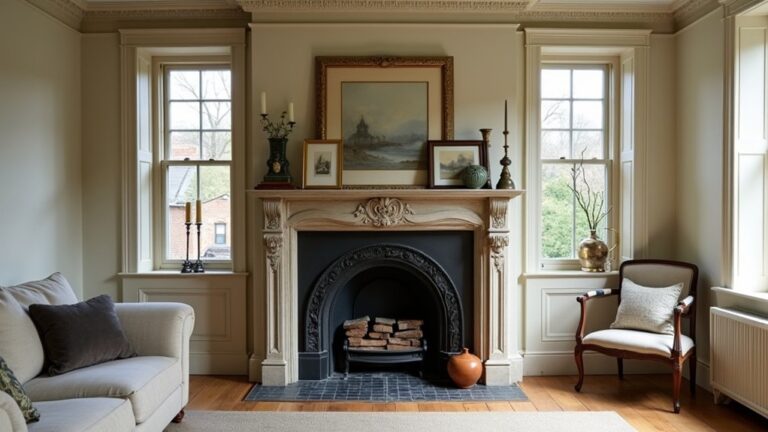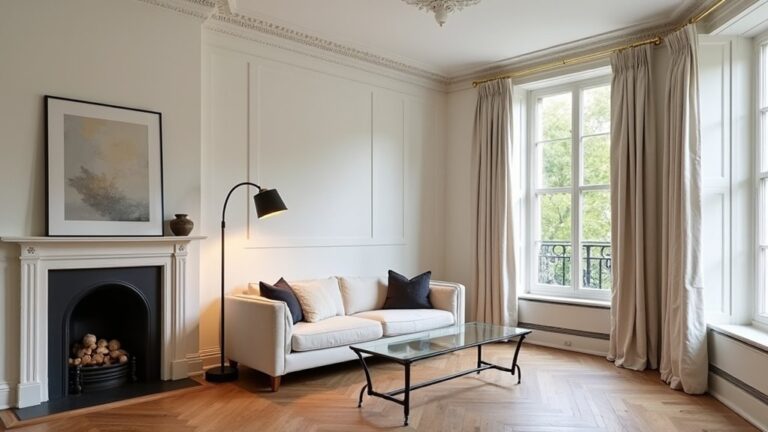
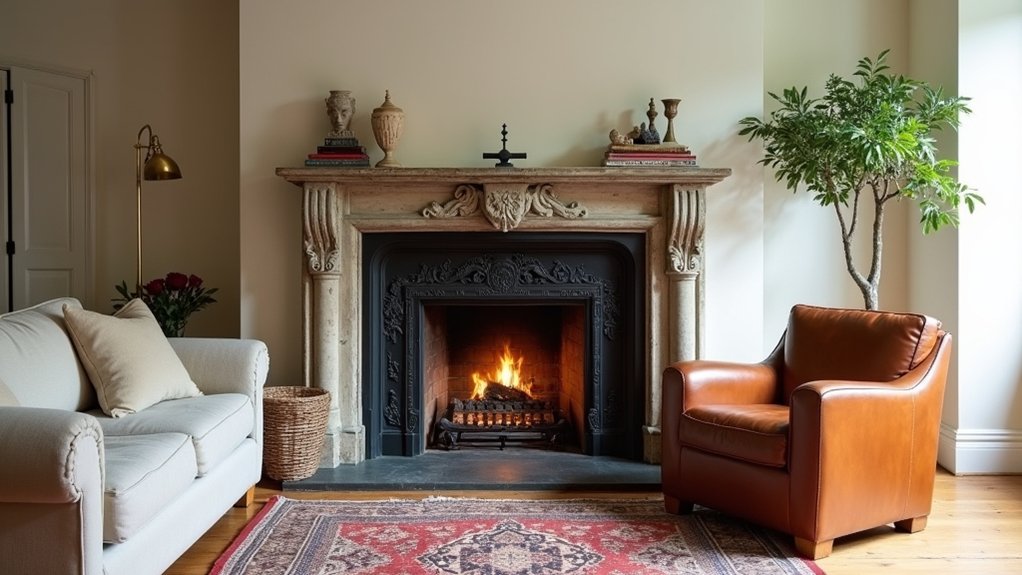
You can treat a restored antique fireplace like a working piece of architecture, not just a decorative backdrop. You’ll start by checking sightlines from every seat, then angle your sofa and chairs so they frame the surround instead of crowding it. A properly scaled rug grounds the zone, while layered lamps and a soft wall finish lift the stonework without glare. Keep the mantel sparse, then decide what you’ll let compete with it…
Key Takeaways
- Treated the restored antique fireplace as the anchor, floating the sofa opposite and forming a conversational U-shape with angled armchairs.
- Protected sightlines by keeping the hearth visually clear, walking the room at seated eye level, and avoiding furniture cutting across it.
- Chose a generous rug aligned to the chimney breast, with front legs on the pile and 20–30cm extension beyond seating.
- Used calm, matte neutrals and layered natural materials—wood, stone, and textiles—to complement the antique surround without competing with it.
- Added layered, dimmable 2700K lighting and minimal mantel styling, while keeping TV or art secondary and discreetly integrated.
Choose Your Living Room Layout Around the Fireplace
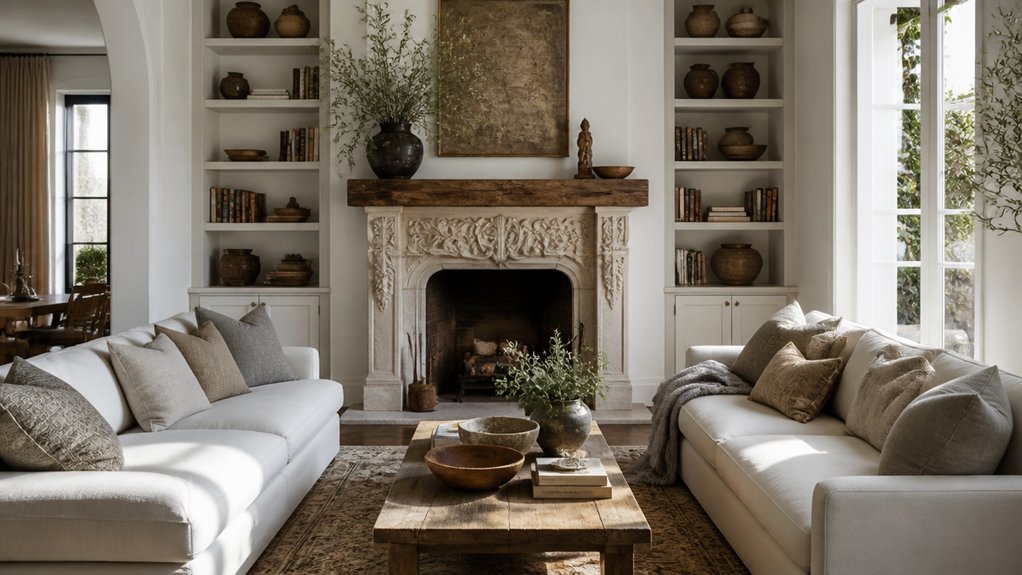
If you treat the restored antique fireplace as your anchor point, the right layout almost chooses itself. Float a sofa opposite, leaving a generous walkway behind it so the room still feels Georgian, not cramped. Many homeowners are turning to reclaimed & antique fireplaces as a character‑rich way to upgrade their living spaces, blending sustainable DIY restoration with timeless architectural charm
Angle two armchairs slightly inwards to form a conversational U, then slip a slim nesting table between them for tea and books.
For Feng Shui, keep the main seat in a “command” position: you should face into the room, not feel pinned against a wall.
Add Acoustic Planning early: soft rugs, lined curtains, and upholstered pieces stop the hearth’s hard surfaces from making voices ping.
Finish with a low, centred coffee table and a lamped sideboard to one flank, balancing weight without symmetry.
Check Sightlines to the Antique Fireplace First
Once you’ve set the seating to orbit the hearth, walk the room and check what you actually see from every key perch—sofa, armchairs, doorway, even the spot you’ll pause with a cuppa. This quick sightline assessment tells you whether the restored surround reads as the hero, or gets chopped by a lamp, tall plant, or the edge of a bookcase.
Crouch to seated eye level and note the viewing angles: can you see the full opening, the mantel profile, and any tiled slips without obstruction? Watch for glare from south-facing windows washing out detail, and for a TV reflection skittering across the polish.
If a door swing or radiator interrupts the view, shift accessories, not the fireplace. Keep it clear, calm, and intentional.
Place Seating to Frame the Fireplace (Not Block It)
While the fireplace wants to be the focal point, your seating should act like a picture frame around it—supporting the view rather than stealing it.
Start with the sofa opposite or on a slight angle, so you’re looking into the hearth without cutting across it. Keep the back height low if you’ve got a delicate mantel or tiled insert, and leave a clear route to the fireguard.
Build your seating arrangement with a pair of compact armchairs flanking the opening, pulled forward enough to feel conversational but not so close they crowd the surround.
In small UK terraces, swap bulky recliners for slipper chairs or a neat loveseat.
Nail the furniture placement by keeping legs visible and the centreline to the fireplace open.
Add a slim side table for tea and candles.
Pick a Rug Size That Anchors the Fireplace Zone
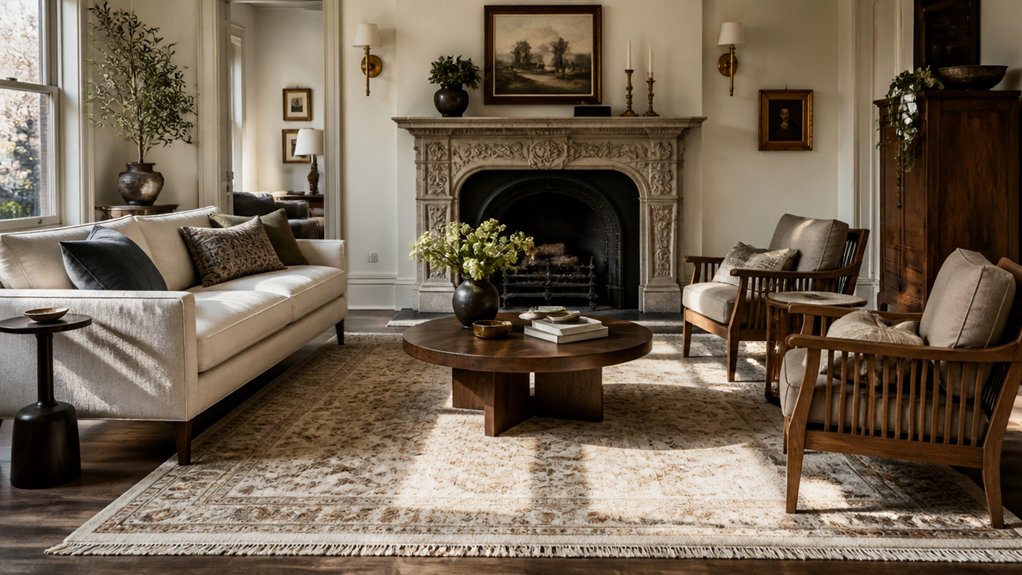
Get the seating sitting neatly around the hearth, then let a rug lock that arrangement to the floor so it reads as one calm fireplace zone.
Go generous: you want at least the front legs of the sofa and chairs on the pile, with 20–30cm beyond each side, so nothing looks like it’s perching.
In most UK living rooms, a 160x230cm or 200x290cm rug will do the heavy lifting; smaller tends to drift.
Align the rug to the fireplace breast, not the bay, so the room feels squared-up.
Choose Rug patterns that echo the antique surround—muted Persian, faded stripes, or a low-contrast check.
Keep Color coordination tight: lift tones from the mantel stone, then repeat them in cushions and throws.
Add One Secondary Focal Point (TV, Art, Built-Ins)
Once your rug’s set, you’ll want one secondary focal point so the restored fireplace stays the star.
If you’re adding a TV, offset it or tuck it into slim built-ins so it doesn’t compete with the mantel’s proportions.
Prefer art instead? Hang one well-scaled piece above the mantel, centred to the chimney breast, to anchor the whole elevation.
Balance TV With Fireplace
Even if your restored antique fireplace deserves centre stage, the room still needs a second focal point so it doesn’t feel like a shrine. To balance a TV with period detail, treat the screen as calm, considered media integration rather than a black slab fighting the mantel.
Position it to one side on a low console, keeping sightlines easy from the sofa and leaving the hearth as the anchor.
- Choose a slim frame TV or dark bezel that echoes ironwork for subtle colour coordination.
- Run cables inside trunking or a stud box; finish in the wall paint so it disappears.
- Use built-in shelving either side for books and ceramics, keeping the TV visually “nested”.
Keep the console height below the mantel shelf, and let soft lamp light reduce glare.
Anchor Art Above Mantel
Although the restored fireplace sets the tone, you’ll make the whole wall feel intentional by anchoring a single, confident artwork above the mantel. Choose one generous piece rather than a fussy gallery; it should read from the sofa and hold its own against the surround’s antique charm.
Hang it so the lower edge sits roughly 10–15cm above the shelf, centred to the opening, not the chimney breast, and keep the frame finish in step with nearby metals—aged brass, blackened steel, or oak.
If you’re adding a secondary focal point like a TV or built-ins, let the art lead and keep screens off-axis.
Edit mantel decor to two or three tactile items, leaving breathing room around the picture.
Choose Paint and Wall Finish to Flatter the Antique Fireplace
Because an antique fireplace already brings its own patina and contrast, your paint choice should support it rather than compete. Start by sampling your Paint color in morning and lamplight; UK homes shift tone fast with grey skies and warm bulbs.
If the surround’s stone or cast iron reads busy, choose a calm, nuanced neutral—chalky off-white, putty, or a softened sage—so the detailing stays crisp.
Then fine-tune Wall texture: too much sheen can shout, while heavy texture can blur mouldings and edges.
- Use a matt or soft-matt emulsion on main walls to keep glare down.
- Add a subtle limewash or clay paint on the chimney breast for depth.
- Keep skirting and coving in durable eggshell for a tidy, period-friendly line.
Mix Metals, Woods, and Stone Around the Fireplace
Once your paint and wall finish are doing the antique fireplace justice, you’ll want the materials around it to feel intentional rather than matchy.
You can balance metal finishes by pairing, say, aged brass picture lights with blackened steel fire tools, keeping the undertones warm and the sheen levels in check.
Then layer wood and stone—oak in a side table or mantel detail against honed limestone or slate—so the hearth reads as grounded, tactile, and properly British.
Balancing Metal Finishes
To keep a restored antique fireplace from feeling too precious, you’ll want to treat the surrounding finishes like a considered mix rather than a matching set. Aim for metal finish harmony by repeating one tone twice, then introduce finish contrast in a smaller dose so it reads intentional, not busy.
In UK terraces, you’ll often juggle inherited brass, newer blackened steel, and chrome from lighting—edit them like you’d jewellery.
- Choose a “lead” metal (say, aged brass on the fender) and echo it once on picture lights or a mirror frame
- Add a “supporting” dark metal on the fire tools or grate to anchor the hearth visually
- Keep any third finish to tiny hits—tray, knobs, candle snuffer—so it stays a highlight
Layering Wood And Stone
Metal harmony sets the tone, but wood and stone give a restored antique fireplace its weight and warmth.
Start with one timber note: a limed oak mantel for a light London feel, or smoked walnut if you want moodier Georgian depth. Keep the grain visible; it softens cast iron and brass without fighting them.
Now anchor it with stone that suits the era. Honed limestone reads calm and contemporary, while veined marble nods to antique restoration—just keep the finish matte so it doesn’t look too new.
Layer slate hearth tiles underfoot for grip and contrast, and run a thin stone slip into the recess to frame the firebox. Leave clear access for fireplace maintenance, especially around vents and ash clean-outs.
Light the Fireplace Wall With Soft, Layered Lighting
Although the restored fireplace naturally steals the focus, you’ll get far more impact if you light the chimney breast in soft layers rather than relying on the main ceiling fitting.
Start with dimmable wall lights either side to wash the stone and pick out its tooling, then add a low, warm ambient glow to soften evening shadows across the hearth. Keep colour temperature around 2700K so the room feels inviting, not showroom-cool, and always put it on separate circuits for true layered lighting.
- Fit discreet picture lights above any artwork nearby, angled away from the opening
- Add a slim LED strip under the shelf line to skim texture without glare
- Place a floor lamp to the side, aiming up to lift the breast and ceiling
Style the Mantel So the Fireplace Stays the Hero
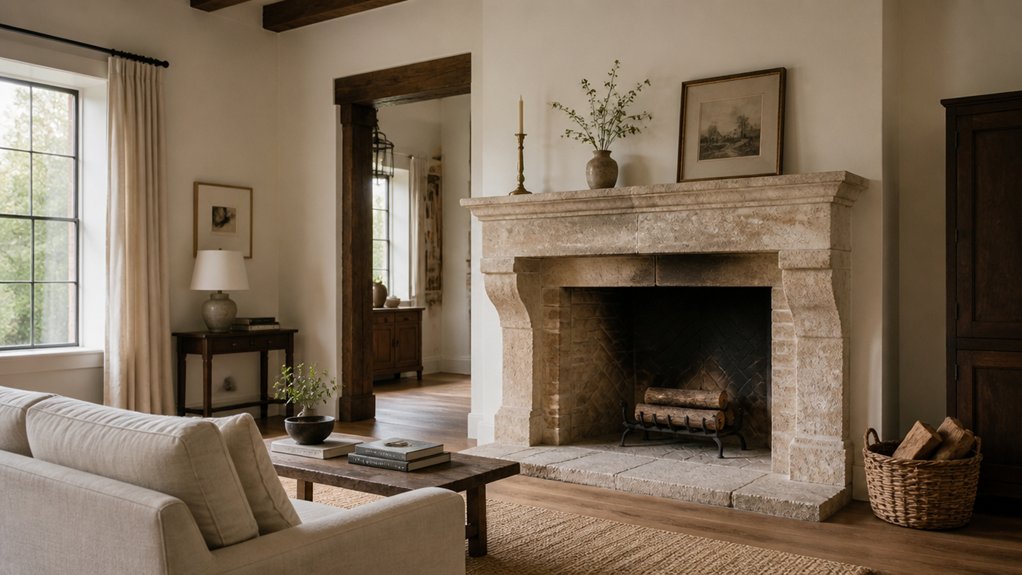
Once you’ve got that soft, layered light grazing the chimney breast, keep the mantel styling edited so the restored stonework still reads as the main event.
Work in odd numbers, but cap it at three to five pieces so you don’t crowd the shelf.
Start with one grounded anchor: a small gilt mirror or framed print, leaned rather than hung for a relaxed, townhouse feel.
Add height with a slim pair of candlesticks in aged brass, then soften the line with a single bud vase of garden stems.
Keep decorative accessories tonal—chalky whites, smoked glass, dark oak—so they echo the fire surround, not compete with it.
If you want pattern, use one object only, like a hand-thrown striped jug, and let negative space do the rest.
Fix Common Awkward Fireplace Layouts (Quick Wins)
If your fireplace sits awkwardly in the room—off-centre, tucked into a corner, or flanked by mismatched alcoves—you can still make it feel intentional with a few quick, reversible tweaks. Start by shifting the “centre” to the hearth: align your rug, coffee table, and main sightline to it, even if the chimney breast isn’t central. Use symmetry where you can, and considered asymmetry where you can’t.
- Float a sofa slightly off the wall, then angle an armchair toward the fire to close dead space without blocking circulation.
- Add slim, matching wall lights or picture lights to balance uneven alcoves and lift the focal point.
- Fit discreet fireplace insulation around draughty gaps and plan ventilation improvements with an air vent cover that suits your period style.
Conclusion
When you style your living room around a restored antique fireplace, you let it lead like a Georgian host at the head of the table. You’ve checked sightlines, angled seating to frame—not fight—the hearth, and grounded everything with a properly scaled rug. A single secondary focal point keeps the balance. Layered lamps and a soft picture light flatter stone and tile, while restrained, tonal mantel pieces leave breathing room. The result feels calm, considered, and unmistakably yours.
About the Author