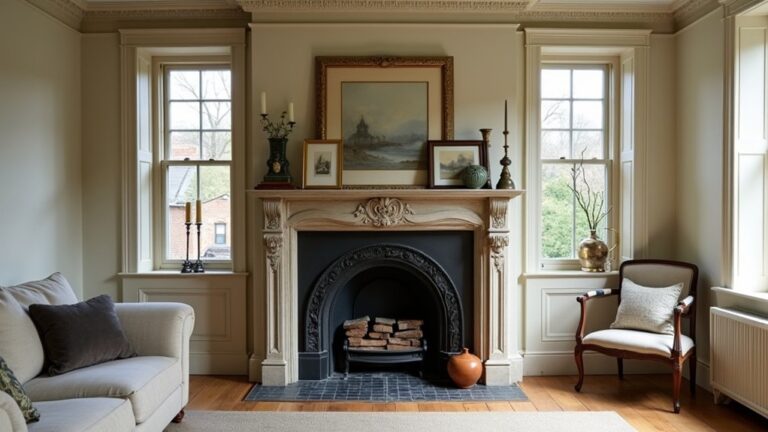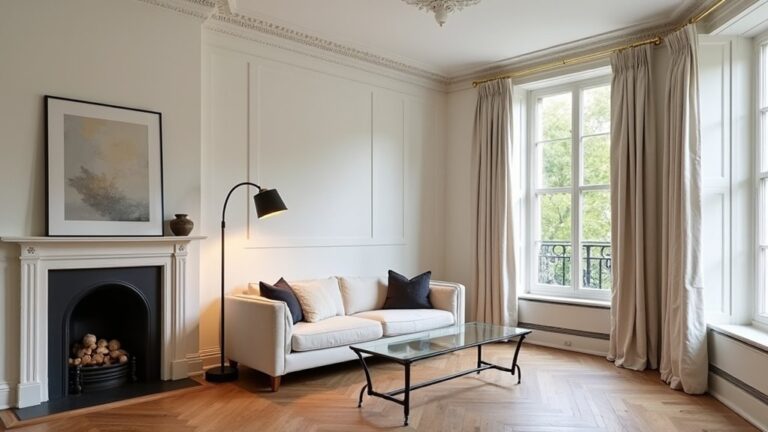
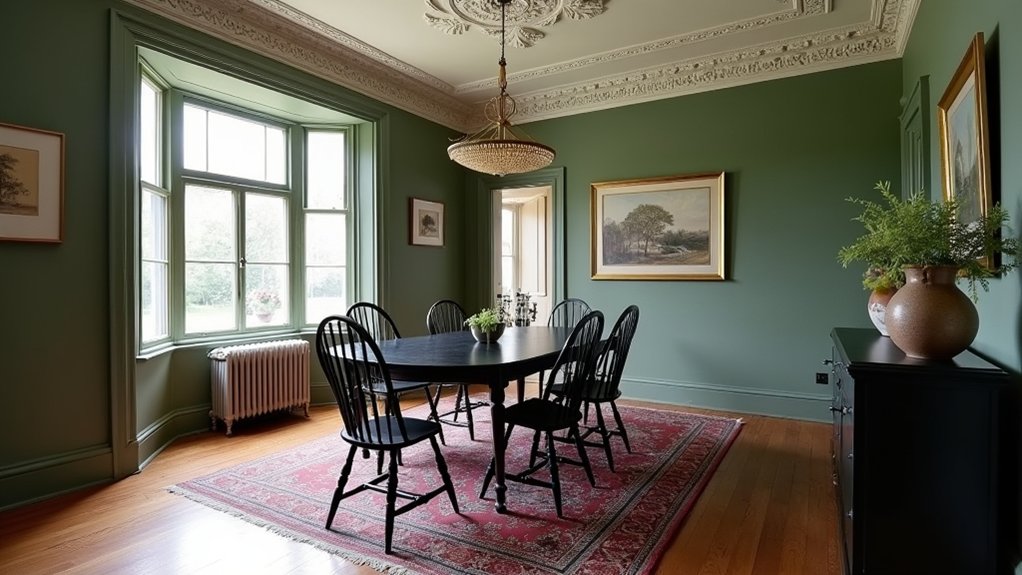
You start by deciding what’s non‑negotiable: ceiling roses, sash windows, and that original fireplace stay, but everything else earns its place. You keep repairs reversible and traditional, then lift the room with warm, layered lighting and a softer neutral palette that flatters period plasterwork. Clean-lined oak and walnut pieces bring the modern edge, while art, rugs, and a few antiques add depth without clutter. The key is knowing where to stop…
Key Takeaways
- Survey original Victorian features in daylight, photograph and measure, then decide what to restore versus update for modern circulation and function.
- Restore key details—ceiling rose, cornicing, sash windows, fireplace, and floorboards—using reversible, UK-appropriate heritage materials and methods.
- Choose a warm, light-reflective Victorian palette (biscuit, oat, greige) with matte ceilings and eggshell woodwork for durability and crisp lines.
- Layer lighting with a dimmable ceiling pendant, opal wall lights, and subtle accents, keeping bulbs at 2700K for consistent warmth.
- Simplify the layout with a slim-legged table, supportive upholstered chairs, hidden storage, and one standout antique to keep character without clutter.
How We Planned Our Victorian Dining Room Update
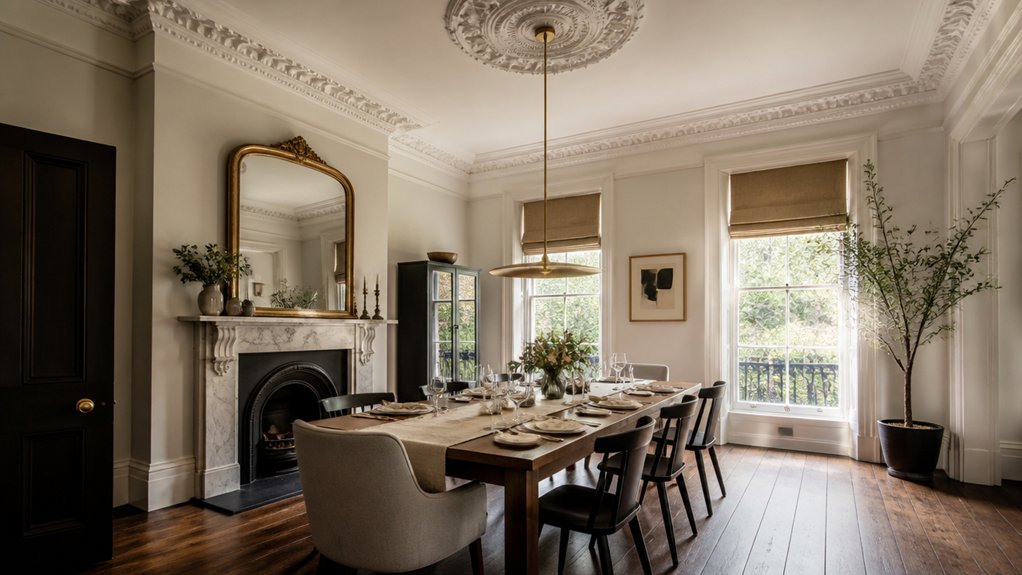
Although we loved the room’s original proportions and period charm, we planned the update like a modern UK renovation: keep what’s authentic, improve what’s practical, and make every choice earn its place.
You start by surveying the bones in daylight: ceiling rose, cornice lines, skirting depth, fireplace position, and how the bay reads from the hall. You photograph, measure, and sketch elevations, then set a budget that protects joinery and decent prep.
For Historical accuracy, you cross-check profiles against local Victorian references and salvage yards, not Pinterest mash-ups.
For Modern integration, you map lighting layers, power points, and dining circulation so the room works for weeknights and hosting.
You align finishes with UK trends—warm whites, muted greens, aged brass—while keeping everything restrained.
Decide What to Keep vs Change (Quick Checklist)
Once you’ve measured, photographed, and mapped how you actually use the room, you can make faster, smarter calls on what stays and what gets upgraded.
Start with a quick keep/change checklist: keep anything structurally sound, hard to replace, or genuinely characterful; change pieces that block circulation, feel undersized, or fight the light.
Prioritise antique preservation where it matters: a solid sideboard or extending table can anchor the scheme, while tired chairs can be reupholstered or swapped.
Audit your storage—if you’re stacking placemats on the windowsill, you need a slimmer cabinet.
For lighting, keep any fitting with good proportions, but upgrade bulbs and control.
Finish with strict color coordination: pick one heritage neutral, one deep accent, and one warm metal, then edit everything else.
Restore and Highlight Original Victorian Features
Where do your room’s original Victorian details still do the heavy lifting—ceiling rose, cornicing, picture rail, fireplaces, sash windows, floorboards? Start by auditing what’s authentic, what’s damaged, and what’s been bodged.
In Victorian architecture, small interventions read as big quality: you don’t need to “add character” if you reveal it.
Prioritise Heritage restoration that’s reversible and honest, using UK-appropriate materials (lime filler, shellac, softwood repairs) and trades who respect period fabric.
- Strip paint from mouldings carefully, then sharpen edges with crisp, sympathetic repairs.
- Service sash windows: cords, draught-proofing, and glazing put comfort back without losing lines.
- Make fireplaces the focal point—repoint, tile, or refit a period-appropriate insert, then dress the mantel simply.
Choose a Lighter Victorian Dining Room Colour Palette
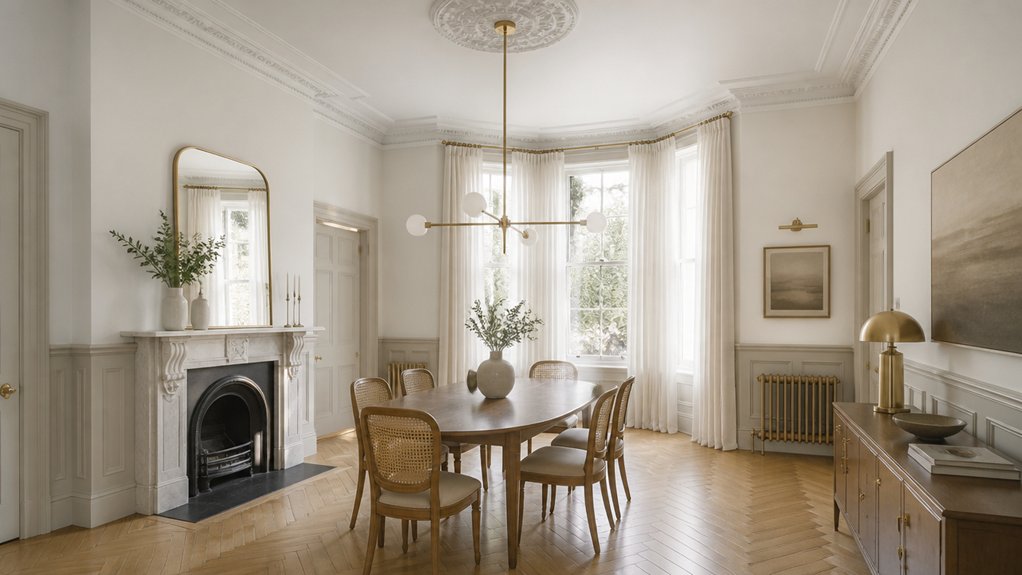
You’ll make your Victorian dining room feel bigger and brighter by swapping heavy hues for soft neutrals with warmth—think biscuit, oat and gentle greige that still flatter period timber.
Layer in airy pastels and clean whites on walls and ceilings to lift the light, especially in north-facing UK rooms.
Finish with light-reflective trim tones—crisp off-white on skirting, architraves and picture rails—to sharpen the architecture without looking stark.
Soft Neutrals With Warmth
Although Victorian dining rooms often default to jewel tones and heavy contrast, a lighter palette of soft neutrals can still feel authentic if you build in warmth. You’ll get instant modern‑heritage balance by leaning into biscuit, putty, and greige, then anchoring them with deeper, tea‑stained timber and aged metals.
Prioritise Color harmony by keeping undertones consistent—warm creams with mellow taupes—so your coving and ceiling rose read crisp, not chalky. Your Material selection does the heavy lifting: tactile finishes stop neutrals feeling flat under UK’s changeable light.
- Matte clay or mineral paint on walls to soften glare
- Oak, walnut, or stained pine to echo period joinery
- Antique brass, bronze, or burnished iron for depth and glow
Airy Pastels And Whites
A pale wash of whites and airy pastels can make a Victorian dining room feel brighter without stripping out its period character. You’ll get that modern-heritage balance by choosing chalky, not icy, whites and pairing them with soft blush, misty blue, or muted sage.
Keep Color harmony tight: let one pastel lead, then echo it in linen napkins, a vintage runner, or framed prints so the scheme feels intentional.
In UK terraces, north-facing rooms love warmer pastels, while south-facing spaces handle cooler tones without going stark.
For lighting ambiance, you can soften evening glare with warm bulbs and shaded pendants, so pale walls stay creamy and flattering at dinner.
Add a touch of antique brass for gentle depth.
Light-Reflective Trim Tones
Because Victorian rooms often come with hefty skirting boards, dado rails, and ornate architraves, picking light-reflective trim tones can lift the whole dining room without touching the original plasterwork.
You’ll sharpen those Decorative moldings by choosing a clean off‑white with a subtle warm undertone, then finishing in eggshell or satin so light bounces gently off Reflective surfaces rather than glaring.
- Match trim to the palest note in your wall colour for a calm, gallery-like edge.
- Use a higher sheen on architraves and picture rails, keeping walls matt for depth.
- Specify UK classics: Farrow & Ball Wimborne White, Little Greene Slaked Lime, or Dulux Natural Calico.
You’ll keep the period geometry crisp, make north-facing rooms feel sunnier, and let heritage joinery read as intentional detailing.
Update Trim, Paint Finishes, and Hardware Cleanly
You’ll sharpen the room instantly with a crisp trim refresh, keeping skirtings, architraves, and picture rails clean-lined and properly prepped.
You’ll choose a modern sheen strategy—often matt on walls with durable eggshell or satin on woodwork—to balance period character with easy wipe-down practicality.
You’ll finish by swapping in updated heritage hardware, like unlacquered brass, aged bronze, or porcelain knobs, so every handle feels intentional rather than fussy.
Crisp Trim Refresh
While the room’s grand proportions and period mouldings do most of the heavy lifting, a crisp trim refresh is what makes a Victorian dining room feel newly tailored rather than merely repainted. You’ll get instant trim contrast by tightening edges, smoothing old brush marks, and keeping lines razor-straight with paint precision.
Start with a proper wash-down, then fill hairline cracks and lightly sand the architraves, skirtings, and picture rails so every profile reads cleanly in evening lamplight.
- Use a high-quality angled sash brush and cut in slowly around cornices and ceiling roses.
- Swap tired screws for matching finishes and clean plates with a gentle metal polish.
- Rehang doors, reset hinges, and align latches so everything closes with a satisfying click.
Modern Paint Sheen Strategy
Once you’ve sharpened the trim, lock in that tailored Victorian look with a deliberate paint-sheen plan that balances period detail with a modern, wipe-clean finish.
Keep ceilings and original plaster in a dead-matt to hide imperfections and soften evening light.
On walls, choose a durable matt or eggshell; it reads heritage but copes with family dining, splashes, and scuffs.
Push woodwork to satin (or soft gloss if you want extra definition), so architraves, skirting, and picture rails stand proud without looking plasticky.
Paint finish consistency matters: use the same brand system for colour accuracy across sheens.
Your sheen strategy should also follow the room’s light—south-facing can take deeper tones, while north-facing benefits from higher-reflectance eggshell.
Always sample on primed patches before committing.
Updated Heritage Hardware
A tight sheen plan sets the stage, but the room only reads convincingly “restored” when the trim and hardware look intentionally updated rather than simply repainted. You’ll get the cleanest result by stripping back claggy layers on architraves, then re-cutting edges with a quality sash brush and low-tack tape. Choose a crisp eggshell on woodwork for that London townhouse calm, and keep ceilings dead matt to preserve height.
- Swap tired brass for heritage hardware in aged bronze or unlacquered brass that’ll patinate gracefully.
- Replate escutcheons and polish knobs, keeping vintage accents without the sticky thrift-shop feel.
- Align screw slots, centre backplates, and match latch faceplates for a joinery-grade finish.
Finally, wax around keyholes and hinges so paint doesn’t bridge and crack.
Layer Dining Room Lighting to Suit Period Details
Because Victorian rooms often mix ornate ceiling roses, deep cornicing, and heavy joinery, you’ll get the best result by layering your dining room lighting rather than relying on a single pendant.
Start with a warm, dimmable ceiling light that respects the rose—choose a shallow semi‑flush or a refined lantern if head height’s tight.
Next, add ambient layering with wall lights to wash the picture rail and highlight panelling; opal glass or ribbed shades feel heritage without looking fussy.
Get fixture placement right: centre pendants over the table line, not the room, and keep wall lights symmetrical to the chimney breast.
Finish with discreet accent lighting—LED tape under shelving, or a low‑glare picture light—so evenings feel cosy, not cave‑like.
Use 2700K lamps and quality dimmers throughout.
Choose Table, Chairs, and Storage With Cleaner Lines
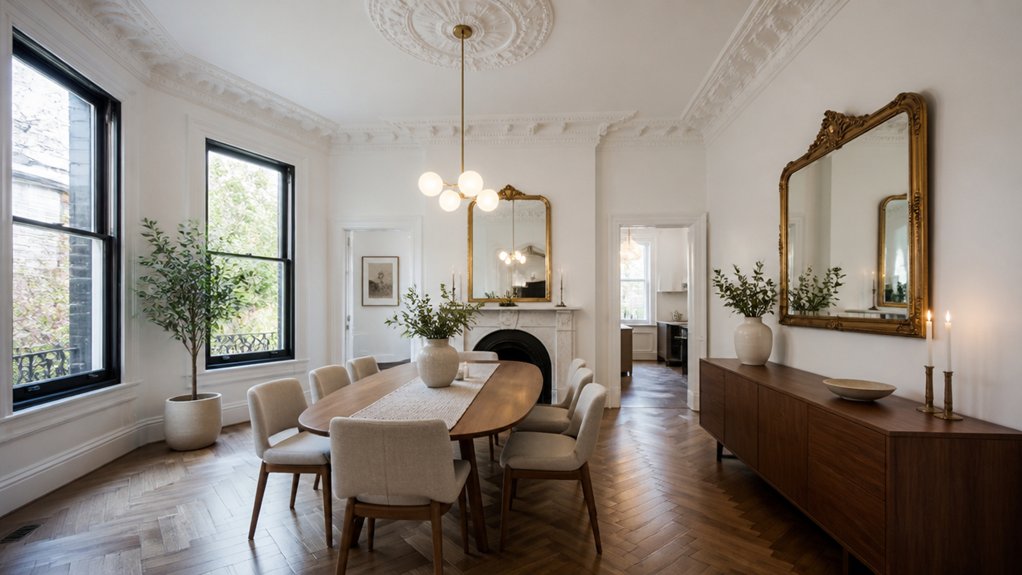
With your lighting layers set, let the furniture calm the room’s Victorian busyness rather than compete with it. Prioritise Furniture selection that respects original cornices and skirting: choose a table with slim legs, a tight profile, and a matt oak or walnut finish that reads modern yet warm in UK light.
Keep chair silhouettes pared back, but guarantee comfort with supportive backs and upholstery in hard‑wearing wool or performance linen for everyday dining.
- Opt for a rectangular table that clears door swings and keeps circulation easy.
- Choose chairs with consistent seat heights and subtle curves for Design harmony.
- Add a low sideboard with flush fronts to hide serveware without bulky panelling.
Measure carefully, match timber tones, and leave breathing space around the hearth for balance.
Mix Antiques, Art, Rugs, and Textiles Without Clutter
Once your streamlined table, chairs, and sideboard are in place, you can layer antiques, art, rugs, and textiles in a way that nods to the room’s Victorian bones without tipping into bric‑a‑brac.
Start with Antique blending: choose one standout piece, like a mahogany candle stand or gilt mirror, then echo its tone in a single frame or brass picture light. Keep the wall edit tight—two to three works hung on one centreline feels curated, not busy.
Ground everything with a faded Persian-style runner sized to leave a smart border of floorboards, a very UK terrace-house move.
For Textile pairing, limit yourself to two fabrics: linen seat pads plus a wool throw, or ticking stripe with velvet. Repeat colours twice, then stop.
What Worked, What Didn’t, and What We’d Do Again
Although the “less but better” approach felt risky in a Victorian room, it proved the winning move: the pared-back table and chairs held their own, and the single hero antique (the gilt mirror) gave you period character without a mantelpiece’s worth of bits.
What worked: you kept the palette warm and mineral, and let daylight bounce off limewash and brass.
What didn’t: your first try at Faux finishes on the skirting read too Instagram, not Belgravia; you stripped it back to honest satinwood.
What you’d repeat: Vintage repurposing—turning a spare linen press into a drinks cabinet—plus disciplined lighting and scale.
- One statement piece, no “gallery wall” creep
- Layered lamps over harsh downlights
- A rug big enough for tucked-in chairs
Conclusion
You end up with a dining room that feels both Victorian and quietly current: ornate ceiling roses above clean-lined oak seating, a restored fireplace beside pared-back art. You keep what’s honest, change what’s fussy, and let a soft, warm neutral palette bounce light off refreshed trim and brass hardware. Layered lighting—pendant, wall lights, candles—flatters evening meals without fighting the period details. It’s heritage, but liveable; polished, but relaxed.
About the Author